


📌 🐝 Pierre Bonnet, CIRAD: using AI to better map biodiversity
📌 🐝 Pierre Bonnet, CIRAD: using AI to better map biodiversity
As its focus topic for 2026, Futura-Mobility has chosen how artificial intelligence (AI) can help transport better respect planetary boundaries and increase societal benefits. In 2025, the think tank addressed the impact of transport on biodiversity, along with the management of freshwater resources.
To bridge the gap between the two, in February 2026, Futura-Mobility members welcomed Pierre Bonnet from the French agricultural research and cooperation organisation (CIRAD) in Montpellier.
He presented the objectives and developments of Pl@ntNet, a French, AI-based, participatory science platform launched in 2009, to shed light on using AI to better map biodiversity.
Futura-Mobility: What is your role within the Pl@ntNet platform, and how is it funded and organised?
Pierre Bonnet: A member of the Pl@ntNet team as a researcher at CIRAD, I have been coordinating the project since 2009, alongside Alexis Joly (a researcher at INRIA).
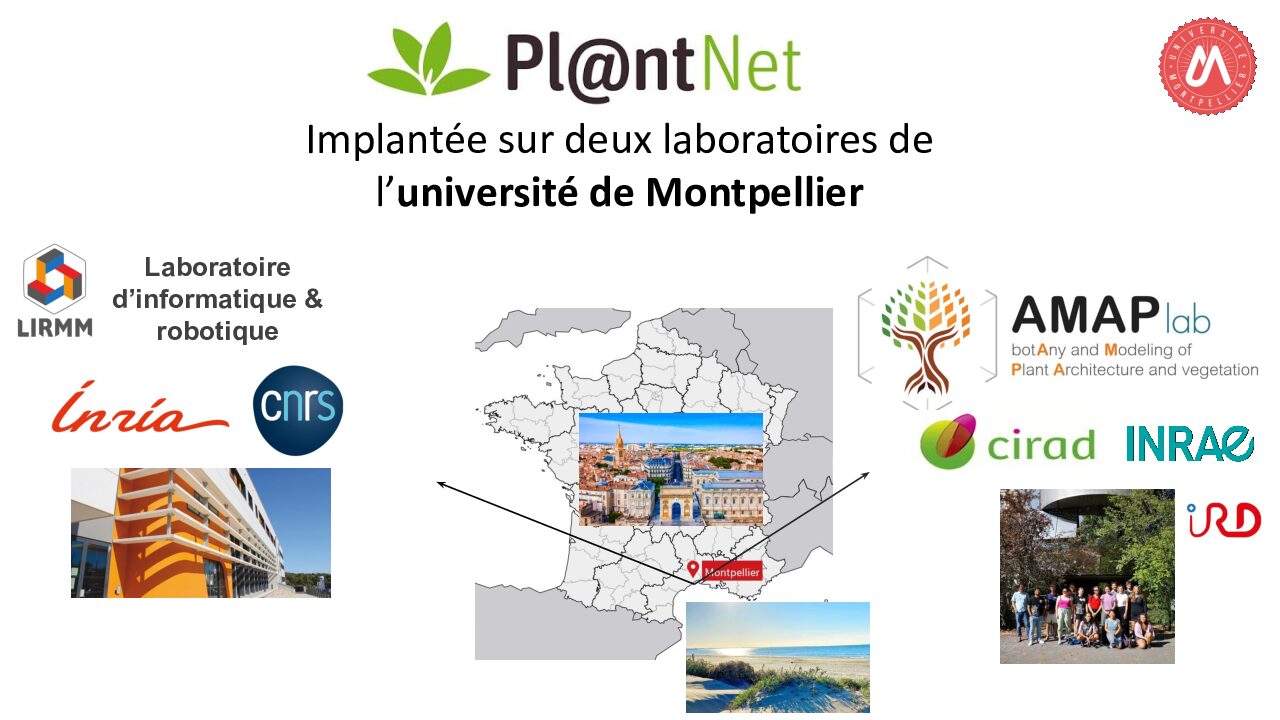
Pl@ntNet is a consortium led by four French research organisations: CIRAD, INRIA, IRD, and INRAE. The CNRS has joined in 2025 too.
The team members are based across two research units in Montpellier: the UMR AMAP and LIRMM. The work carried out by Pl@ntNet is the result of a collective effort between colleagues, engineers and researchers in the fields of botany, ecology, computer science and mathematics.
FM: What were the motivations behind Pl@ntNet?
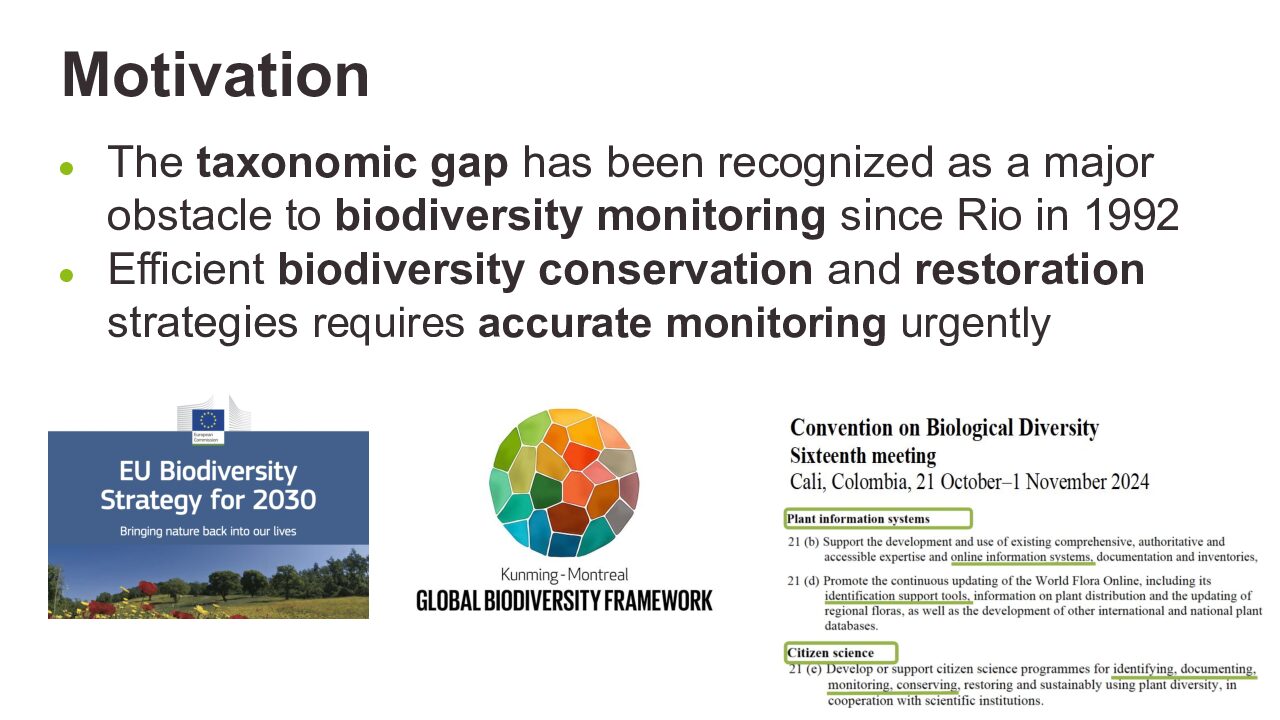
PB: The platform was initially designed to facilitate and strengthen plant biodiversity monitoring capabilities. The aim was to enable more people to correctly identify plants in their natural environment and produce occurrences, i.e. dated, geolocated observations of these plants, in order to gain a better understanding of their distribution and development dynamics in their environments.
The driving aim of the Pl@ntNet project is to establish a virtuous circle of enriching biodiversity data that enables testing of automated processing methods, especially (but not only) for identifying plants.
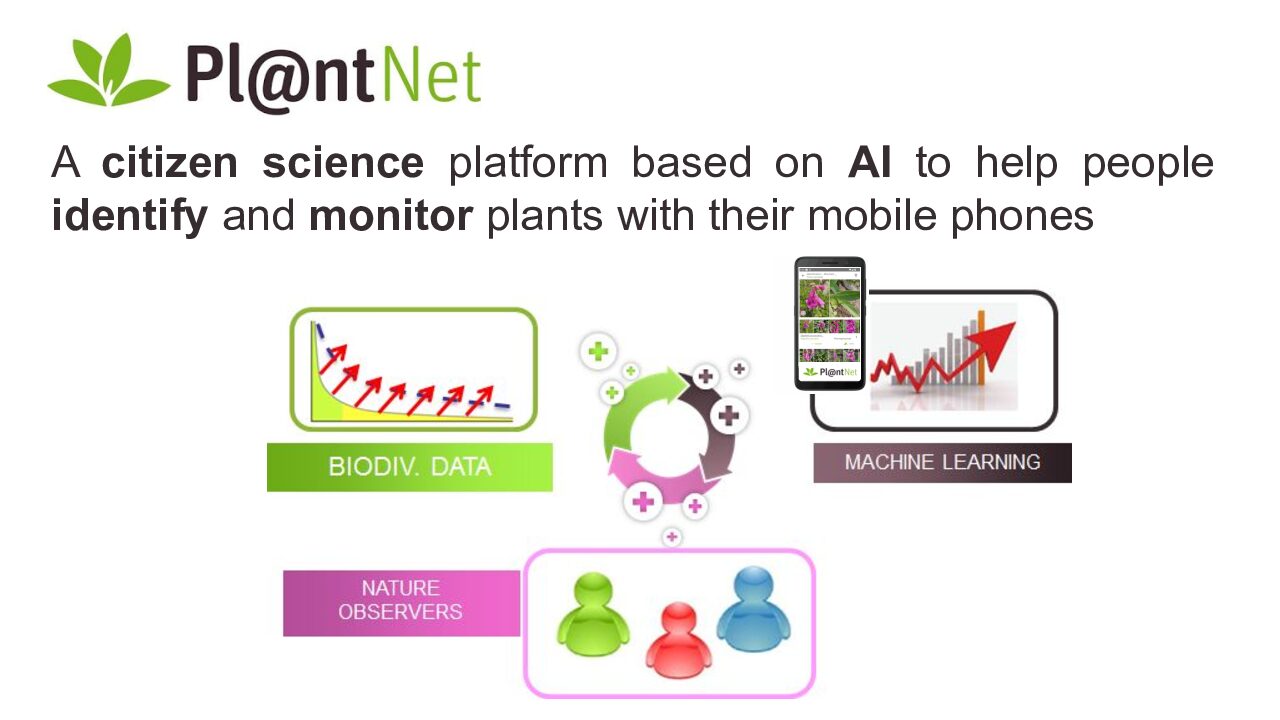
The method has been made available to a wide range of users, from citizens to professional experts, to test the relevance of these methodologies and help us expand our knowledge of the plant world.
FM: In practical terms, how does this platform work?
PB: It enables users to identify plant species by submitting images of the plant via a web or mobile app. The image is analysed by a recognition model based on deep learning, a branch of AI that uses a methodology for training automated, visual classification models.
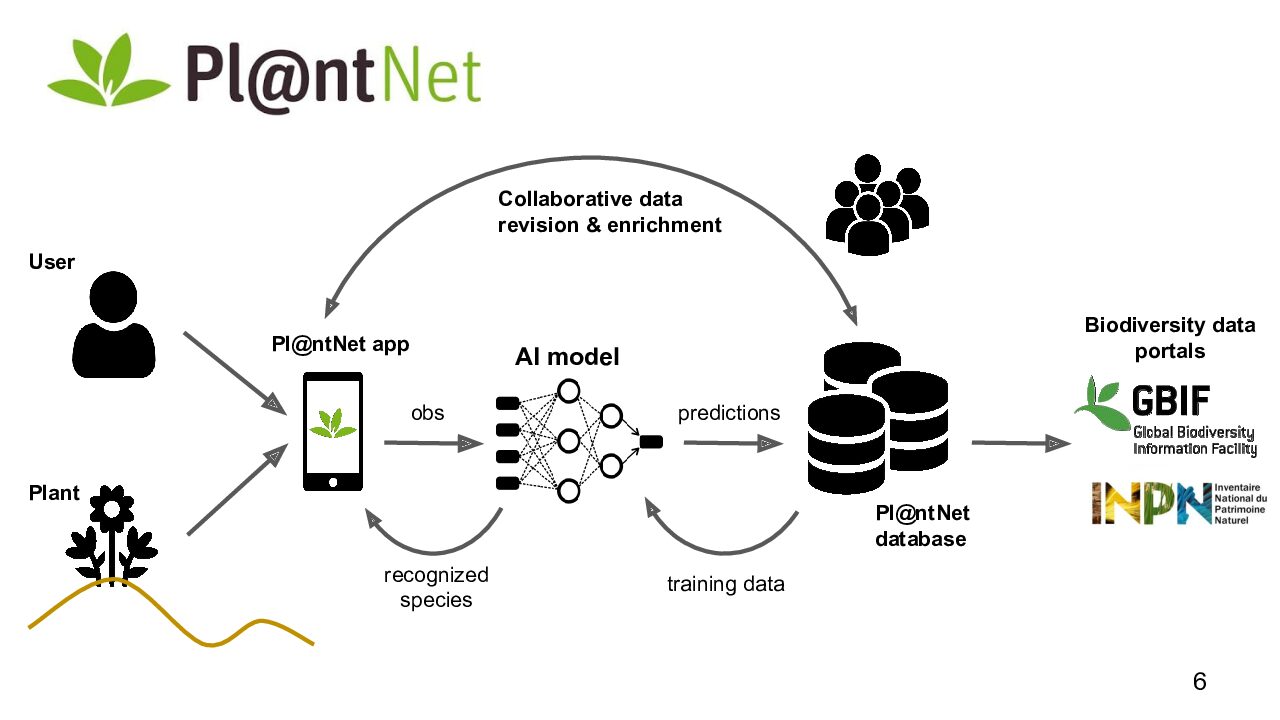
Users can obtain a list of the most likely species based on the image, or combination of images, they have submitted. In addition, if they so wish, they can share their images by accepting the terms of use and sharing (including a Creative Commons licence). This renders the observation public, which can then potentially be validated by the platform’s network of participants.
Thanks to this observation sharing by Pl@ntNet users, the data on which the AI model is regularly trained is continuously enriched in terms of volume and quality. All the data generated by the platform is then outsourced to third-party platforms, such as the Global Biodiversity Information Facility (GBIF), for instance. Today, a great deal of research relies on the GBIF, the world’s largest source of biodiversity occurence data.
FM: Can you explain the platform’s offline functionality and its importance?
PB: We have also worked on mechanisms to create an embedded model and for this automated, visual plant identification function to be used on standalone devices (smartphones, tablets, etc).
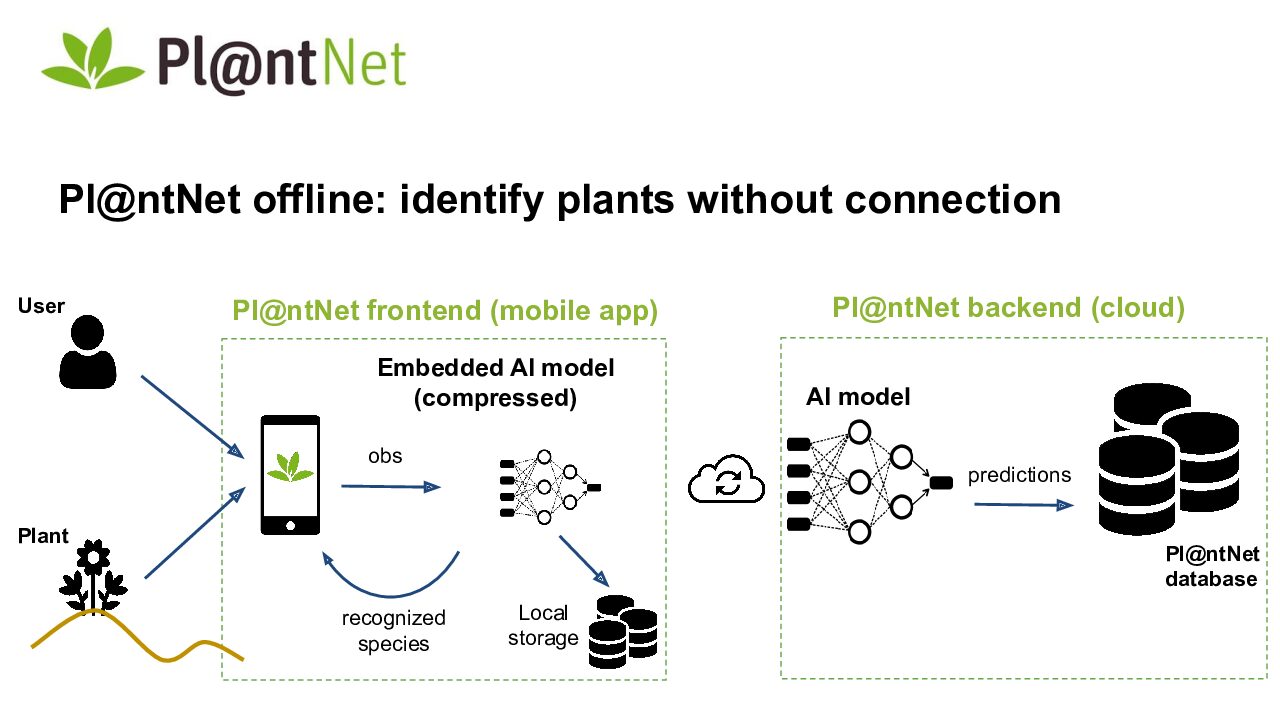
Users with an account can download the recognition model on their smartphone. This allows them to submit photos and receive identification results even when offline. This feature is really useful in mountainous, forest and agricultural contexts, or in extremely remote areas.
Once the user reconnects to the network, they can share the data generated off line thanks to a synchronisation mechanism.
FM: How has the platform evolved over the years?
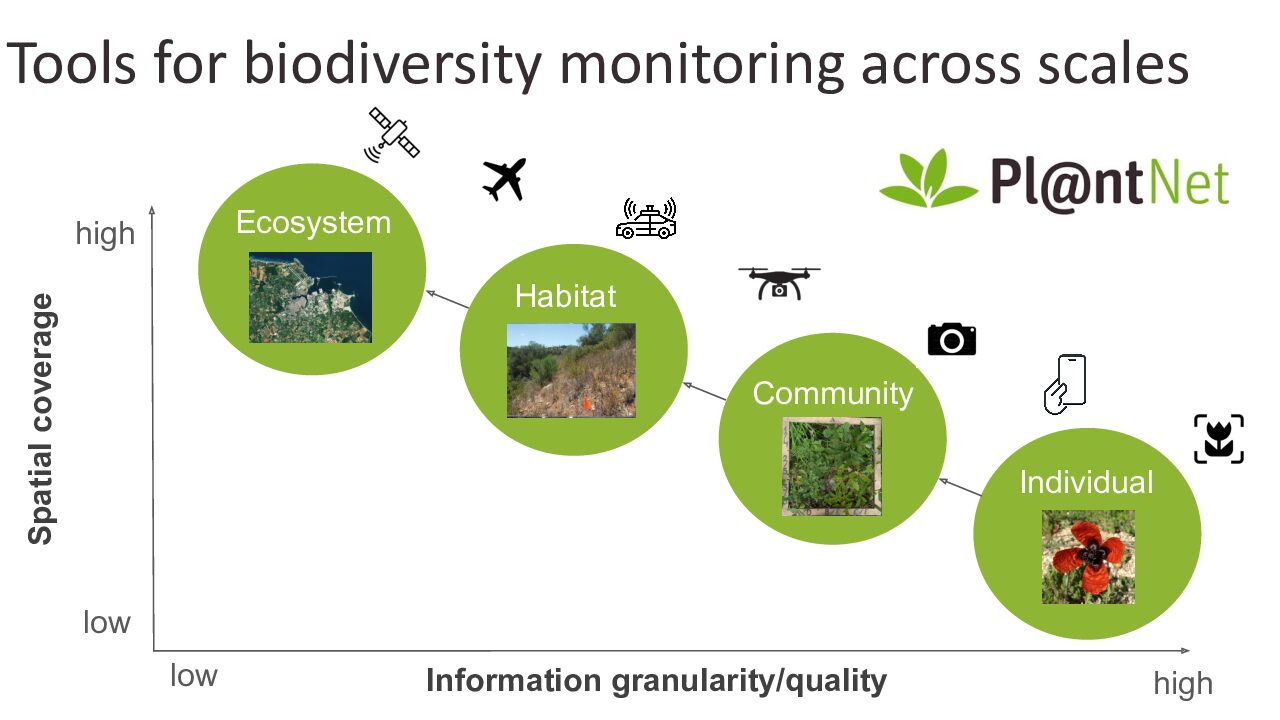
PB: Initially it focused on very fine granularity and identifying individual plants in the natural environment via photos taken in the field. Over the years, through our partnerships and research results, we have become interested in increasingly larger and more complex spatial scales.
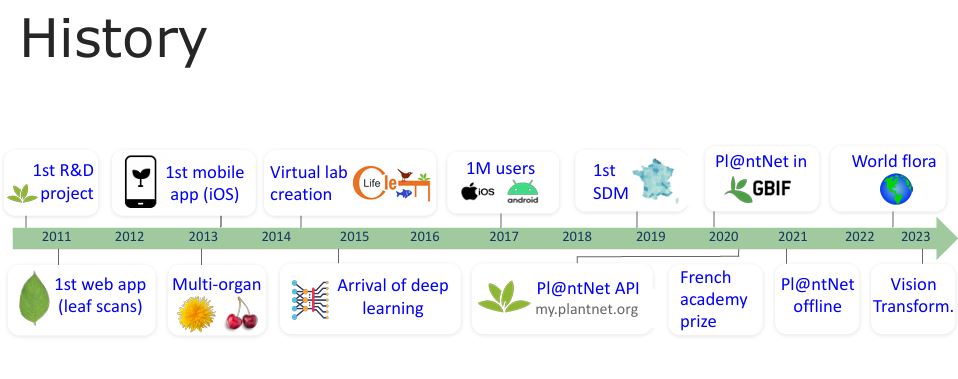
The project, which kicked off in late 2009, has marked various milestones. We started by taking leaf scans into account and then, using various visual criteria, to characterise plants with multi-organ approaches combining leaves, flowers, fruits, and stems.
The first mobile version of Pl@ntNet was launched in 2013. Deep learning models arrived in 2015. Then 2018 marked the start of work modelling the spatial distribution of plants, based on the data collected.
Pl@ntNet’s activities strike a constant balance between foundational work focused on ecology and work that is more maths and computing orientated.
FM: How do you work with partners, especially companies?
PB: The project depends on an extensive network of partners that includes NGOs, universities, companies, botanical gardens…
In the field of life sciences and data science, Pl@ntNet actively collaborates with European partners such as the European Joint Research Centre (JRC), whose network of partners conducts surveys of plant communities across Europe.
The recognition service is made available so that companies, researchers or students can try it out in their own fields of work. For instance, fhrough representatives from the French Office for Biodiversity (OFB) or the National Federation of Public Works (FNTP): the latter has developed an app to make it easier for all land planners to identify invasive species, so as to avoid them shifting from one place to another during construction of transport infrastructure.
Around thirty companies have contracted access to this recognition service. Just over 18,000 people (company employees, students, teachers…) have created an access account and have been benefitting from the service since 2018.
The project is a long-term undertaking. We have been working on it for 15 years, with the idea of having a consortium that is as open as possible. In 2025, the CNRS joined the consortium. Other universities and companies have expressed interest in joining. The University of Montreal’s application for membership has been approved, and we are currently in discussions with Arvalis Agricultural Technical Institute and the Danish University of Aarhus.
FM: Tell us about Pl@ntNet’s key figures.
PB: Little by little, we’ve managed to expand from a few dozen then hundreds of plants, covered in the early 2010s, to tens of thousands today, since we now cover more than 80,000 plant species worldwide.
Widescale use of the platform, with tens of millions of users per year, really took off in 2015-16. Today, of the 20,000,000 annual users, 8,000,000 have created an account and actively contribute to its development. Since the project began, just over 1.3 billion identification requests have been processed worldwide!
FM: Could you give some examples of activities in the field that use your data and services?
PB: The data collected is aggregated into dashboards that feed species description files with galleries, maps, and diagrams, allowing users to track the dynamics of flower, fruit, and stem appearances by location.
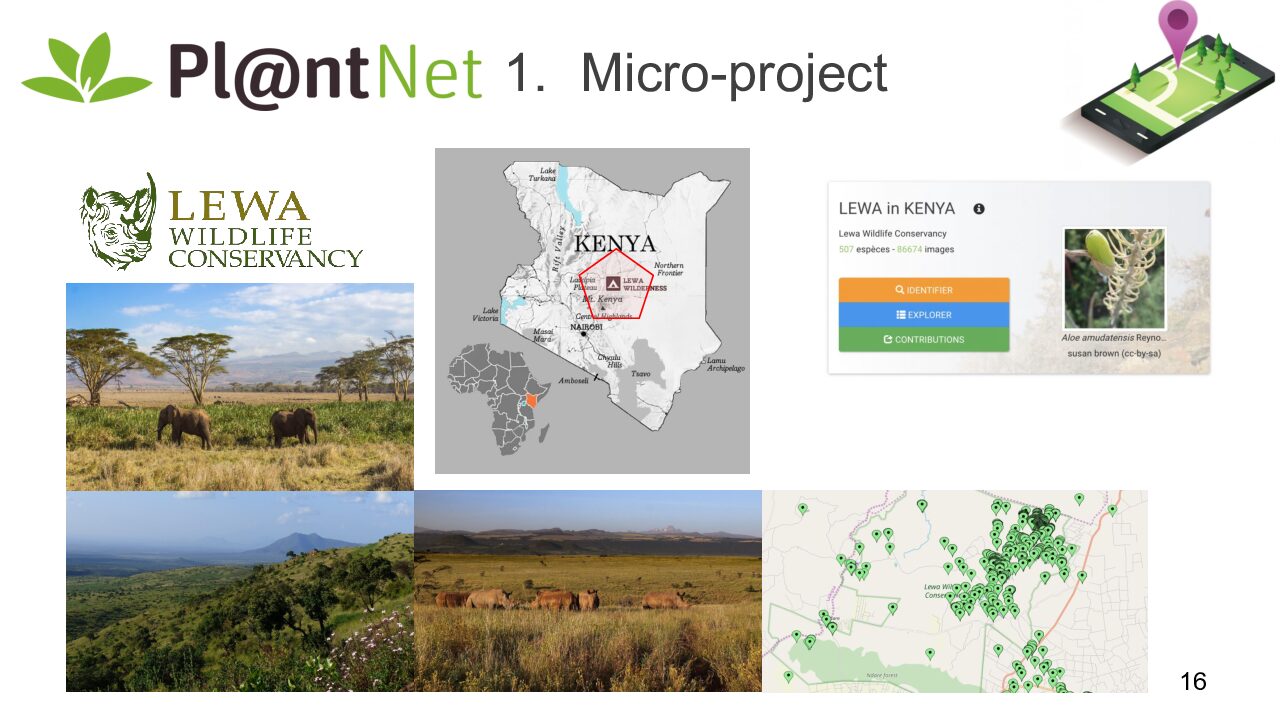
This data contributes to the availability of various services offered by Pl@ntNet. Micro-projects are one example. They contextualise all the platform services to a list of species of interest or to the flora of a given region. Lewa National Park in Kenya, Cévennes National Park, and the Bouches-du-Rhône Departmental Council have requested access to this service be made available.
Users can aggregate their data through groups, as well as sharing and pooling data of mutual interest, in order to monitor the biodiversity of a school, the development of a park or site they manage.
For our partners, we also provide real-time access to species of interest occurrence data. For instance, we work with the DREAL (Regional Directorate for Environment, Development and Housing) in the Réunion, which is interested in detecting invasive species at a very early stage. It can do this detection work by accessing these occurrence feeds we generate.
FM: What topics is the Pl@ntNet team currently working on?
PB: For the past three years, as part of the Pl@ntAgroEco project, we have been working on identifying plant pathogens and identifying at infra-specific level. We are keen for this work to contribute towards an epidemiological surveillance system for better characterising the development of plant pathogens in crops, on a large scale.
Over the years, our partnerships and work have led us to a larger scale, especially as part of the European projects GUARDEN and MAMBO. They have opened up another area of research: the types of views we now work on are squares of vegetation typically used by experts to compile inventories of species presence/absence. And so we have experimented with methodologies that would allow, from a high definition image with several plants, a list of all the species present in that image to be obtained, along with their spatial distribution.
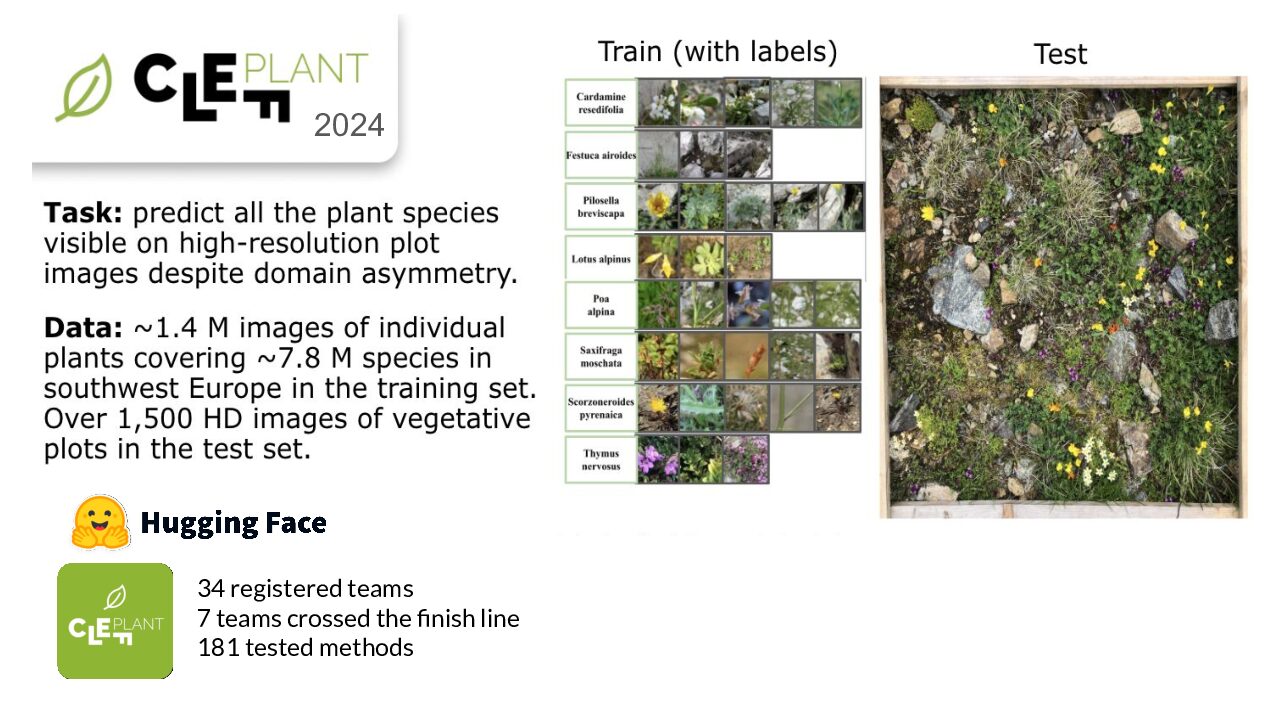
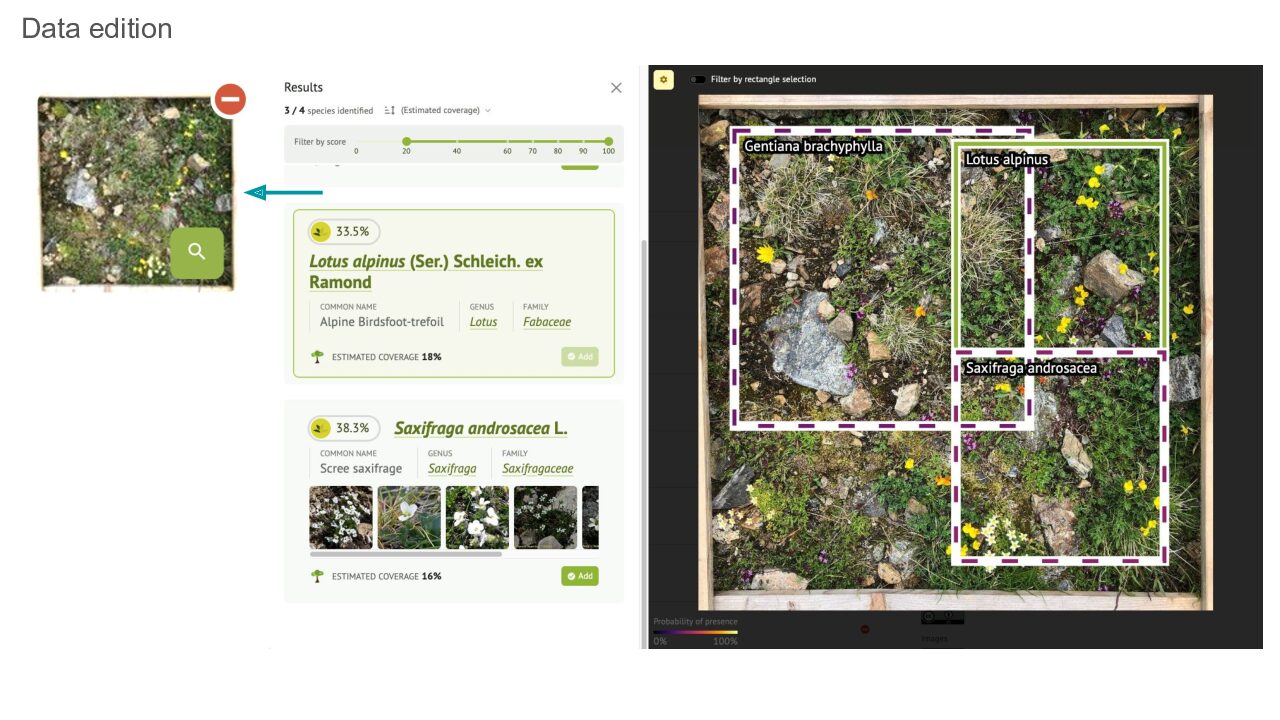
This is still research work but it is progressing well, with the service already opened to our partners several months ago. The service based on this methodology has already been used in various contexts, for instance:
– through the use of data analysis from drones flying over forest canopies, especially in the tropics, to characterise plant biodiversity;
– with professional organisations that carry out regular surveys and inventories of areas where they monitor biodiversity. We are also in discussions with Quebec’s Environment Ministry to assess to what extent Pl@ntNet could assist them in their surveys;
– in recent years, as part of a Biodiversa+ pilot project involving the French Office for Biodiversity, Pl@ntNet has analysed several million images generated by cameras mounted on cars;
The development of species distribution models through Deep Learning (cf. DeepSDM) is another focus area we have been working on over the past decade. We draw on these visual data analysis techniques to predict the ecological niche of species by processing other types of visual content, including satellite data and visual representations of environmental variables.
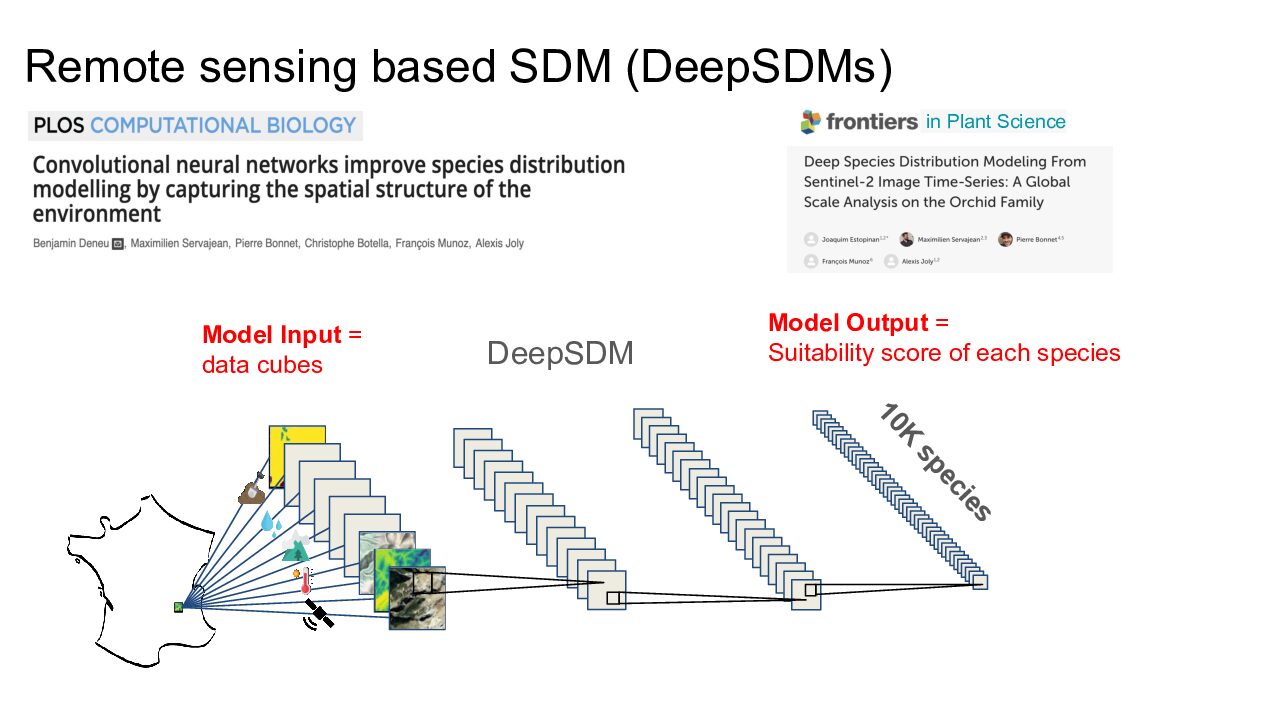
Starting with plant occurrences and environmental variables available at these occurrences, we trained SDM models to predict the presence and absence of species at a given coordinate. This kind of approach is truly innovative. It allows for a great number of species to be included the training process and so to deliver predictions for vast numbers of plants, potentially at very high resolution.
This methodology goes beyond species prediction, since it allows inference of biodiversity indicators like the probability of invasive or threatened species being present.
We were the first to experiment with this type of methodology at continental level to predict distribution maps for several thousand species across Europe, at a resolution of 50 metres per pixel.
This work – carried out as part of the European GUARDEN project that I coordinate, and the MAMBO project in which we are actively involved – is now accessible through the GeoPl@nNet tool.
The cartographic data obtained through this methodology has already been harnessed in various projects and case studies. For instance, in 2025, Harokopio University in Athens used it to analyse the route of the Montpellier-Perpignan high-speed rail line (HSL).
The project team explored the different impact scenarios of this HSL on Narbonnaise Regional Nature Park. It set up workshops to analyse the cartographic data. The team was then able to propose scenarios taking into account nature conservation capacity based on potential changes to the pathway of this rail route.
Cover photo ©Pierre Bonnet