

🇦🇹 Austria: Technology for people, transport and the environment
🇦🇹 Austria: Technology for people, transport and the environment
Lying at the heart of the European Union and bordering eight countries, Austria is a transit country with highly developed rail and road links. Two-thirds of the country is covered by the Alps, which certainly explains why Austrians are so close to nature, but which also means building transport infrastructure (roads and railway lines bridges and tunnels,) is more destructive. The country has become a pioneer in environmental protection. It is keen to become climate-neutral by 2040 and adopted a biodiversity strategy 10 years ago.
Austria actively supports scientific research with one of the highest rates of gross expenditure on R&D in Europe (3.29% GDP in 2023), being organised with clusters in each region. In Styria, the city of Graz is home to a major ecosystem in the field of transport and energy with research centres, innovation hubs, and major corporate firms.
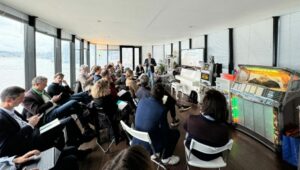
During Futura-Mobility’s field trip to Austria, in November 2025, the delegation set out to discover how the country is counting on technology to serve nature and people, as well as the cutting-edge technologies under development for the transport sector…
Entrepreneurial and start-up ecosystem
TU Wien, “where we dare to reason”, is Austria’s largest technical university. The Innovation Incubation Center (i²c), founded in 2012, is TU Wien’s Centre for Deep Tech Entrepreneurship & Innovation. A pioneer of the ‘entrepreneurial university’ model, TU Wien’s mission statement is ‘technology for people’. “More than just patents and licences, we are dedicated to general entrepreneurial education,” explains Dr Birgit Hofreiter, founding head of i²c and the TUW i²ncubator. Indeed, the Centre prides itself on giving students and scientists a business mindset to better transfer their work into societal benefits.
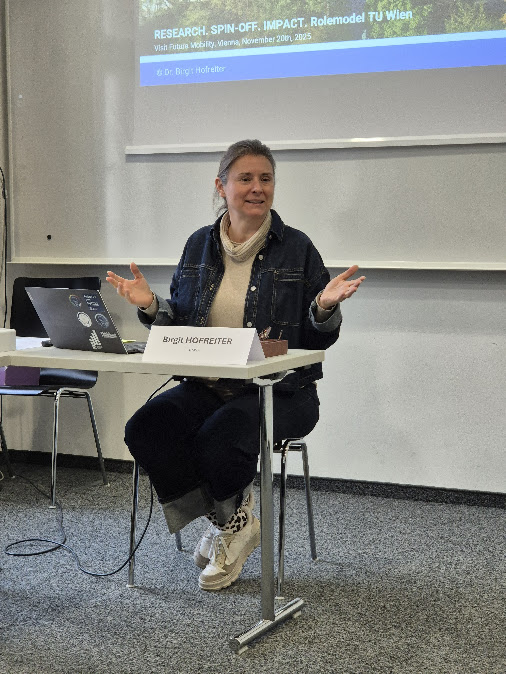
i²c offers a multi-dimensional support programme based on five foundations: inspire, educate, innovate, connect, and collaborate. Since 2016, the Centre has enabled 44 spin-offs through 22 programmes, centred around software, infrastructure, and funding initiatives. In addition to financial support from the State, it has an in-house buffer fund (Blue Sky), and another, dedicated to early-stage start-ups.
TU Wien collaborates with TU Munich and ETH Zurich.
During Futura-Mobility’s visit, six spin-offs from the TUW i²ncubator programme pitched their solutions.
💡 KR Labs provides transparent and trustworthy artificial intelligence (AI) with full source traceability. Every AI response is backed by verifiable evidence. Facts in the final document can be traced back to the source documents. The target market is enterprise AI, notably legal and medical. The tech is developed using open-source software repositories. Longer term, it could provide a means for research to reliably use AI.
💡Sisyphus has developed a scalable process for producing green carbon monoxide using hydrogen. It transforms carbon emissions into a renewable resource for the chemicals, pharmaceuticals, and electronics industries, with a potential future use case being sustainable aviation fuel (SAF).
💡LeoTrek AI (formerly Starbase) offers AI as a Service (AIaaS) in Space for real-time monitoring applications such as detecting wildfires, monitoring shipping, flooding, and tracking traffic, by enabling edge AI treatment at satellite level superior to current non-real-time satellite monitoring (it can also fuse data from multiple satellites).
💡 Light4Clean is developing a self-cleaning paint solution based on nano particles. An early-stage company.
💡 Cool Catalyst offers a simplified means of recycling CO2 generated by heavy industries to methanol. It is based on using a sulphur resistant catalyst. The C02 is sourced from biogenic sources or steel and chemical processes. The resulting green methanol could be used for mobility, e.g. ships, planes, cars, and SAF.
💡 City Layers is a digitised participatory tool for urban design. Its interactive platform is designed to get people involved in planning from the early stages and so lead to better and smoother project delivery. It involves live input of mapping data. Already tested in Austria and Greece. Seven projects already funded.
Investment and the cooperative spirit
Located in the province of Styria, Graz, with a population of about 300,000 inhabitants (2024), is Austria’s second-largest city. Headquartered here, the Austrian mobility tech company AVL specialises in powertrain and vehicle engineering, development platforms, simulation and testing for the automotive industry and other sectors such as rail, marine, and energy.
“We are an engineering service provider, develop and build instrumentation and test systems, and develop software tools for our customers,” says Georg List, vice president, corporate strategy. AVL. Customer segments range from passenger cars, construction, and commercial vehicles to marine, rail and aviation.
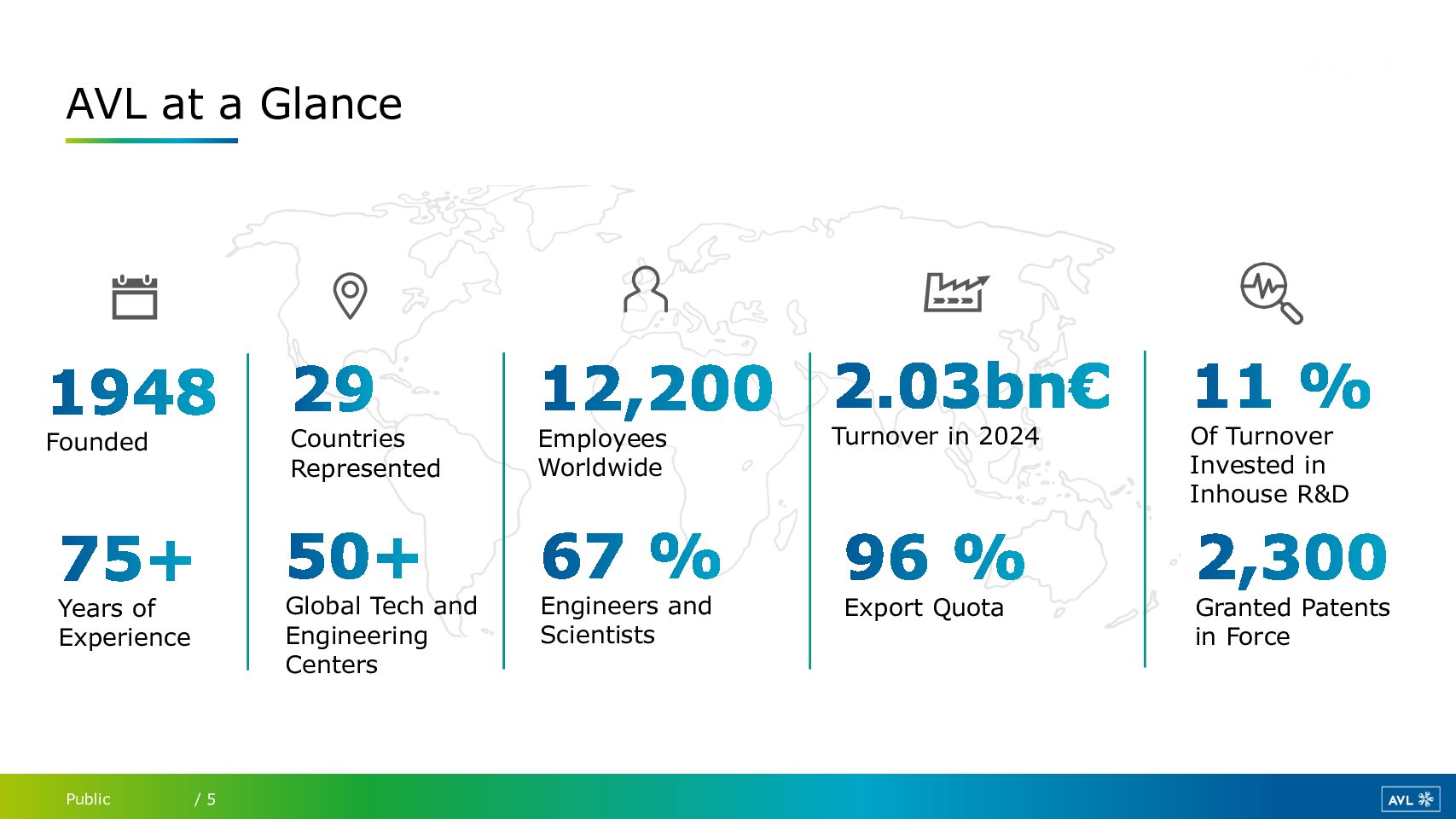
Much of AVL’s work at Graz is centred around two state-of-the-art installations: the Battery Innovation Center for the development, implementation and validation of cutting-edge battery production processes, and the Hydrogen and Fuel Cell Test Center, an advanced test site for fuel cells and electrolysis systems.
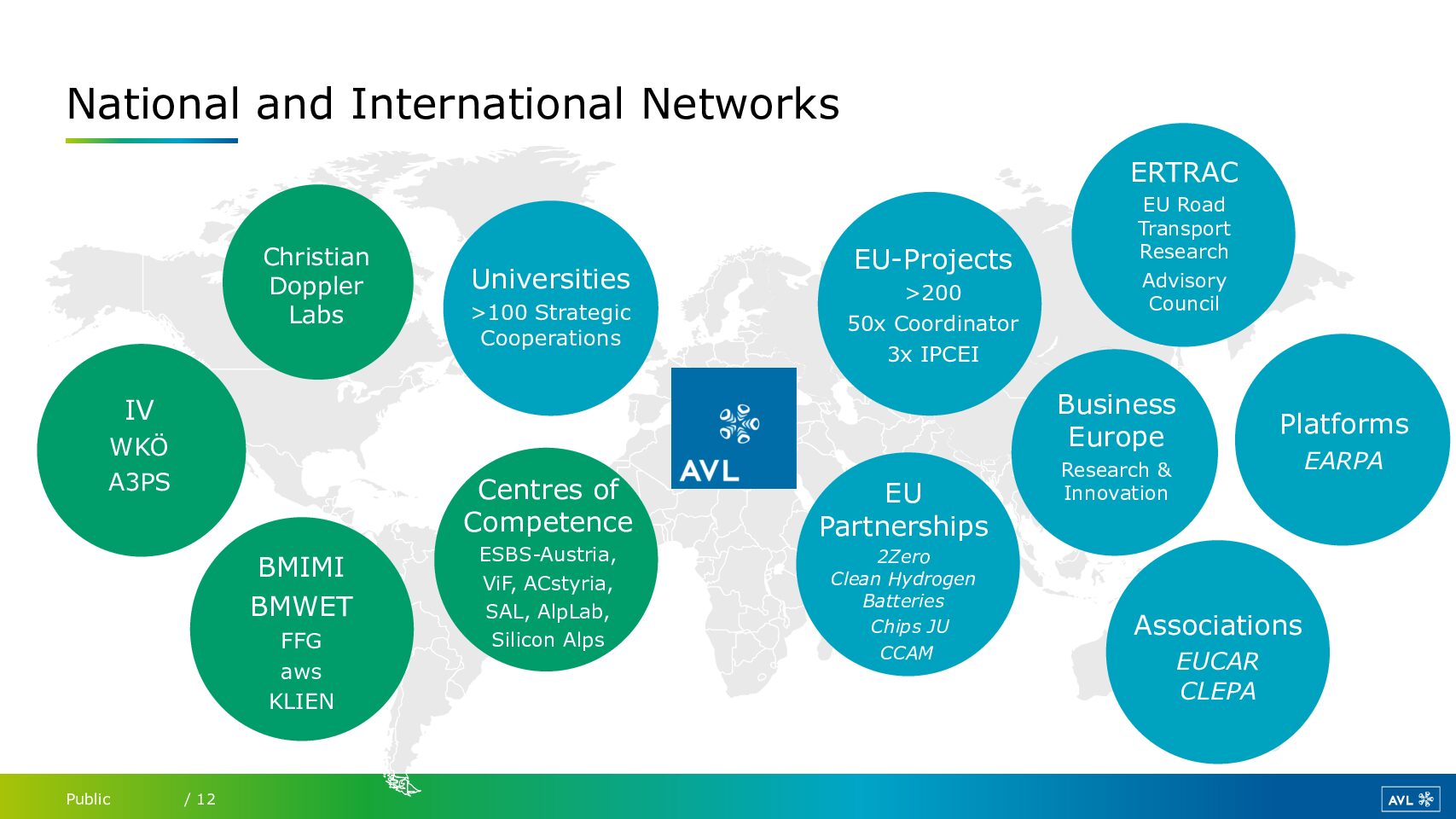
Strategic growth areas for the company today are e-mobility, autonomous driving, and intelligence security (data intelligence, AI, cybersecurity). With these segments in mind, continuous and substantial investment in R&D, alongside cooperation with external partners, are key. “We invest 11% of our turnover in in-house R&D, participate in European projects, and have partnerships with universities and other bodies,” explains Mr List. “We are part of a large global network. In Austria, since we are a small country, communication between politicians and universities is easy. There is a cooperative spirit.”
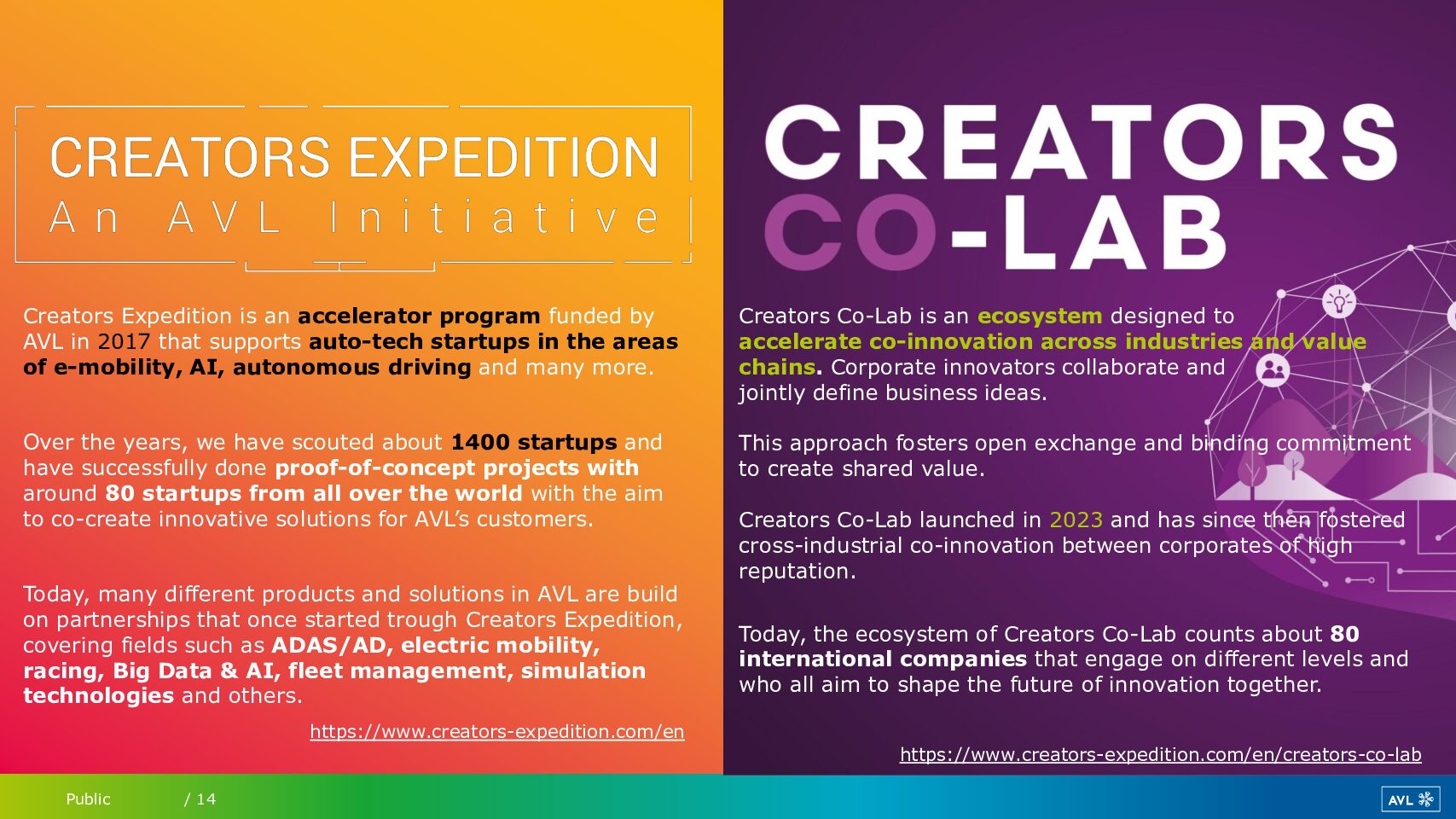
The Creators Expedition is an accelerator programme, funded by AVL since 2017, to support auto-tech start-ups in e-mobility, autonomous driving, AI, and so forth. “Scaling and monetisation of AI is difficult right now,” points out Josef Macherhammer, product & business development, Fuel Cell & Energy. The company is also now applying its methodology of working with start-ups to corporates, through its Creators Co-Lab, which promotes cross-industrial co-innovation.
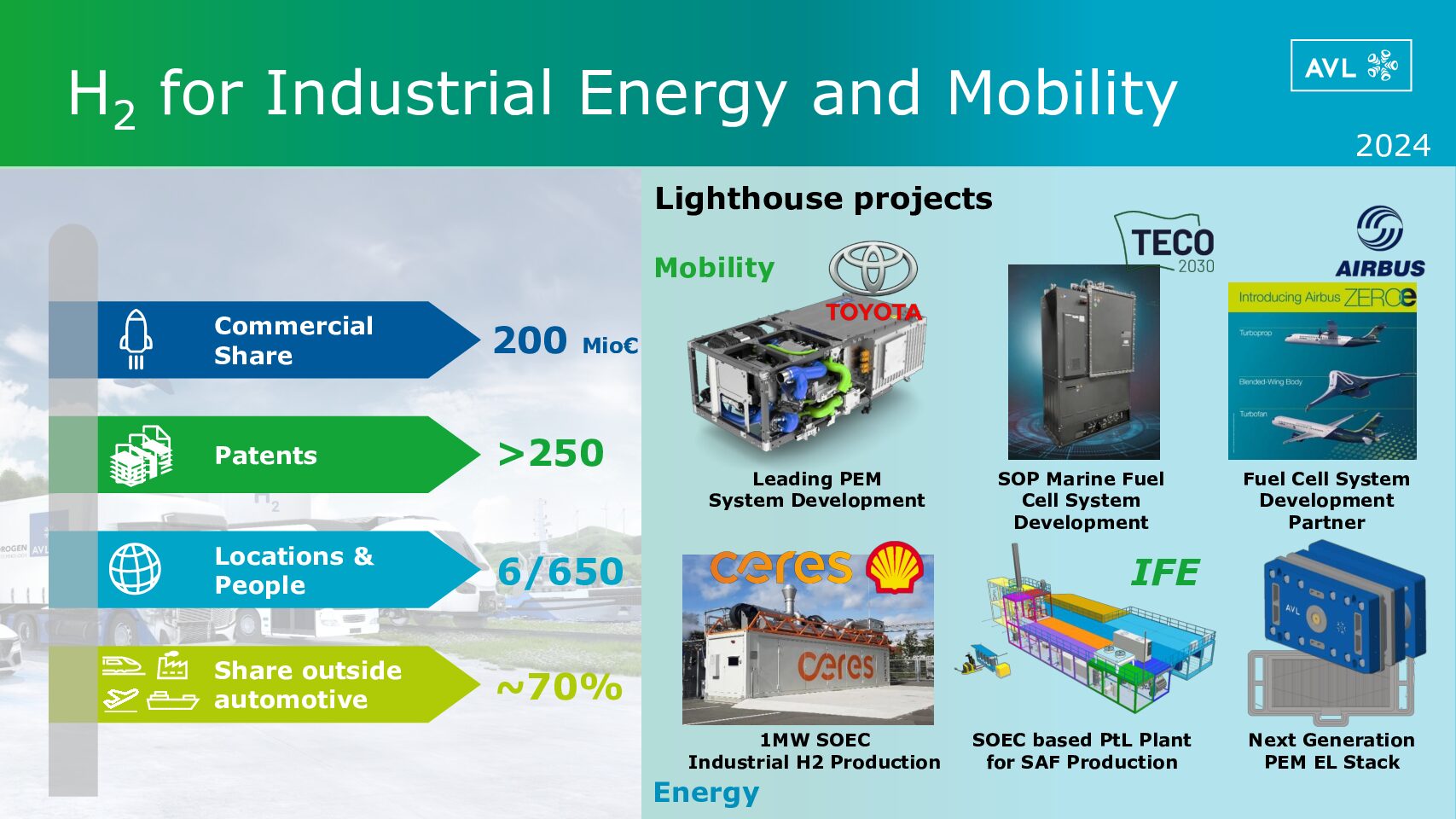
AVL’s decarbonisation strategy is focused on three main vectors: electricity, hydrogen, and e-fuels. Its Energy division, which includes testing and simulation activities, accounts for around 10% of its revenue. It has a team of 650 engineers across six sites, 70% of whom work outside the automotive sector but within the mobility sector.
The company firmly believes in hydrogen as a future energy vector. Indeed, it already owns over 250 patents related to hydrogen technology. But in Austria it has yet to take off. “Certain industries like steel, chemicals, and fertilizers need hydrogen to decarbonise, but right now it is too expensive and the infrastructure is lacking, so there is no incentive,” says Mr Macherhammer. “Mobility is prepared to pay two to three times more for hydrogen than the steel industry, so it is probable mobility will be a catalyst for all hydrogen applications.”
Lighthouse H2 projects ongoing include fuel cell development with Airbus, with the aim of making them safe enough for aviation, and collaboration with the Norwegian tech company TECO 2030 for a marine fuel cell system. “We help our customers develop their ideas and bring them to market,” sums up Mr Macherhammer.
In parallel, innovations in materials and components include work on reducing tyre emissions by decreasing brake wear and developing battery packs. “In our Battery Innovation Centre, for instance, we are exploring using minimum glue with an eye to disassembly and reuse of materials at end of life,” explains Harald Mayrhofer, department manager, AVL.
Today, and looking to the future, AVL is eyeing India, China, and Seoul as “extremely interesting markets,” sums up Mr Macherhammer, adding, “Tokyo is small but important too.”
The driving force of regional clusters
Based in Graz and its surroundings, the mobility cluster ACstyria is a network of over 300 companies from the automotive, aerospace, and rail sectors. Representing 70,000+ employees and €17 billion in annual turnover, its members are predominantly SMEs. Activities are centred around driving innovation in digitalisation, AI, software-defined vehicles, automated driving, and decarbonisation. This the cluster does by initiating collaborative projects and providing networking opportunities, training and other support for its Styrian partner companies.
“One of our strengths is the ability to take rapid action to help meet the specific needs of our partner companies, with the full support of our shareholders,” says Bernhard Mittelbach, head of rail systems and aerospace, ACstyria. The cluster is a member of the European Railway Clusters Initiative (ERCI).
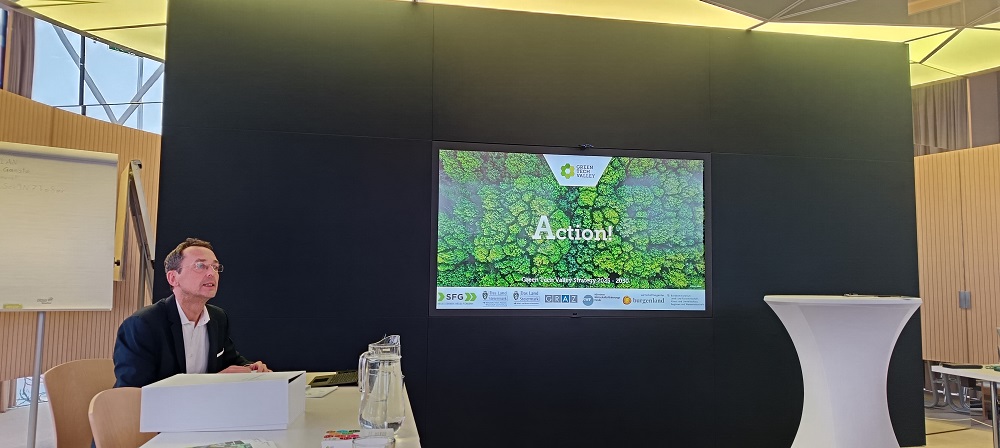
Green Tech Valley, another regional cluster, fosters industrial innovation for 100% climate and circular solutions. it supports Styrian tech companies by providing networking opportunities, producing online support tools, and promoting flagship projects.
“We support 30 industrial innovation projects annually, ranging from last-mile solutions and ramping up green hydrogen to AI-based energy solutions and closed loops, which includes batteries,” explains Bernhard Puttinger, CEO, Green Tech Valley.
Among these projects backed by the cluster, the Wood Vision Lab is dedicated to a pioneering process for unrolling wood for use in new, high-tech, lightweight components. Developing organic batteries from lignin for grid storage is one potential use case.
Green Tech valley is a member of the International CleanTech Network.
Applied research to the fore
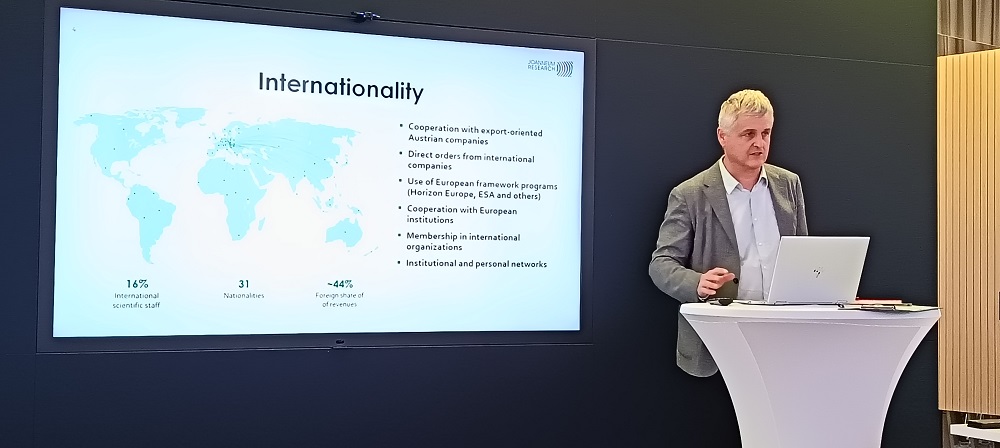
Another prominent actor in this regional ecosystem is JOANNEUM RESEARCH, owned by the federal provinces of Styria, Carinthia, and Burgenland. The organisation works to provide applied research development for local industry as well as playing an active role internationally (European projects like Horizon, the European space agency, institutions, membership of organisations etc).
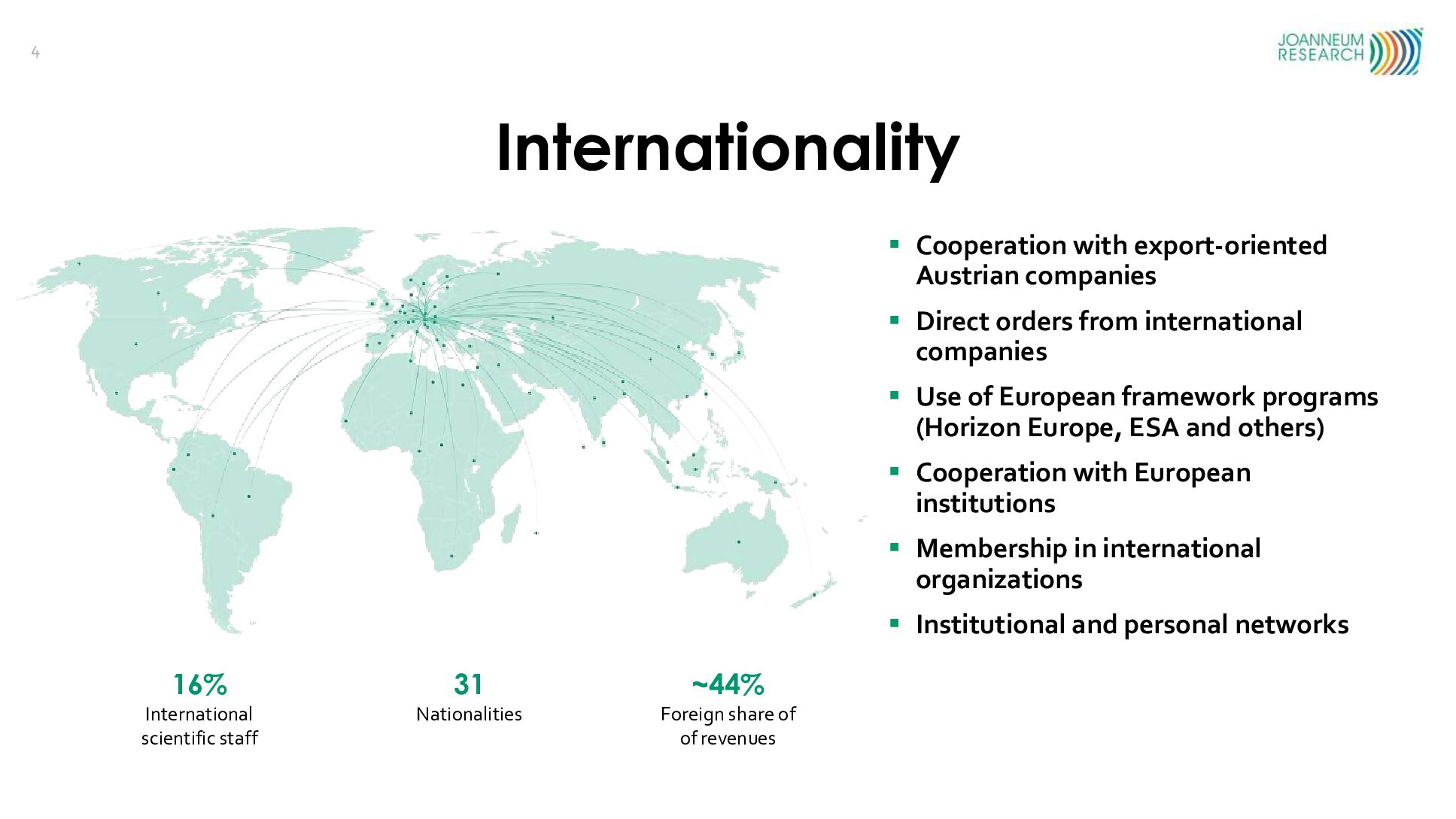
As a not-for-profit organisation, JOANNEUM RESEARCH employs around 500 people across seven research institutes located throughout Austria. Together they develop solutions in the business fields of environment and sustainability, health & care, production and manufacturing, mobility, security and defence, space and politics and society.
“Fifty percent of our research is publicly funded, 50% is contracted,” says Rüdiger Tinauer, business development and innovation, JOANNEUM RESEARCH. In the field of mobility, the core focus areas for applied research are transport and infrastructure; technologies for transport modes; models, simulation, and evaluation.
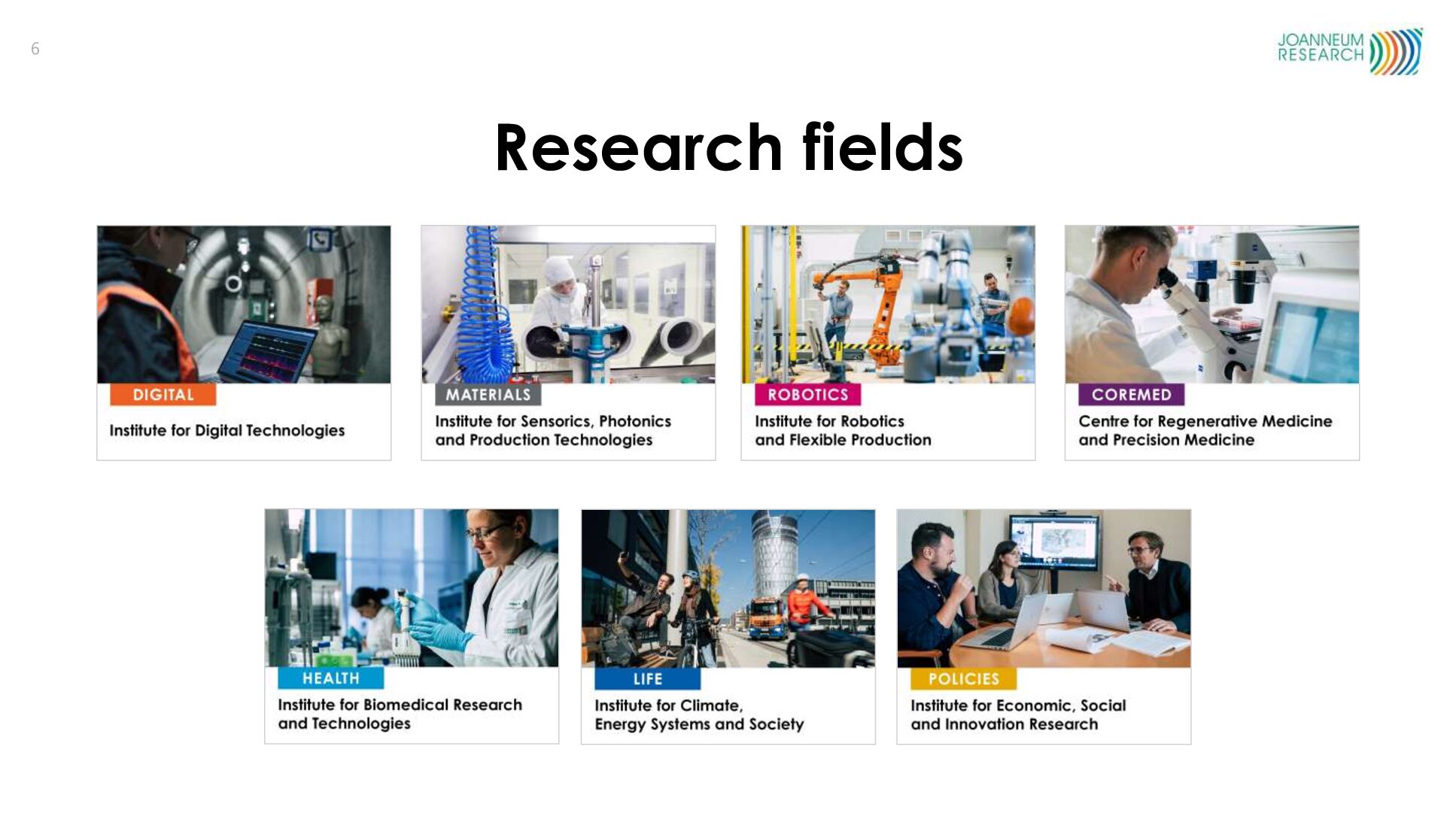
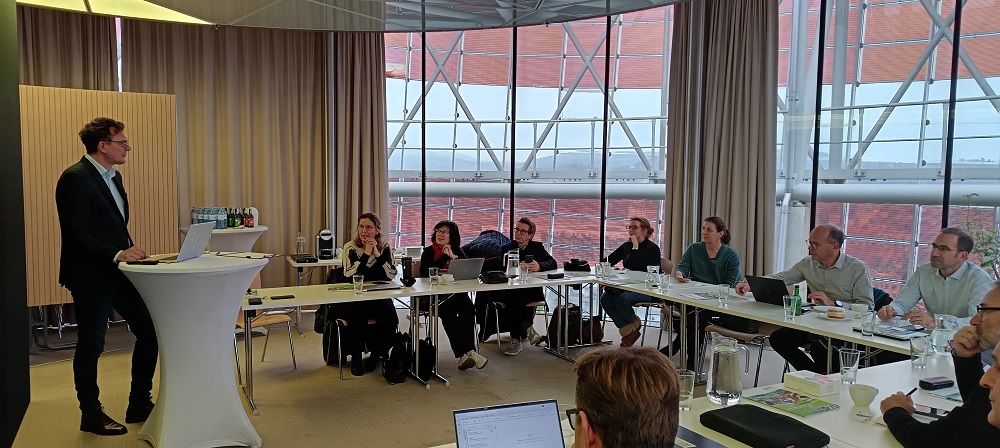
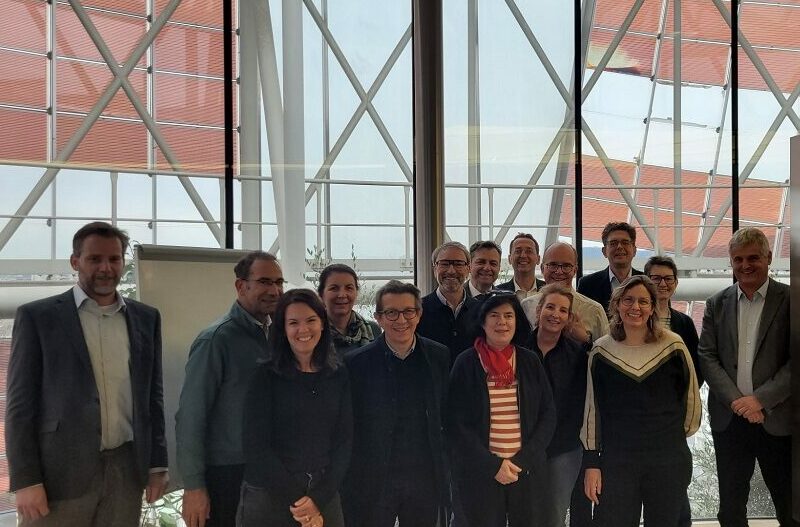
During Futura-Mobility’s visit, the delegation met with three of the Institutes at the eye-catching Science Tower in Graz.
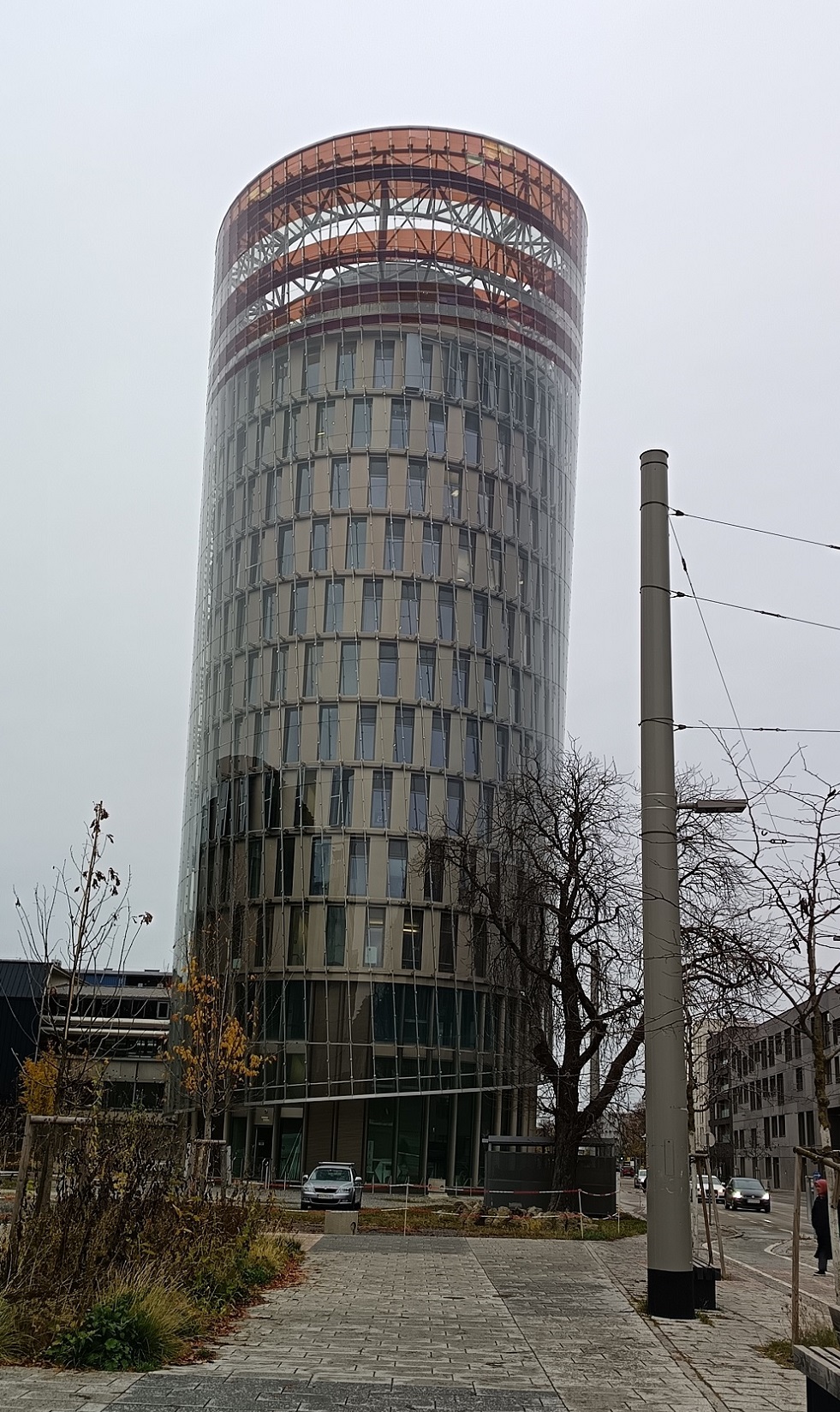
JOANNEUM’s Institute for Digital Technologies develops innovative solutions with digital technologies that can be used in practical applications under harsh conditions. Specifically in the field of mobility, the Institute centres its work around four main topics: Safety Systems, Traffic Monitoring, Spatial Digital Twins, and Infrastructure Assessment.
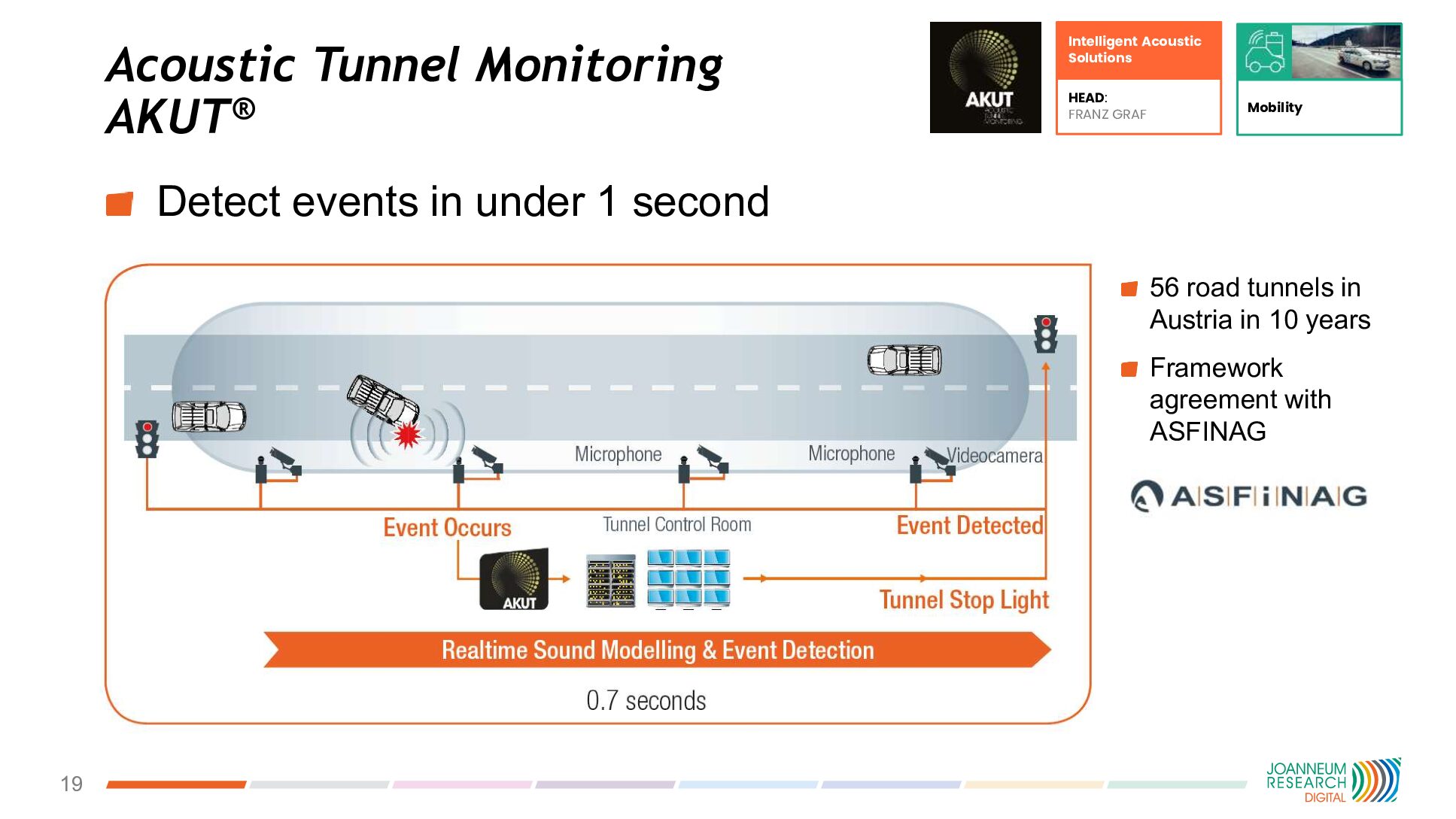
One flagship project is AKUT® for acoustic tunnel monitoring, which combines intelligent microphones and artificial intelligence (AI) based on installing arrays of on arrays of intelligent microphones. “Acoustic systems can detect events that may lead to a fire significantly earlier than video cameras or conventional fire detectors,” says Harald Mayer, deputy director, Institute for Digital Technologies. “Incidents can be signalled in under a second!” Following a framework contract with Austria’s motor- and expressway operator ASFiNAG (see How is the transport sector protecting biodiversity in Austria?), the system is being installed in all high-level road tunnels across Austria, 56 in total.
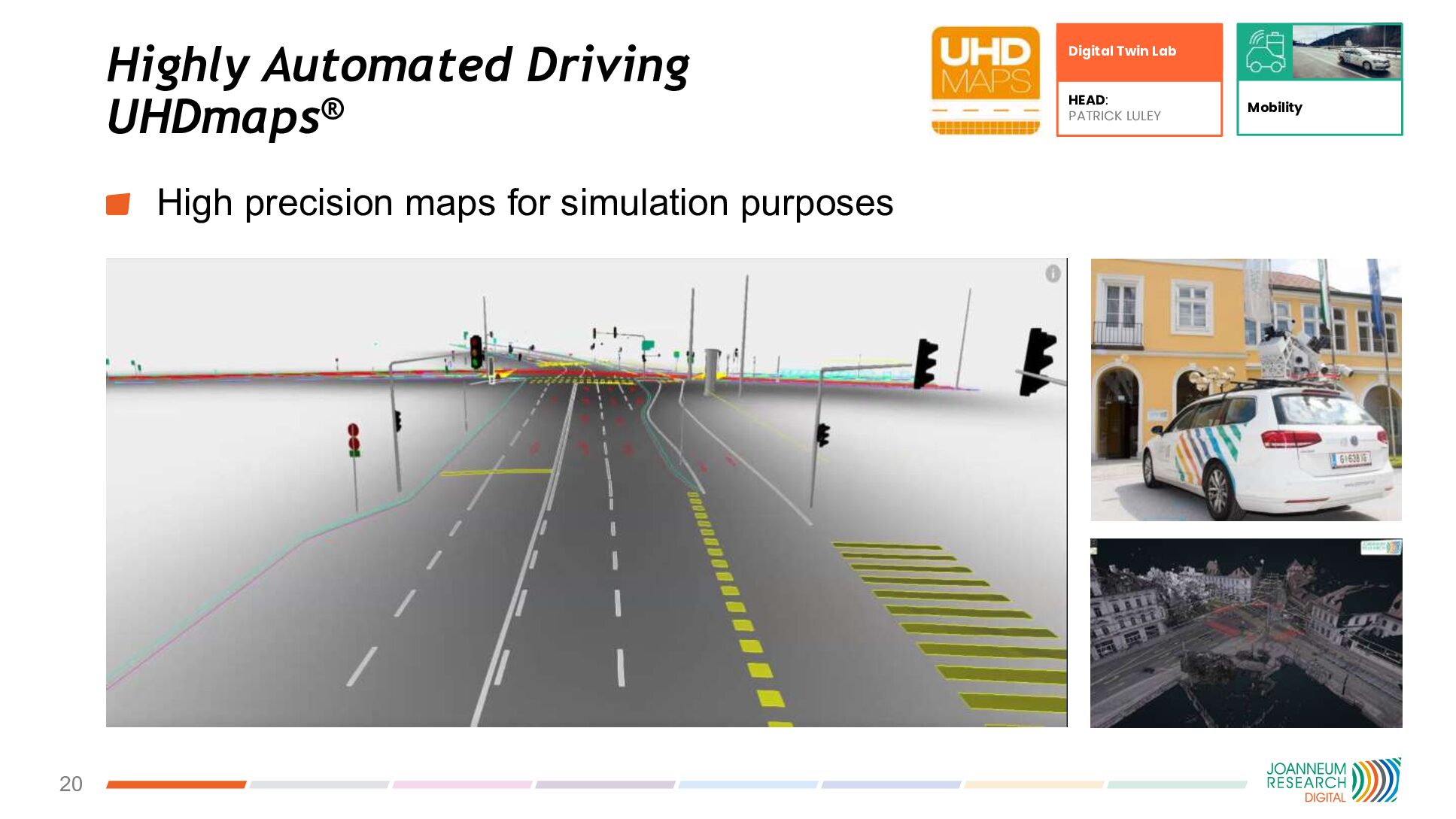
“Mobility and infrastructure are core applications at our Digital Twin Lab,” points out Mr Mayer. Indeed, this Lab has carried out research using digital twins to support automated driving. “You need simulations as a basis for automated driving,” explains Mr Mayer. “Otherwise, you would have to drive millions of kms to prove your automation functions. We worked on producing the ultra-high definitions maps needed, as part of Digibus®, the Austrian flagship project (2018–2021) for automated driving in public transport.”
Research is also ongoing, using digital twins, to simulate climate change induced heavy rain on highways (at lane level) for early warnings. “We are aiming to have an extremely precise 3D model to enable early warnings,” explains Mr Mayer.
For Austria’s rail infrastructure manager ÖBB Infrastruktor AG, and ASFiNAG (roads), the Digital Twin Lab ran a two-year (2020-2023) project FloraMon for monitoring vegetation – which can damage structures on traffic routes and endanger safety – and optimising the use of herbicides. The resulting prototype system, developed using high-speed image capture, AI-based plant detection and GIS processing, is capable of recording vegetation density as well as relevant and particularly problematic plant species.
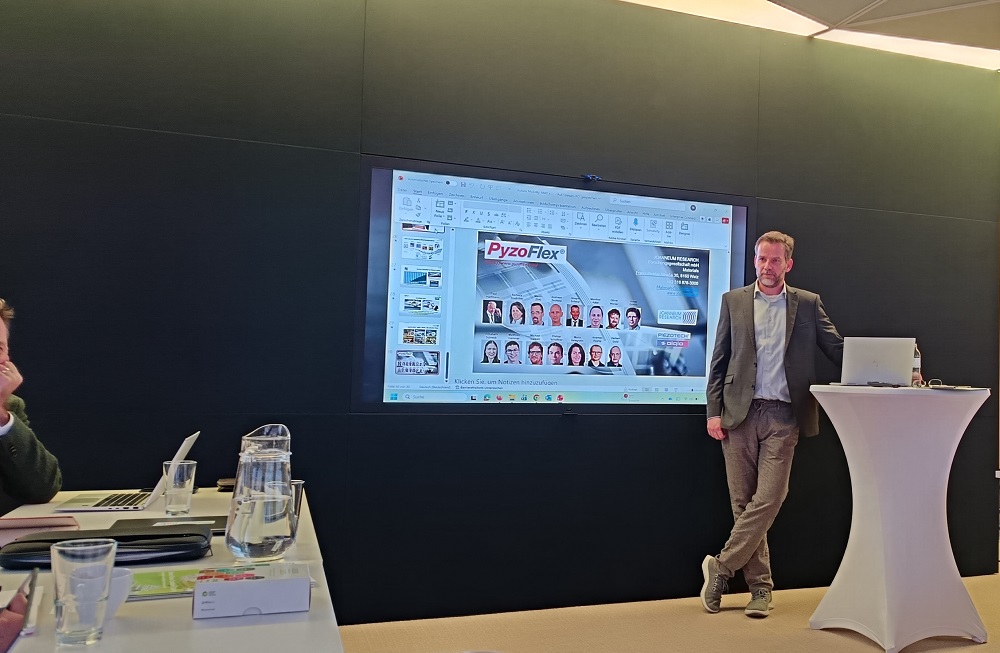
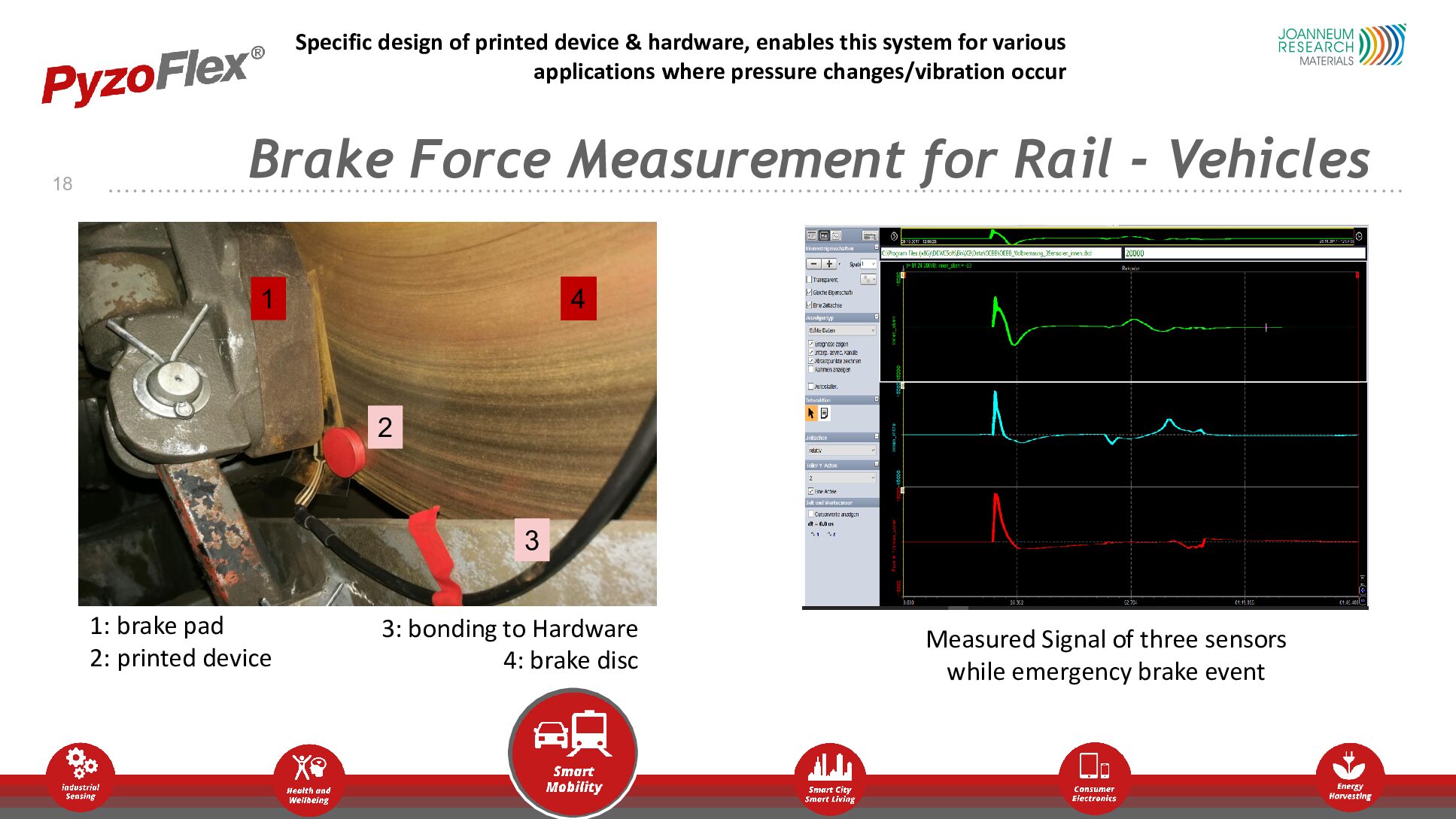
In the Materials research field, the Institute for Sensor Technology, Photonics and Manufacturing Technologies also has mobility on its radar. “Most recently, direct-to-shape digital printing has opened up many use cases for sensors,” explains Gregor Scheipl, marketing & business development, JOANNEUM RESEARCH.
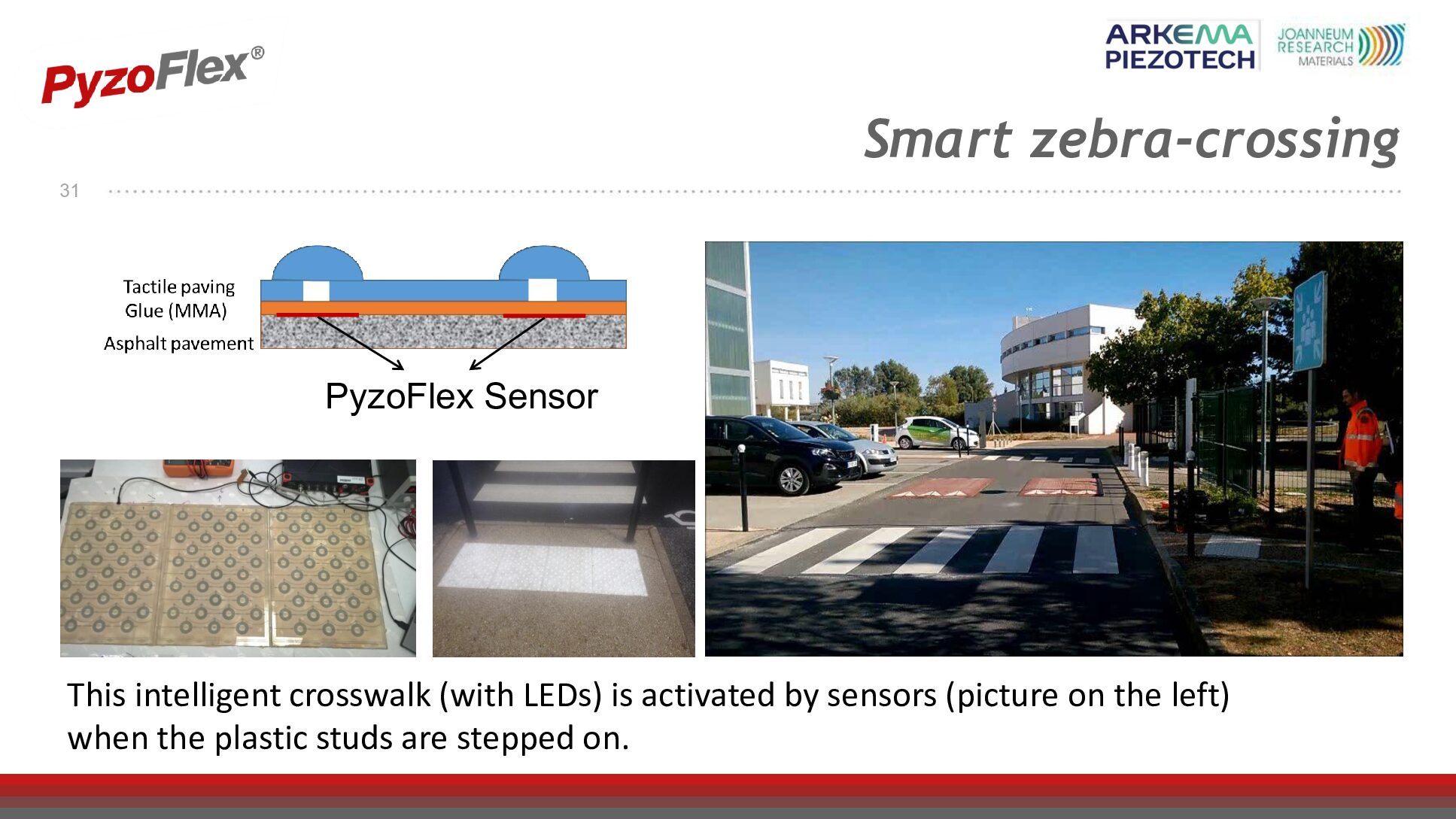
These use cases include brake force measurement of trains, which avoids the costly and time-consuming task of dismantling heavy parts, and intelligent zebra crossings (PyzoFlex® sensors) that light up when pedestrians step on plastic studs.
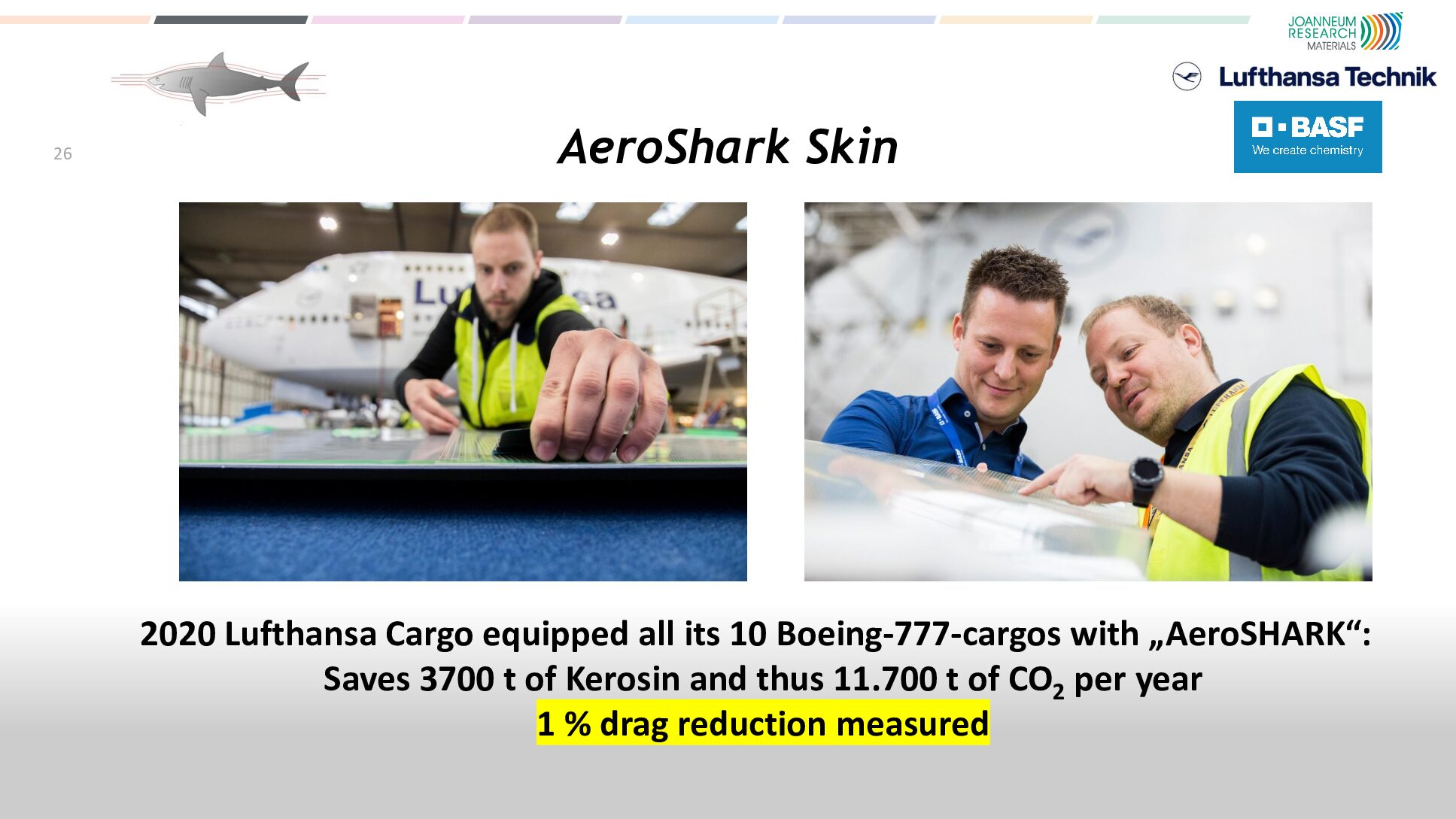
The Materials research team was involved in the early development stages of Aeroshark Skin (2020). This durable bionic film for aircraft mimics the skin of sharks and enables a 1% reduction in drag, thus saving fuel and reducing emissions. (see Futura-Mobility on biomimetics, in French: #7 Transportez-moi ! January 2021: exploring the world of biomimicry and #2 Transportez-Moi ! February 2022: Biomimicry and transport).
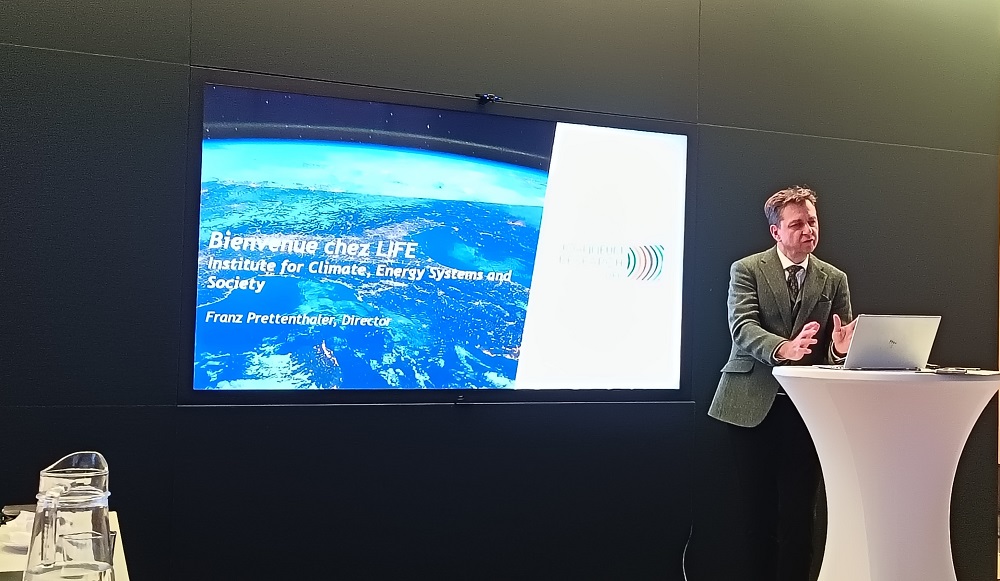
JOANNEUM’s Institute for Climate, Energy Systems and Society focuses on core questions related to climate change and risks, and the transition towards a climate-neutral and climate-resilient society, and, importantly, putting its findings directly into practice. “Our Institute is more systems than technology orientated,” explains founding director Franz Prettenthaler. “We work on understanding, and trying to explain in simple terms, the entire systems of climate, energy and society,”
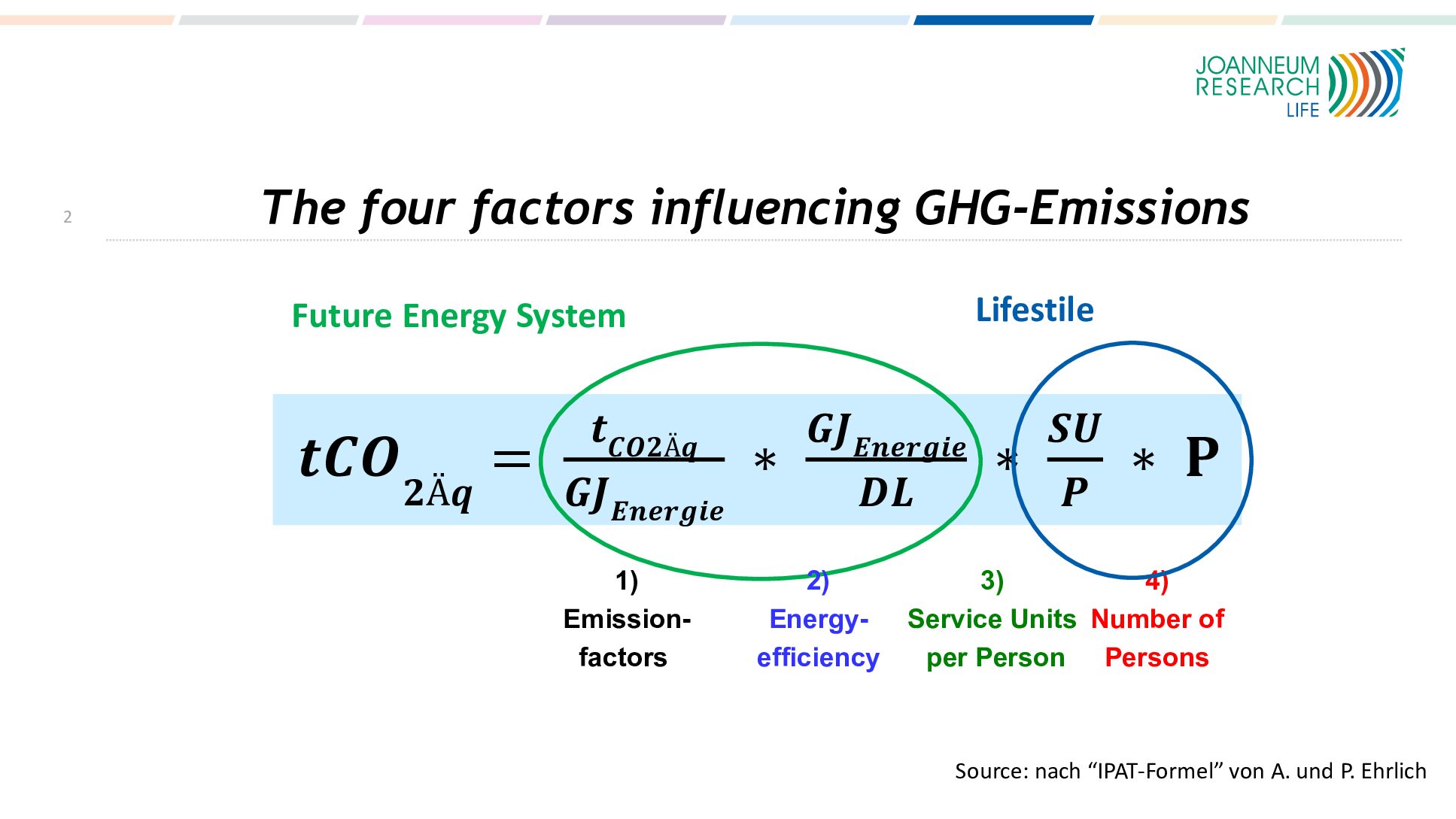
With regards climate change, there are four factors influencing GHG emissions: ‘emissions per energy unit’ x ‘energy unit per service unit’ x ‘service units per person’ x ‘the number of people’.” These four factors explain the impact of the entire human society on the climate. “What is fundamental at LIFE is that we are interested in understanding both the technical [emissions factors and energy efficiency] and the human parts of the equation, i.e., how many service units per person are being consumed,” explains Mr Prettenthaler. “Multiply this by the number of people and you will obtain a true climate efficiency score.”
In order to explain human behaviour, based on original work by ETH Zurich, LIFE has developed a digital twin model of the city of Klagenfurt in Carinthia (Austria’s southernmost province), but also the entire province of Carinthia. It shows all the 670,000 inhabitants as individual mobility agents. “So it is really a live mobility but also activity model,” details Mr Prettenthaler. “We use a lot of statistical modelling and measuring to see how many people are driving at certain points. For every household, we know where they work, where they go to school, where they have children in kindergarten – but of course as a statistical model it complies with data protection laws.”
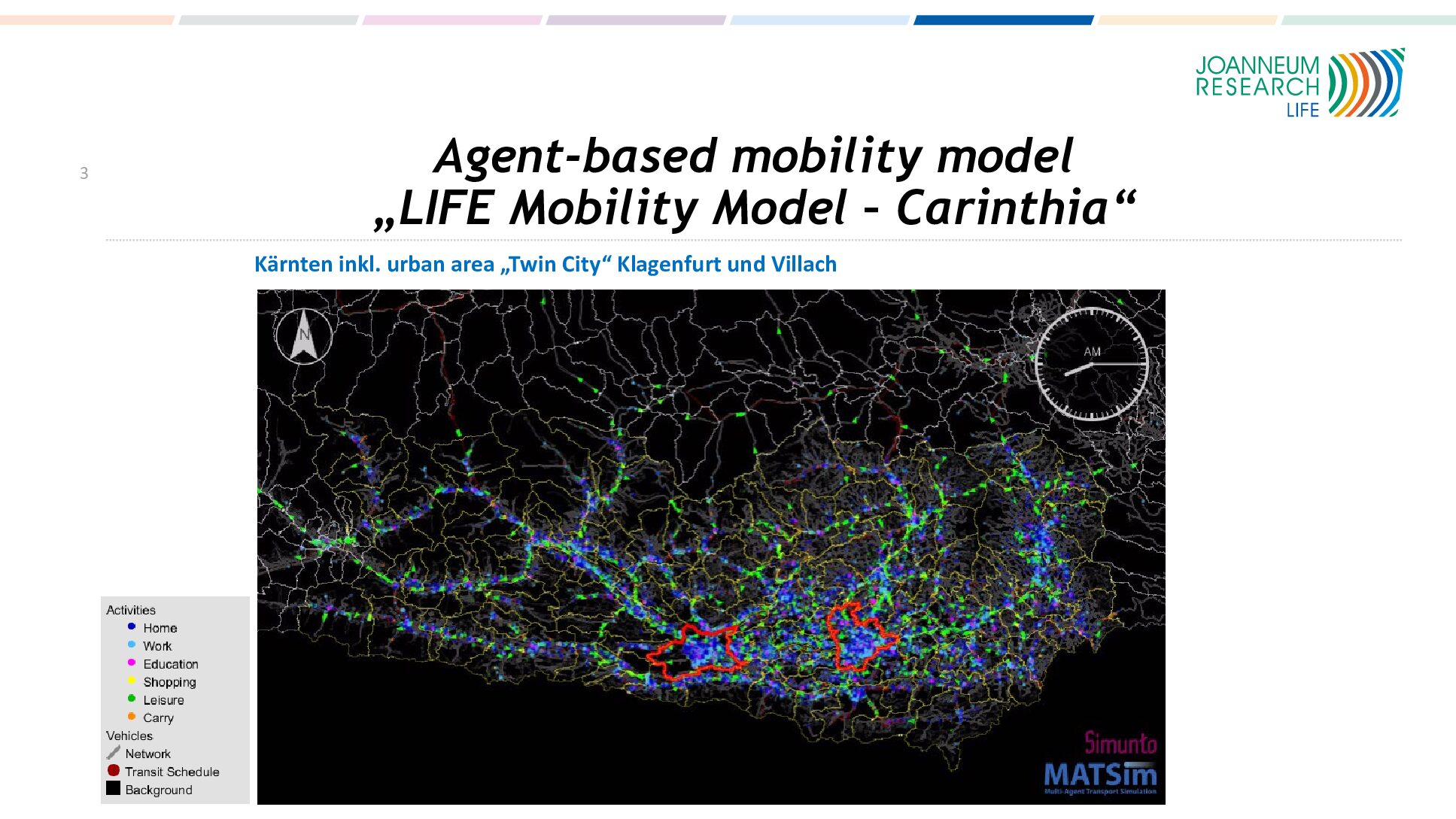
This model, which includes a great many inputs, the public transport system and all the bus schedules amongst others, is designed for scenario analysis. For instance, if a bridge is closed, how does the entire mobility system react? Calculations can be made at every and any point on the map to find out where traffic is increasing, where it is decreasing. It is also a useful tool for planning, e.g. where to install electric charging stations or routing for autonomous vehicles/taxis (they need to know central planning or knowledge). It is also possible to introduce a scenario to obtain CO2 emissions.
The LIFE Institute has also worked on a project with insurance companies to predict car accidents. By inputting their damage data into the model, it was possible to precisely predict damage data, based on the mileage of individuals and also the number of vehicles passing a certain point.
“On founding this institute 10 years ago, I realised we were very good at climate impact calculations for understanding the climate system and how it translates into the natural and economic systems,” concludes Mr Prettenthaler. “At the time, through life cycle analysis, we were already extremely advanced in understanding how the technological system is impacting the ecological and climate systems. But mobility and traffic from a systemic perspective were missing. So I am glad we included them, since they are keystones to our understanding of systems.”
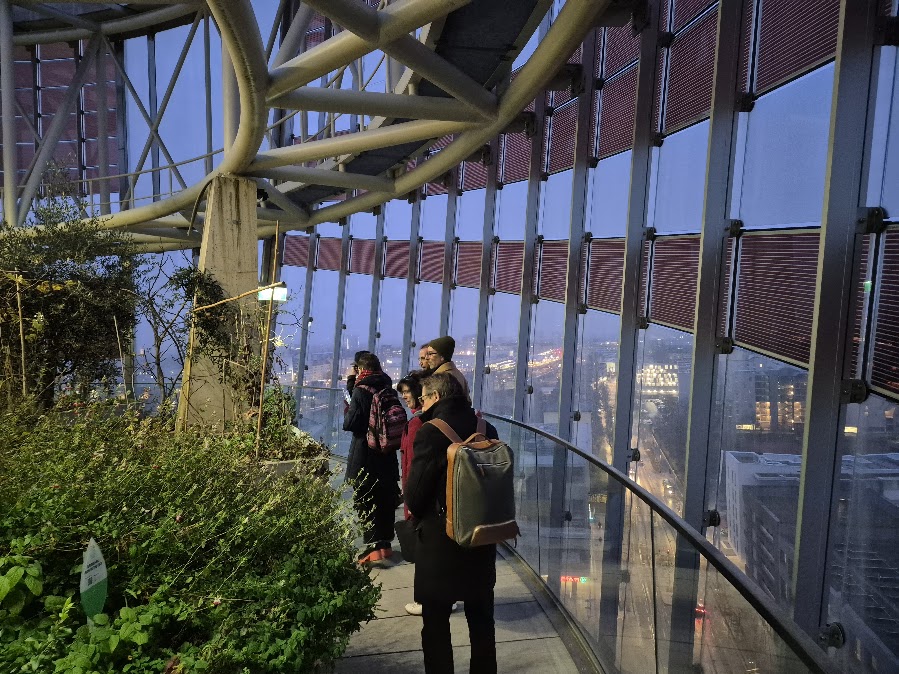
Futura-Mobility ended its learning expedition on a veritable high! Mr Prettenthaler kindly took the delegation on a guided tour of the rooftop farming garden, with its abundant fruit, vegetables and flowers, encircling the Science Tower. Designed by the LIFE Institute to combine four functions, produce food, cool the temperature of the city, provide electricity, and counteract surface sealing at ground level, in 2020 the installation received the Energy Globe Styria Award, research category.