

📌 Implementing responsible AI in companies
📌 Implementing responsible AI in companies
On August 28, the think tank Futura-Mobility organised a workshop on implementing responsible artificial intelligence (AI) in mobility companies, together with Impact AI, a diverse ecosystem of stakeholders working, thinking, and acting together to drive mass adoption of responsible AI. Focusing on real-life use cases in the mobility sector, some thirty members of the think tank and Impact AI discovered the ‘Wheel of Consequences’, an inspirational framework developed by Impact AI.
The session was organised by Joëlle Touré, Executive Director of Futura-Mobility, and led by Roxana Rugina, Executive Director of Impact AI.
Multiple challenges and taking a step back
The workshop was an opportunity for participants to discuss the multiple challenges of AI — whether technological, organisational, cultural, societal, or human. Everyone present greatly appreciated taking the time to step back and reflect.
Indeed, two of the three working groups challenged the initial problem posed by their chosen use case : rejecting an approach driven solely by technology, they instead questioned the organisation of passenger and goods flow in society.
“My belief about responsible AI is that we must follow the thread all the way through to see the systemic impacts. It’s a bit like a tapestry,” explained Ms Rugina; then, “sometimes, at the end of the thread, the best solution isn’t technology based. It’s about rearranging a space. Rethinking an organisation. Changing a rule. Responsible AI doesn’t just mean regulating technology. It’s first and foremost about having the courage to question the issue.”

From healthcare and education to industry and mobility, AI is now permeating every sphere of society at a staggering pace. The technology promises a great many benefits: significant time savings, in-depth analyses made possible by the ability to process vast amounts of data from various sources, and even innovation in unexpected directions.
However, awareness is also growing of the inequalities it creates — whether in terms of access, understanding, or training — as well as the cultural biases inherent in AI systems and their resulting propagation. There is mounting concern, too, over the environmental impacts of the technology in terms of energy and water consumption, as well as other materials (land grab, critical minerals).
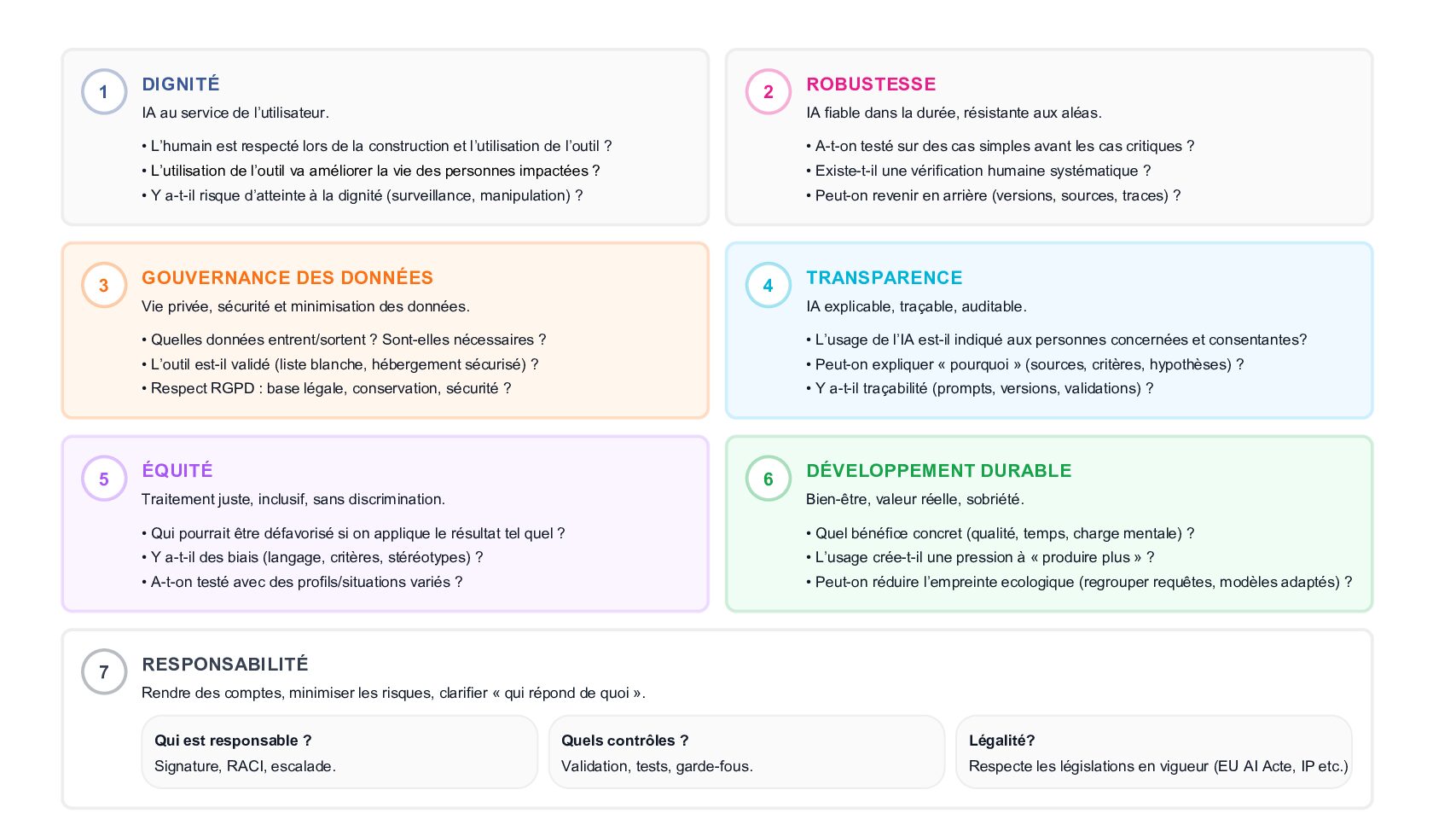
So AI must be used responsibly — even in the ways it is designed and implemented, and in its use cases. The ethical, transparent, and secure use of AI must benefit entire workforces, not just a privileged few. While it is important to regulate this technology and take the best decisions for the common good, the question still remains: how can we do this? “The impacts on work and privacy are the two main concerns for employers in France today,” noted Ms Rugina, referring to the 2026 edition of the Observatory of Responsible AI in Business, which details the use cases, expectations, and tensions accompanying the widespread adoption of AI in the workplace. “To safeguard dignity — that is, AI that serves its users — we must always keep people at the centre of AI systems and decision-making,” she added.
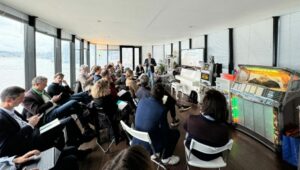
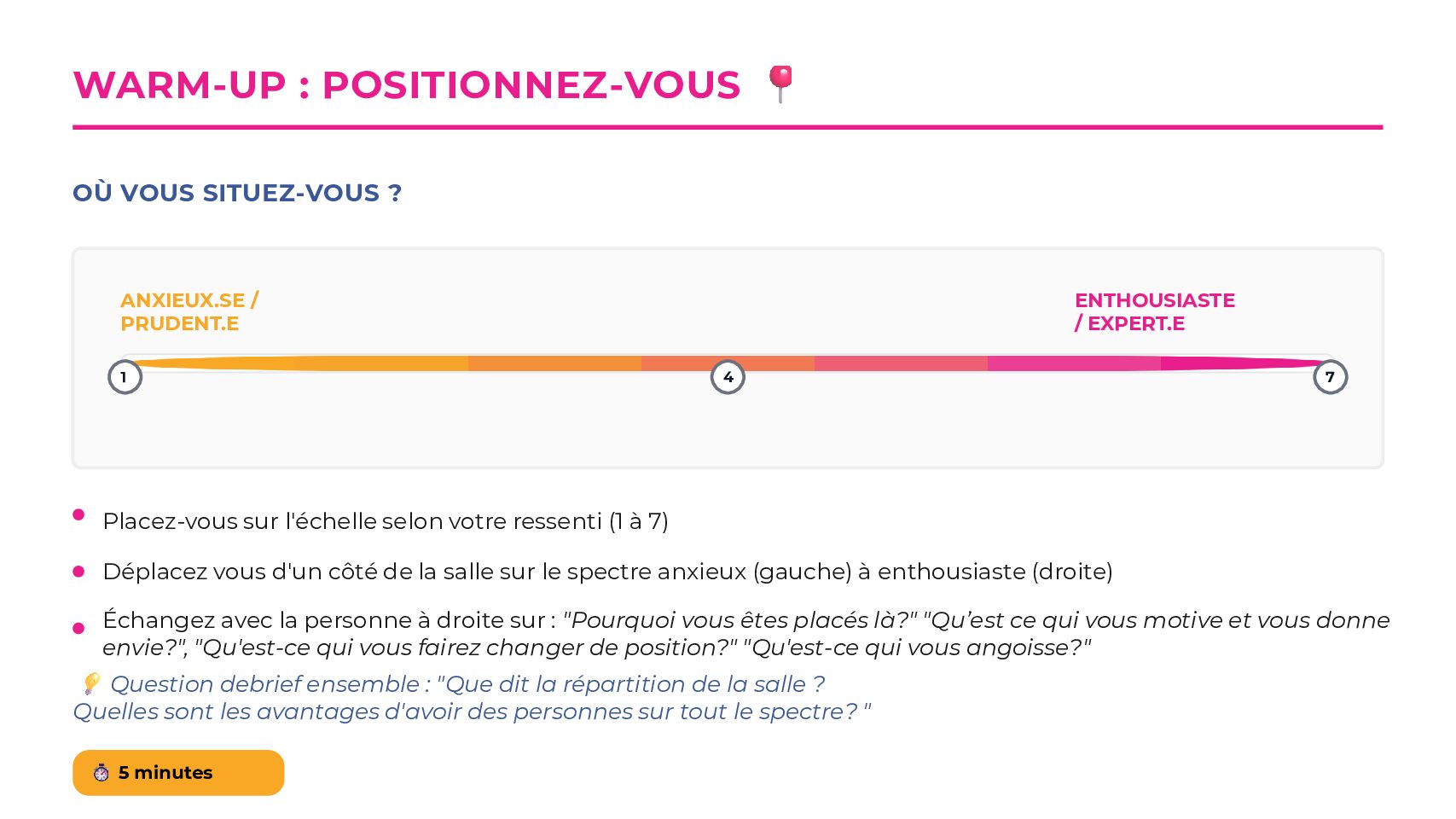
In this context, the workshop began with a warm-up and discussion exercise: standing up, the participants positioned themselves physically on an imaginary spectrum – ranging from caution to enthusiasm about AI – depending on their personal feelings about the technology. They then discussed with those standing next to them the reasons for their chosen position.
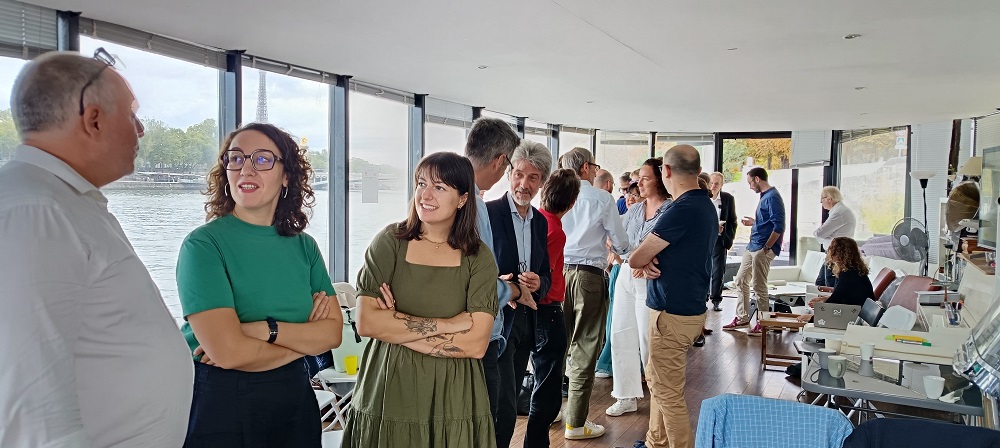

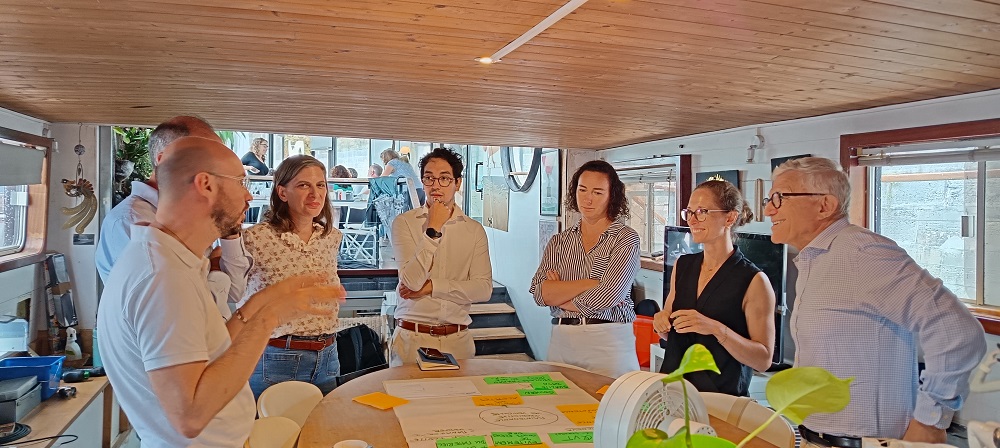
The session then split up into three groups for the brainstorming workshop, using the ‘Wheel of Consequences’. Each group worked on a specific mobility use case, namely pedestrian safety, autonomous vehicles, and predictive maintenance. Participants mapped out the people affected by the use case, as well as the direct and indirect impacts — both positive and negative — generated by AI. This exercise involved using three concentric circles, with considerations taken at individual, organisational, and societal levels.
- Safeguarding pedestrian flow
The group explored ways to ensure pedestrian safety by detecting dangerous behaviour among other passengers using personal mobility devices. They focused on the typical scenario of detecting scooters in a pedestrian underpass in a train station.
The direct individual benefits identified were as follows: fewer accidents, improved perception of pedestrian safety, and better prioritising of tasks for staff in charge of station security. Such a system should also serve to deter unsafe behaviour. More broadly, it should make the station a more attractive place and, consequently, boost the appeal of travelling by train.
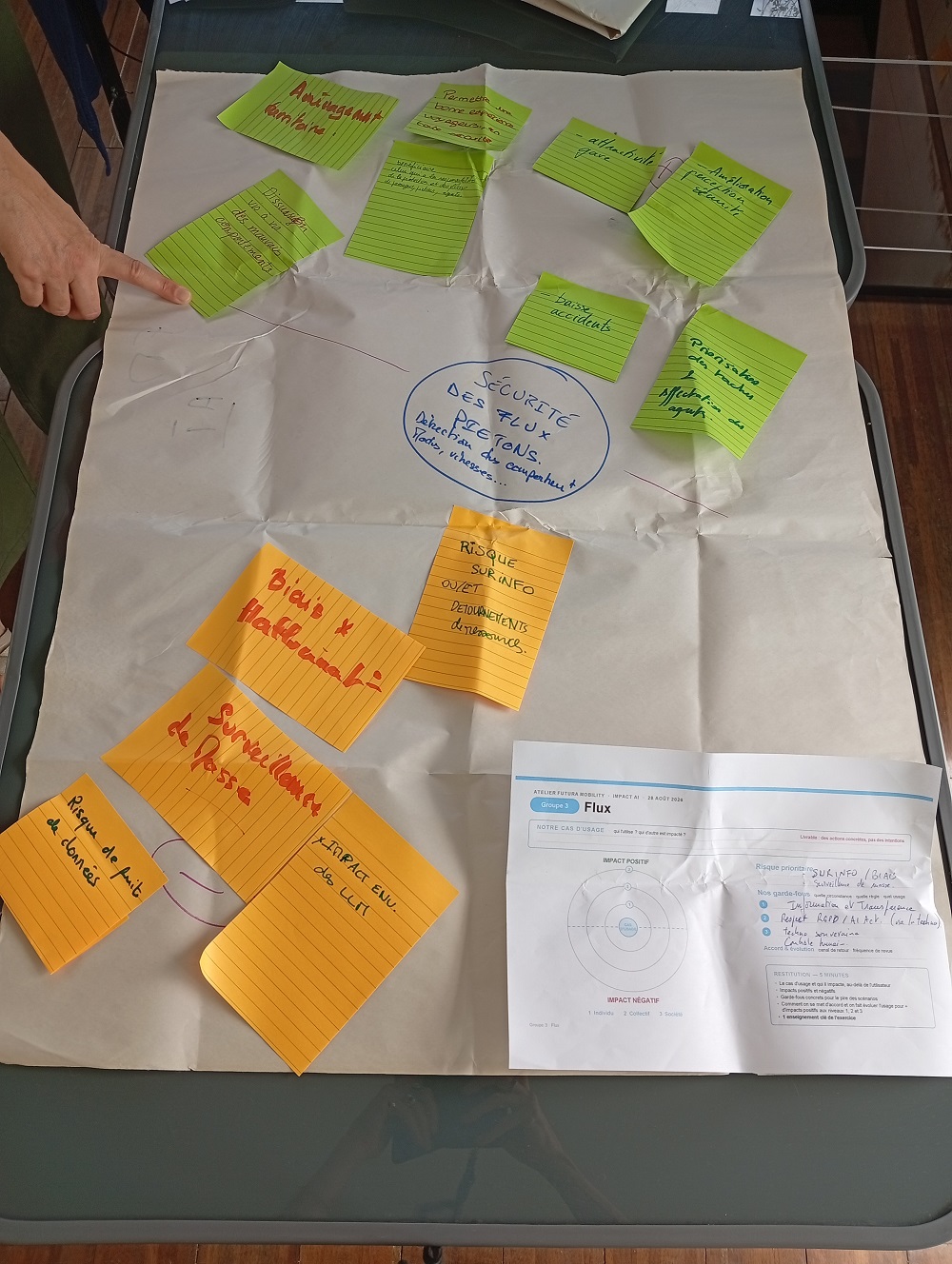
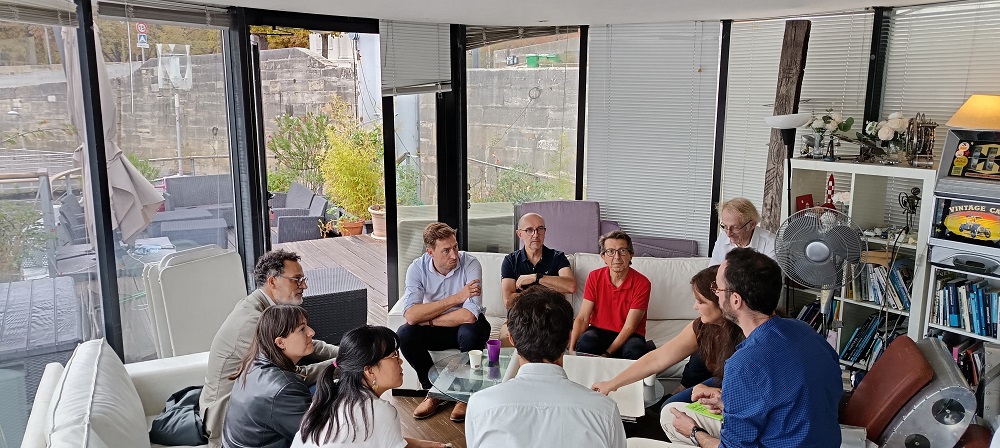
On the other hand, there is a risk of information overload for station staff since “introducing this system would add another screen to the station management dashboard,” explained Jean-Jacques Thomas, Director of Data and AI at SNCF TER, speaking on behalf of this working group. There are also risks that AI systems might generate false alarms by misinterpreting data or show bias, or even produce delusional outputs. Obviously, this also raises the issue of mass surveillance in public places and the need to guarantee data anonymity and security. Of course, the environmental impact of AI should be taken into account, too.
Transparency was one of the safeguards identified. The specific information system must be designed to comply with the General Data Protection Regulation (GDPR) and the AI Act. To avoid vulnerabilities linked to technology dependence, the system should preferably use sovereign (French? European?) or open-source products. Finally, the group insisted on the importance of always keeping a “human in the loop”, to verify the accuracy of results provided by AI before taking action on the ground.
The discussions during this brainstorming led the group to reexamine the issue at heart. Rather than trying to prevent or curb the use of e-scooters at the station, why not, in the first place, try to understand why people are using them in this underpass? Why do they need to use them? Is it due to a lack of buses or other public transport options for getting to and from the station? “From this perspective, we need to consider more appropriate solutions, like redesigning the station and/or underpass spaces to include a dedicated area or pathway for e-scooters,” summed up Mr Thomas. “In this case, the issue now changes and rather concerns overall space planning and station design.”
- Vehicle autonomy
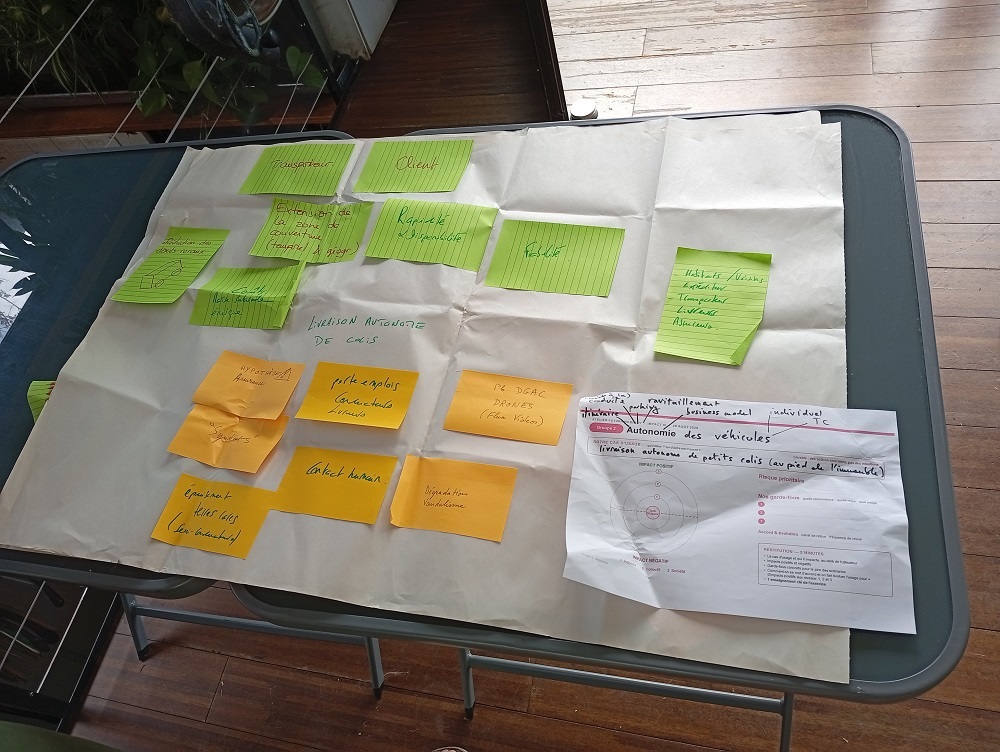
The second working group chose parcel deliveries by drone or autonomous vehicles as their specific use case Here the members identified the following benefits of using AI in this context: greater time and space coverage — faster and longer-distance deliveries — and reduced labour costs for companies operating the services. They raised the issue of job losses among traditional delivery workers using scooters or bikes. Another drawback is insurance. “Are today’s insurers capable of covering this type of system?” queried, on behalf of the group, Maguelone Chandesris, Innovation Correspondent at the Customer & Operations Division, SNCF Réseau.
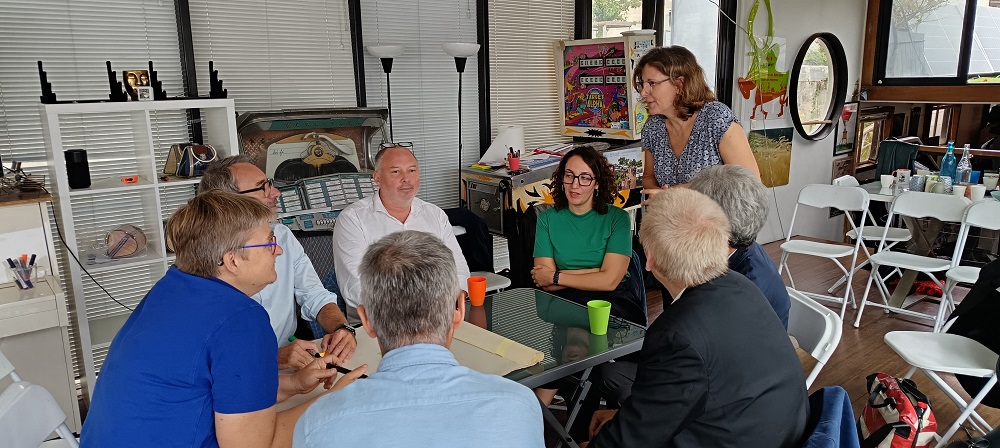
In the end, this working group also called into question their chosen use case. Are ultra-individualised deliveries the real issue at heart? Wouldn’t it be better to challenge this shift toward micro-deliveries — which consume enormous amounts of resources — rather than focusing on fully automating them with AI?
- Predictive maintenance
The third group chose predictive vehicle maintenance using AI-based systems as their specific use case.
On the positive side, predictive maintenance prioritises preventive interventions — that is, early action — rather than emergency repairs carried out under pressure to keep transport services (trains, buses, airplanes, etc) up and running. Decreasing these stressful situations should improve working conditions for technicians and managers. Furthermore, fewer breakdowns increase fleet availability, which in turn should boost the transport company’s brand image.
In terms of risks, the potential unreliability of alerts issued by the AI system would have direct negative impacts: false alerts would unnecessarily mobilise field teams, resulting in a loss of time, efficiency, and money. “But on this point, stakeholders can work to ensure the quality (and thus the reliability) of the data used by these systems,” the group pointed out.
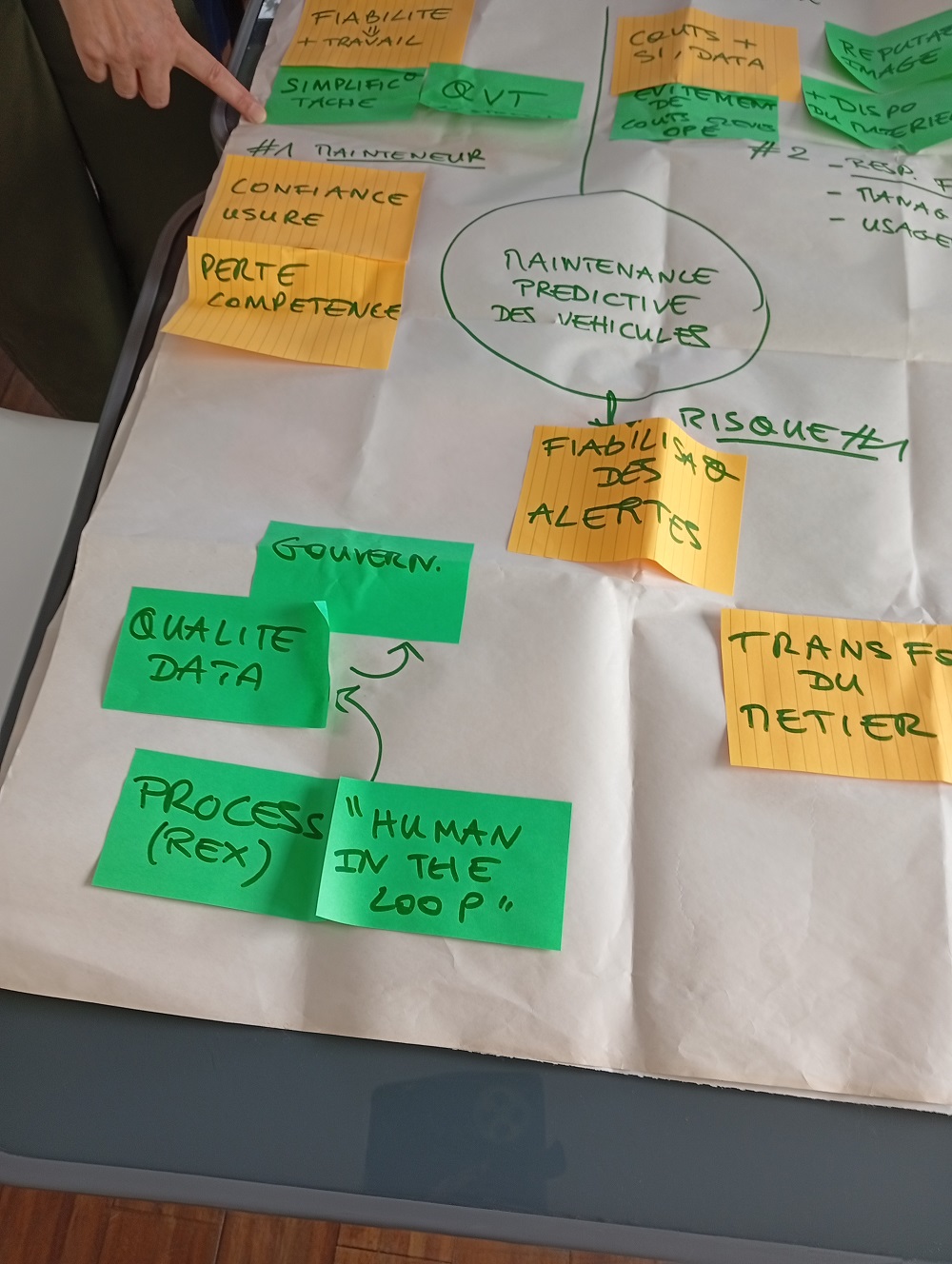
Another critical issue highlighted is the erosion of human skills. By focusing solely on simplified tasks in early stages and no longer performing complex interventions, would maintenance teams risk, over time, losing their in-depth technical expertise?
The group also flagged up the environmental footprint of such AI systems for maintenance : the energy and water consumed to train the technology and process data are most certainly negative impacts.
Can artificial intelligence (AI) help the transport sector operate within the ‘safe and fair space’ of Kate Raworth’s ‘Doughnut’ economic model, thereby better respecting planetary boundaries and increasing societal benefits?
In 2026, Futura-Mobility is organising four sessions to explore this question, of which the first, in June, focused on AI & maintenance of transport systems
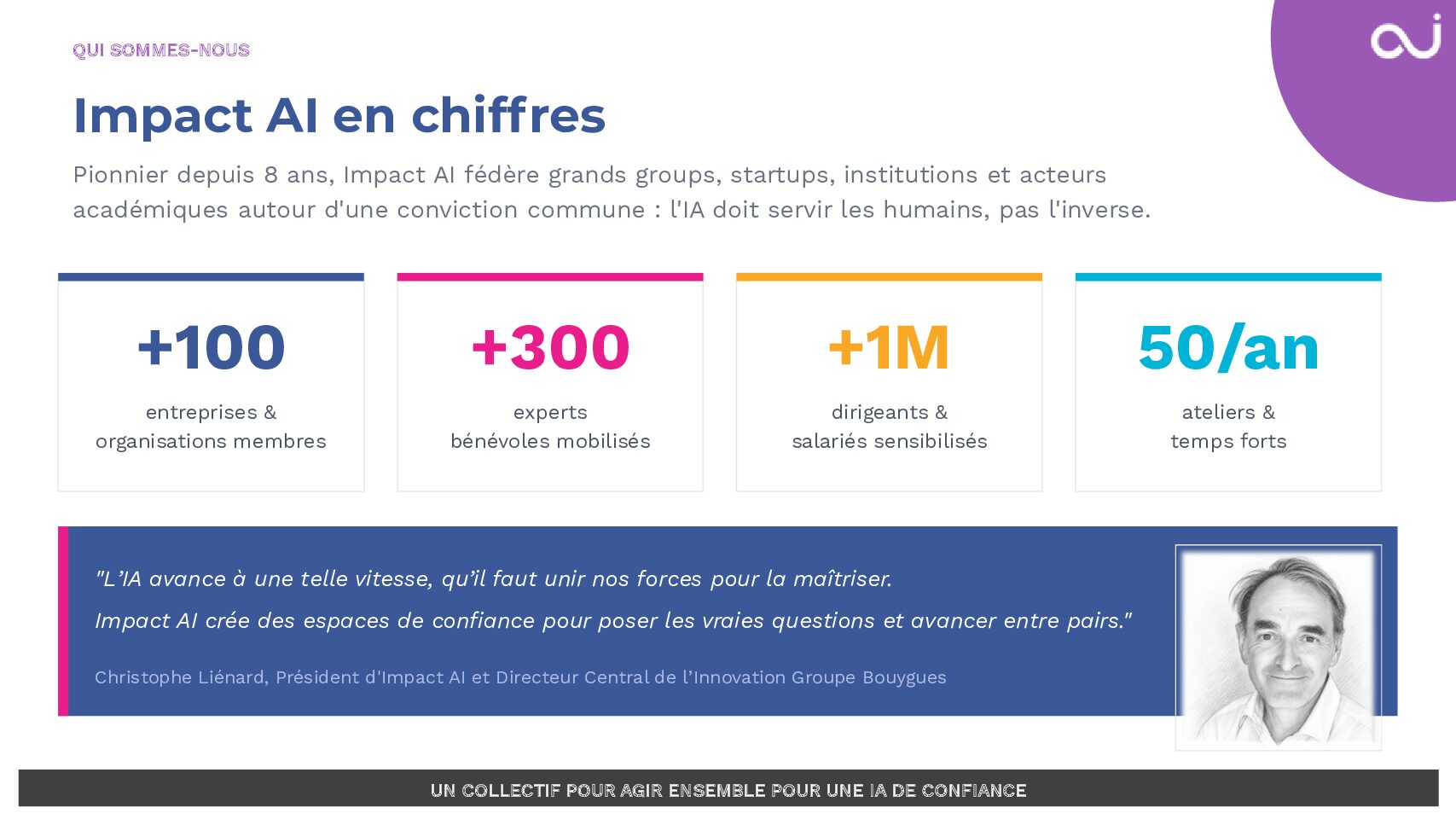
Founded in 2018, Impact AI brings together major corporations, startups, institutions, and representatives from academia and civil society based on a mutual belief: AI must serve humans, and not the other way around. The association works with these stakeholders through studies, discussions, and debate; it develops actionable proposals, designs and shares tools, and publishes reports guided by feedback from its members. The association has created a barometer on responsible AI to foster collective thinking about AI and to meet public needs and expectations.
For businesses, Responsible AI Cafés, hosted by Impact AI, provide a space for discussing the relationship of individuals and companies with AI, the cognitive impact of the technology, its environmental footprint, and data security — and not just technical skills.