

🤖 AI & maintenance of transport systems
🤖 AI & maintenance of transport systems
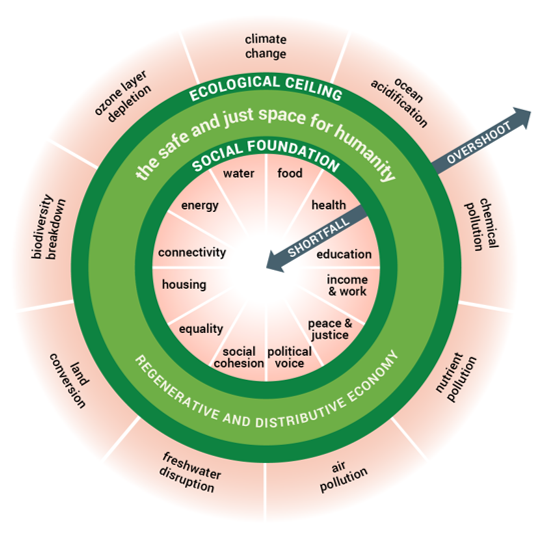
Can artificial intelligence (AI) help the transport sector operate in the ‘safe and just space’ of Kate Raworth’s Doughnut economic model, and, by so doing, better respect planetary boundaries and increase societal benefits? In 2026, Futura-Mobility is organising four sessions to explore this question, the first of which, in June, focused on AI and maintenance of transport systems.
During this remote meeting, moderated by Joëlle Touré, members of the think tank and around forty guests listened to and debated with speakers from Japan, Greece, and France.
To sum up the key insights, this article is structured in two parts: first, it examines how AI for maintenance is being applied across rail, aviation and road transport; second, it takes a broader look at the benefits these use cases can deliver, viewed through the lens of the Doughnut model, as well as the challenges surrounding sovereignty and cybersecurity.
AI IN ACTION – USE CASES IN RAIL, AIR & ON THE ROADS
🚈 Railways
“We are seeing rapid advances in AI technology, with artificial general intelligence that matches human-level intelligence in some fields, and then artificial super intelligence that can surpass human skills,” notes Chikara Hirai, director of the ICT Division at Japan’s Railway Technical Research Institute (RTRI). A further observation, in Japan today, some railway operators are still depending on labour force -intensive activities, e.g. for monitoring the tracks, whereby workers walk along them to visually inspect components, while others, in the train driver cabs, visually check the track conditions and monitor vehicle vibrations.
In this context, “one use case for AI in railways is digital maintenance & inspection,” says Dr Hirai. Indeed, in order to streamline rail maintenance work, the RTRI is advancing research that combines data, smartphones, and AI for identification purposes (e.g. detecting defects) and performing maintenance tasks.
This digital maintenance and inspection approach involves monitoring the vibration and position of trains – by means of smartphones with integrated sensors attached to the front window of the driver cab. Track conditions are captured and recorded by the smartphone. The resulting vibration and position data can then be checked on the spot by a smartphone app, then imported into LABOCS – a database system, developed by the RTRI, widely used among railway operators in Japan for track maintenance management.
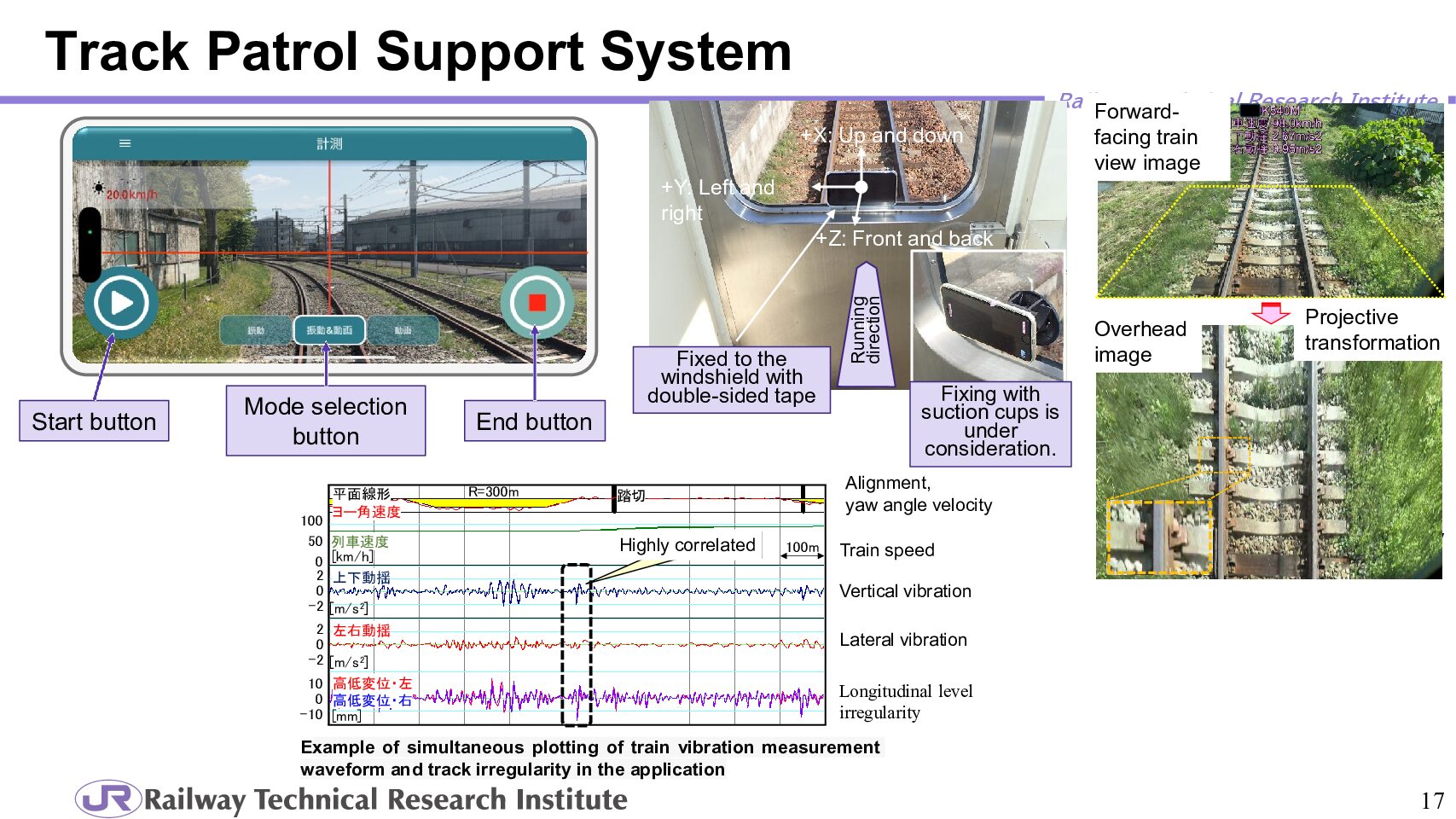
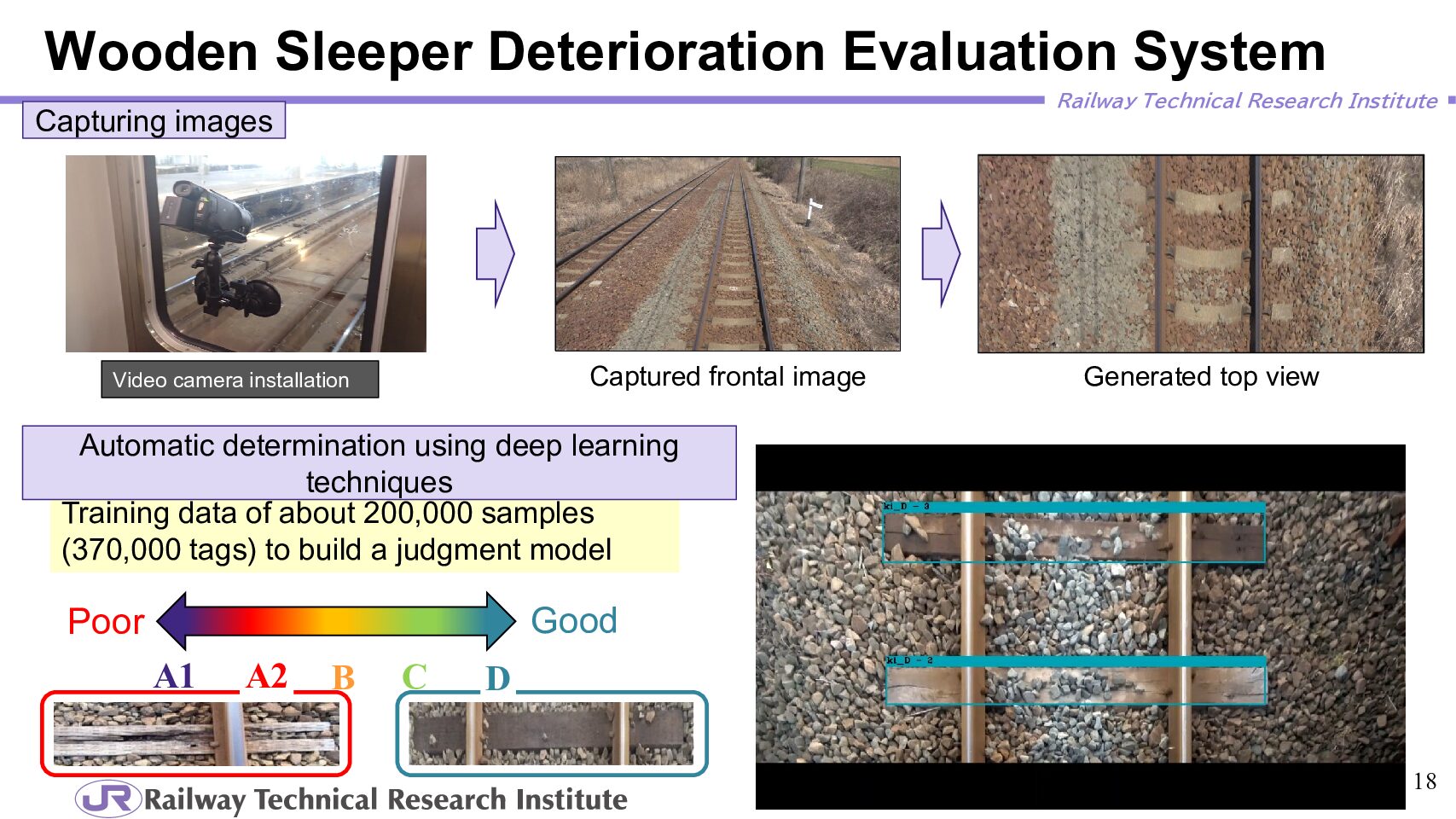
“Using this technology, the RTRI has already developed a system to determine the degree of deterioration of wooden sleepers, based on image data captured from railway tracks,” points out Dr Hirai. “Each sleeper is colour-coded, making it easy to identify those that have deteriorated.”
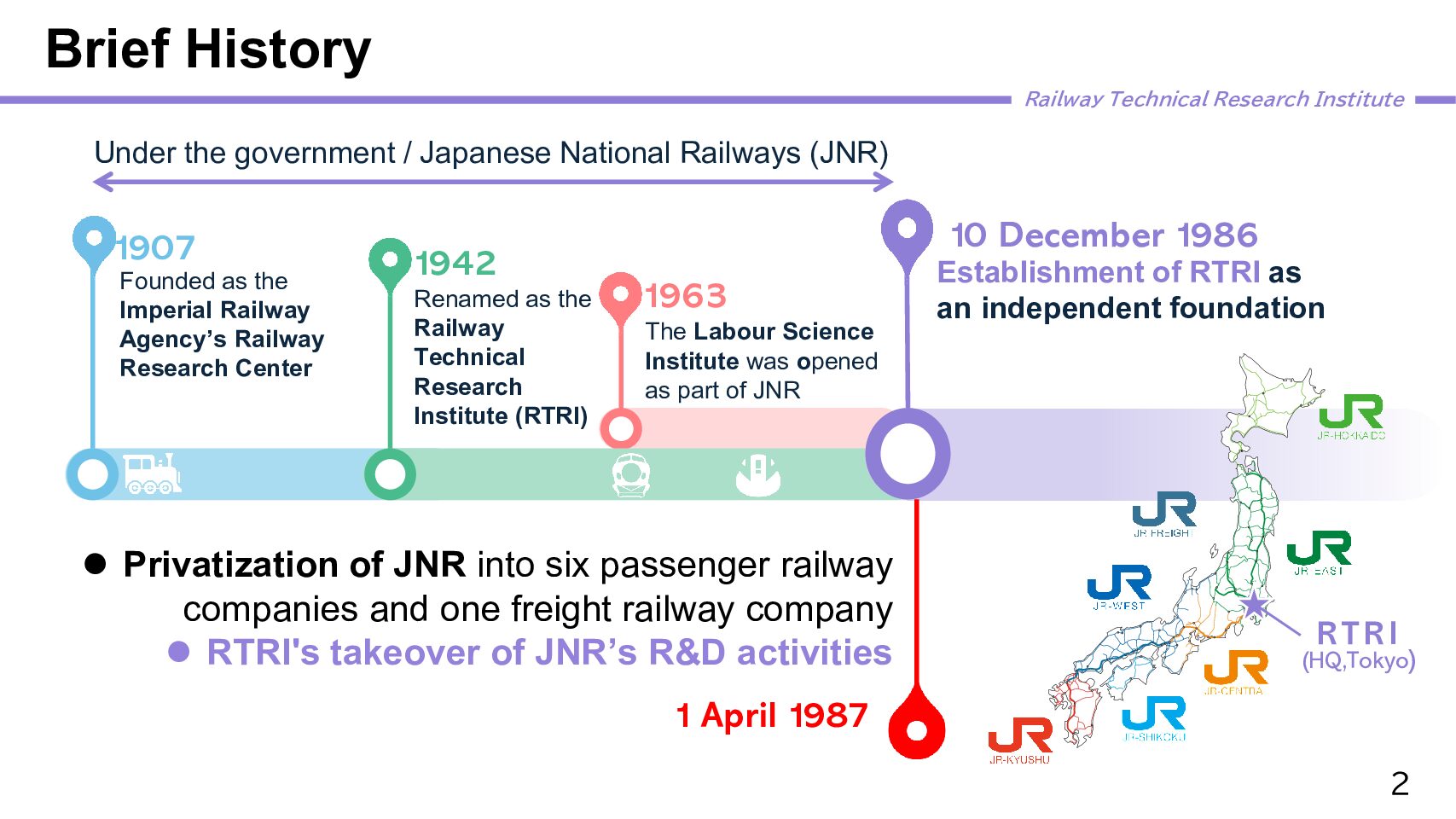
RESEARCH 2030, the RTRI’s five-year master plan, is developing innovative technologies to build future-focused railway systems that are safe and secure, intelligent (sensors, AI, automation…), in harmony with the environment, and sustainability. The core focus areas for this work are innovation, digital and green technologies, AI, autonomous driving, batteries, and renewable energies. “This research is based on forecasting, to be exact – given the technologies currently in use, we foresee what kinds of technologies will be necessary in the near future, and on the imagination, i.e. imagining a railway system of the future,” explains Dr Hirai.
Importantly too, the researchers are factoring in social challenges in Japan today, namely the intensification of natural disasters (heat, drought, earthquakes), the goal to reach carbon neutrality by 2050, social changes triggered by pandemics (e.g. remote working), and the country’s declining working-age population.
“The overall aim of our work going forward is to develop sustainable railways for a sustainable society,” concludes Dr Hirai.
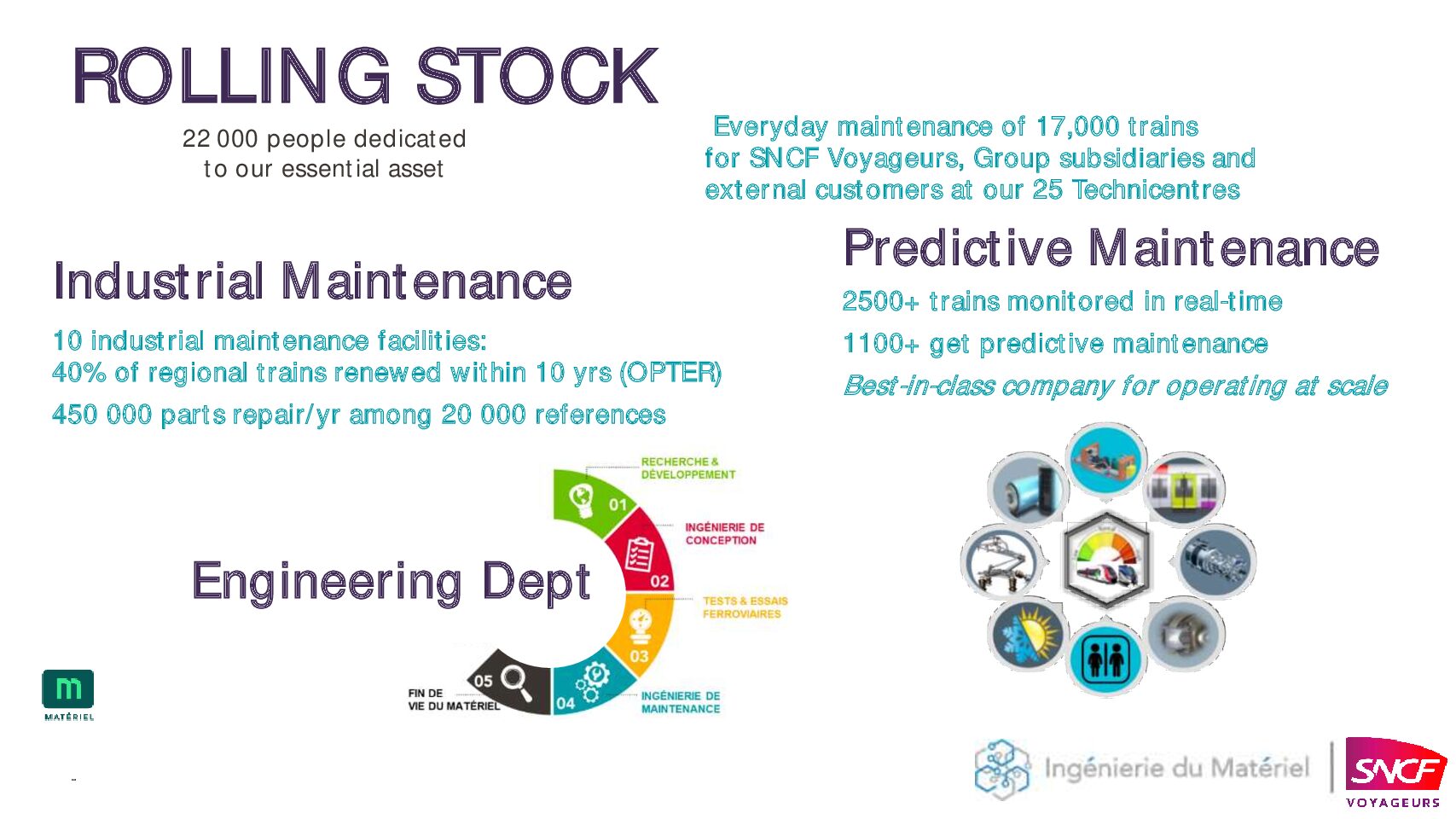
In France at SNCF Voyageurs, the passenger rail arm of the SNCF Group (French Railways), rolling stock is the company’s core working tool, and as such, “a most vital asset,” says Philippe de Laharpe, project lead for remote diagnostics & AI R&D. “We have 22,000 people across the country dedicated to maintaining this rolling stock [15,000 trains running every day].”
The work is organised into three main areas: industrial maintenance, which carries out major overhauls and refurbishment projects, such as mid-life renewal of regional trains; an engineering department of around 2,000 specialists; and a predictive maintenance programme covering more than 1,000 trains, as well as real-time monitoring for 2,500+ trains.
“Since AI enables an increase in algorithm power, it is opening up a new opportunity for predictive maintenance,” explains Mr de Laharpe. Indeed, AI enables sensor data and logs to be transmitted in real time or every day or week. Consequently, maintenance teams can adapt to what is to come and the real status of parts and rolling stock wagons, which in turn “has a tremendous impact on planning, performance, and logistics,” enthuses Mr de Laharpe. “Because when you transform an unexpected task into an expected one, you can plan for it and optimise parts, human resources, and track maintenance. So for us, AI really is a performance booster.”
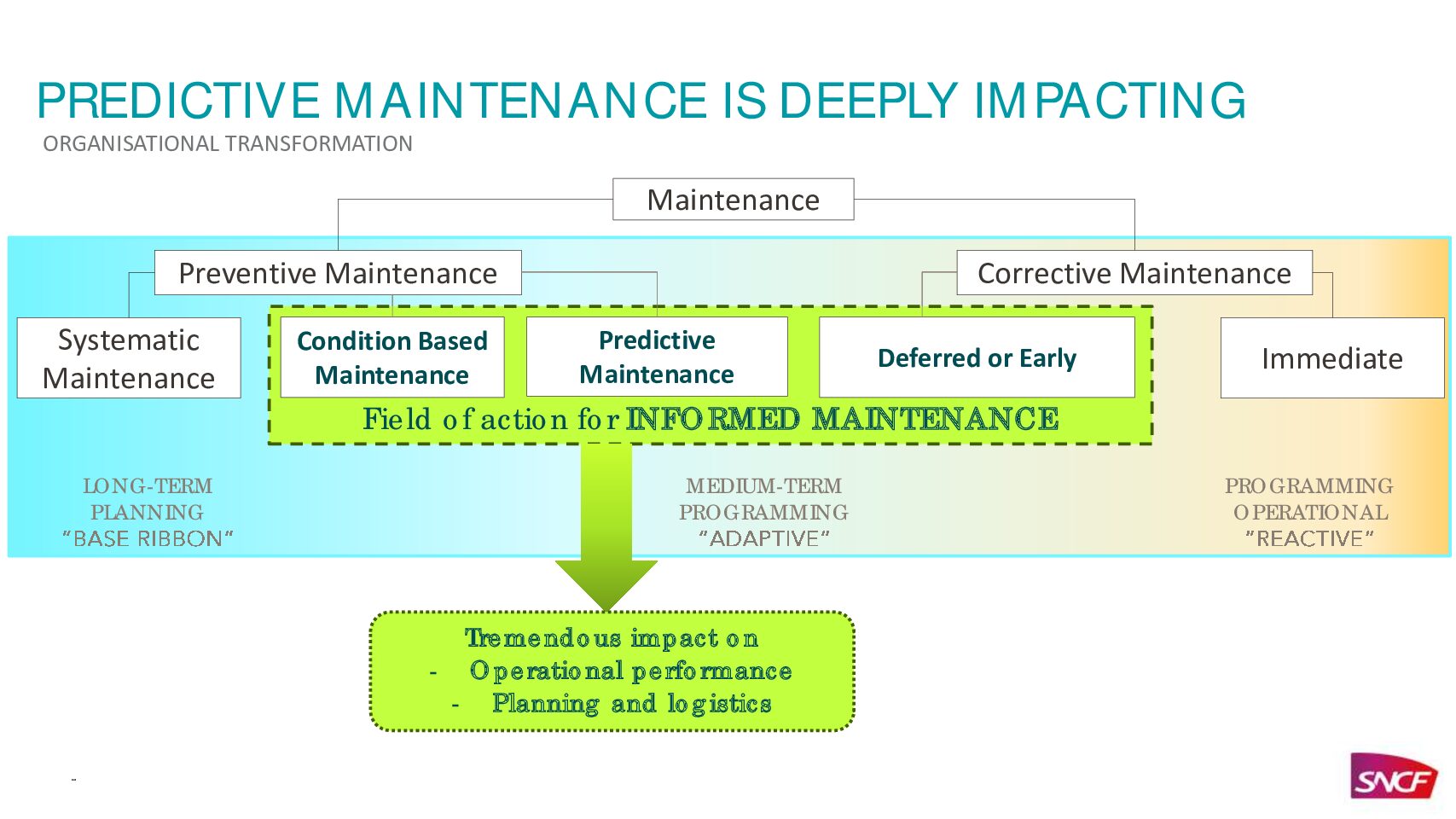
For AI-driven predictive maintenance, use cases depend largely on the availability of data to feed machine learning of AI models.
“Data on equipment failure is quite good, thanks to maintenance logs and billing, so there are traces,” points out Mr de Laharpe. “On the other hand, because there are too few in-service failures of rolling stock (from a data scientist perspective, of course), for instance, there is insufficient data (volume and quality) for supervised machine learning. Moreover, the quality of what unreviewed data is captured is often insufficient for effective use.” These low data sets explain why machine learning on in-service failures of trains, debuted in 2015, failed to meet expectations. “With less than 500 incidents on various rolling stock functions, there was inadequate learning power,” acknowledges Mr de Laharpe. “Consequently, AI didn’t help us learn much about function failures.”
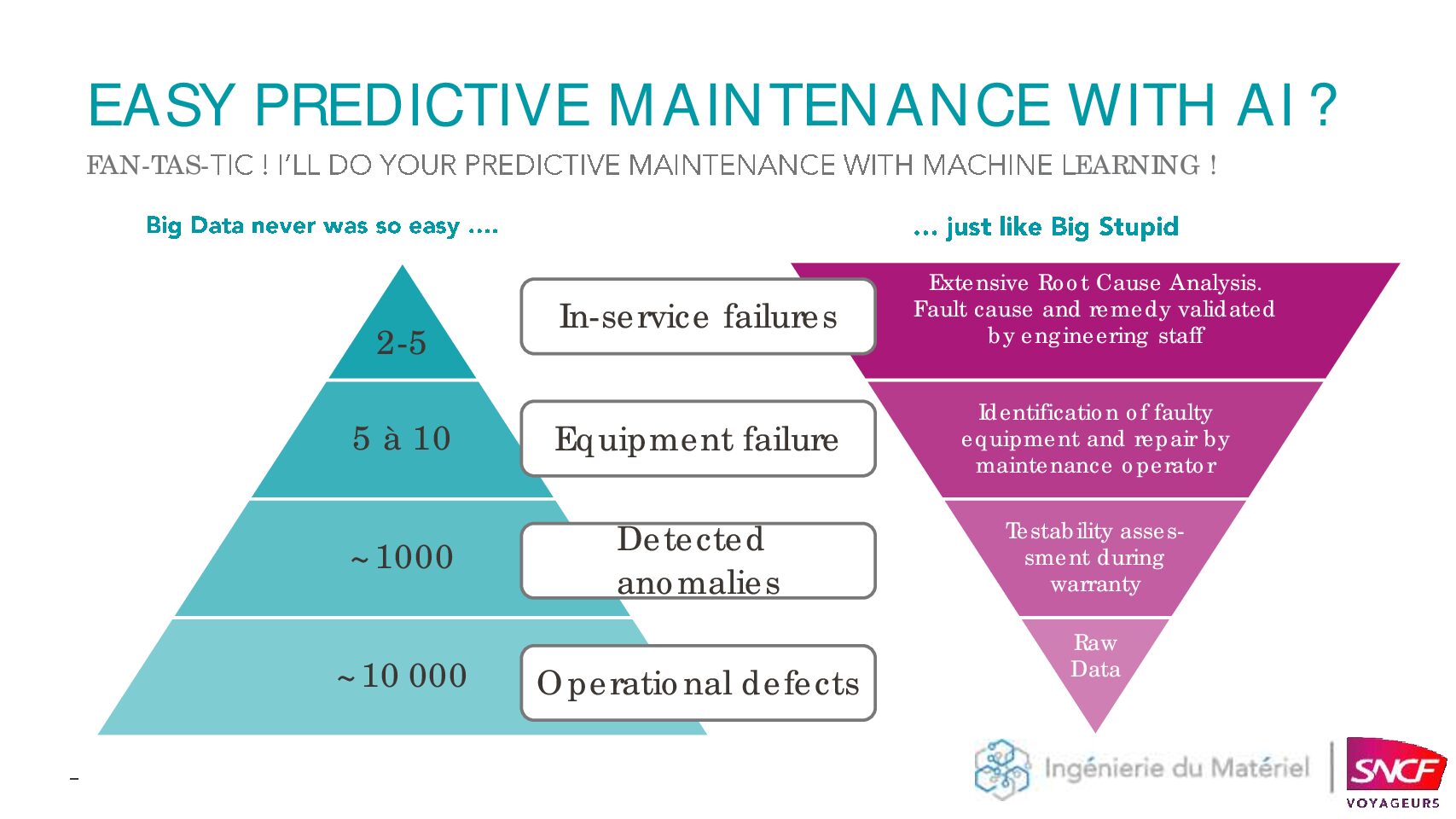
Drawing on this experience, in 2019, the engineers refocused on machine learning for rolling stock repairs, because, with 15,000 to 20 000 parts to be repaired each year, large data sets are certainly available. Here, one lesson learnt was that if the AI model learns from a non-precise target (something that is going to happen between the first and fifth repair), it produces non-precise results. In 2021, this work on machine learning for repairs continued, including this time more detailed data sources : system status snapshot and sensor data associated with the operating events. “But the AI model, despite being good, doesn’t converge enough on the data to be viable on an industrial scale,” concedes Mr de Laharpe.
Nevertheless, SNCF Voyageurs has introduced AI on an industrial scale to help optimise support functions in maintenance, namely the supply chain, finding parts, and quality control.
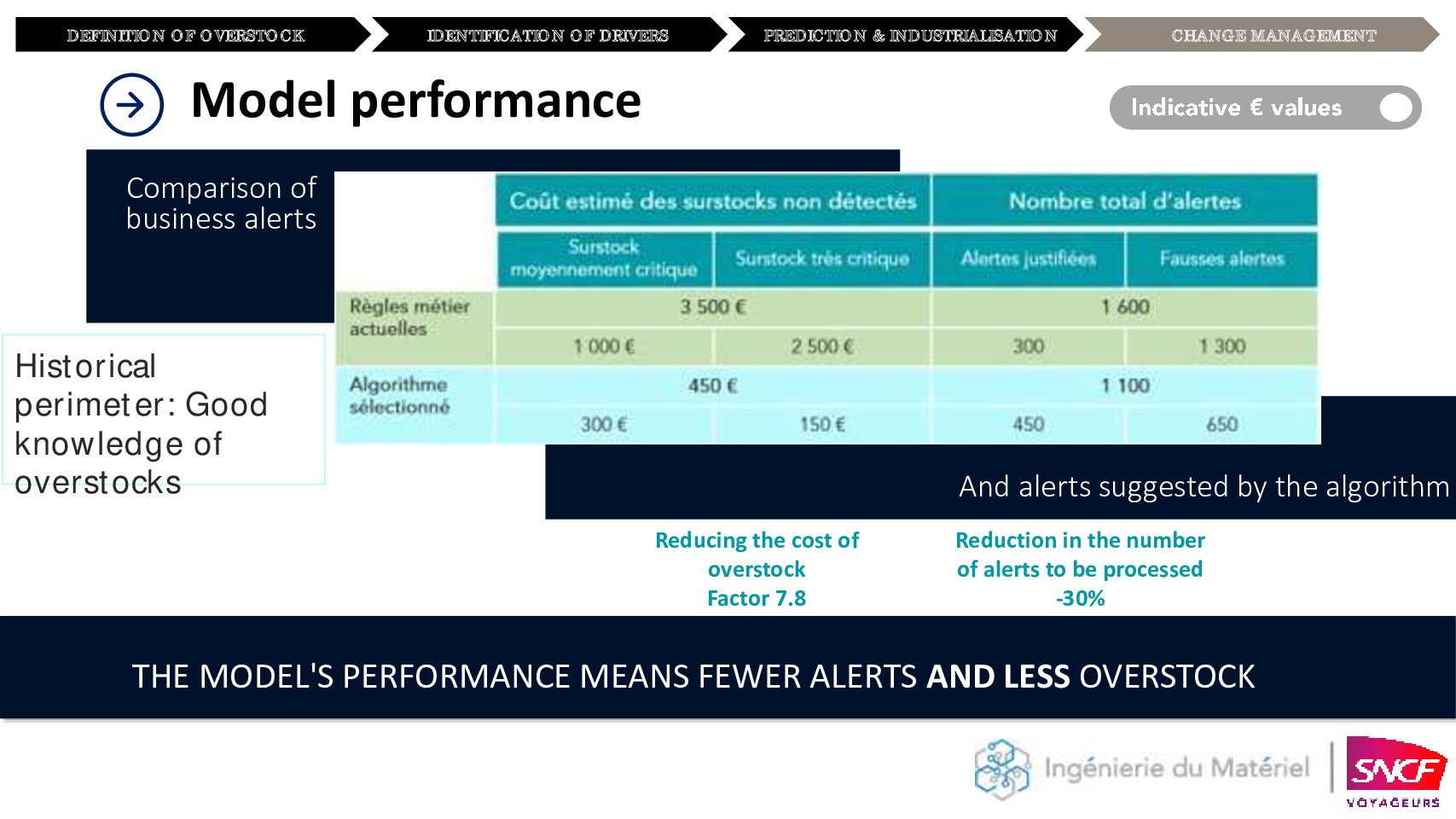
Given the vast quantity of parts used every day and every week, the supply chain has the advantage of abundant data resources. “Thanks to all this data, we can validate sourcing orders based on the history of past sourcing orders,” explains Mr de Laharpe. “This also avoids overstocking and, even more importantly, reduces the number of alerts to be processed by our sourcing teams.” Subsequent benefits are better performance and less administrative work. To date, supply chain optimisation has been fully automated for orders that can be validated without significant risk (limited amount or regularly used item).
Finding parts is a costly activity for SNCF Voyageurs in terms of time and money. Stock wastage is also an issue, with around 10% of parts sent for repair being wrongly labelled. In response, the company has been piloting a multimodal, AI-assisted solution for recognising train parts. Trained on millions of descriptions and images of industrial parts sourced from supplier catalogues, it responds to a request by proposing the five most probable parts. “This AI vision model has proved extremely effective, with very high probability of finding the right part,” enthuses Mr De Laharpe. “In addition to saving time and money, it improves stock reliability and optimises inventory management.” Industrialisation and a public tender are ongoing.
Artificial intelligence is also playing a role in SNCF Voyageur’s workshops by optimising quality control of repaired parts. In 2024, the introduction of an automatic visual control bench, based on combining the human eye with AI “is delivering tremendous results for inspecting contact brushes,” reports Mr de Laharpe.
Mechanical components mounted beneath the trains, contact brushes require a lot of repairs because they undergo a lot of wear and tear. Indeed, SNCF Voyageurs repairs 15,000 brushes annually. “Already we had quite a low level of non-conformity for this repaired part, less than one in a thousand for human-only controls, but with the automated visual inspection we have zero defects,” enthuses Mr de Laharpe.
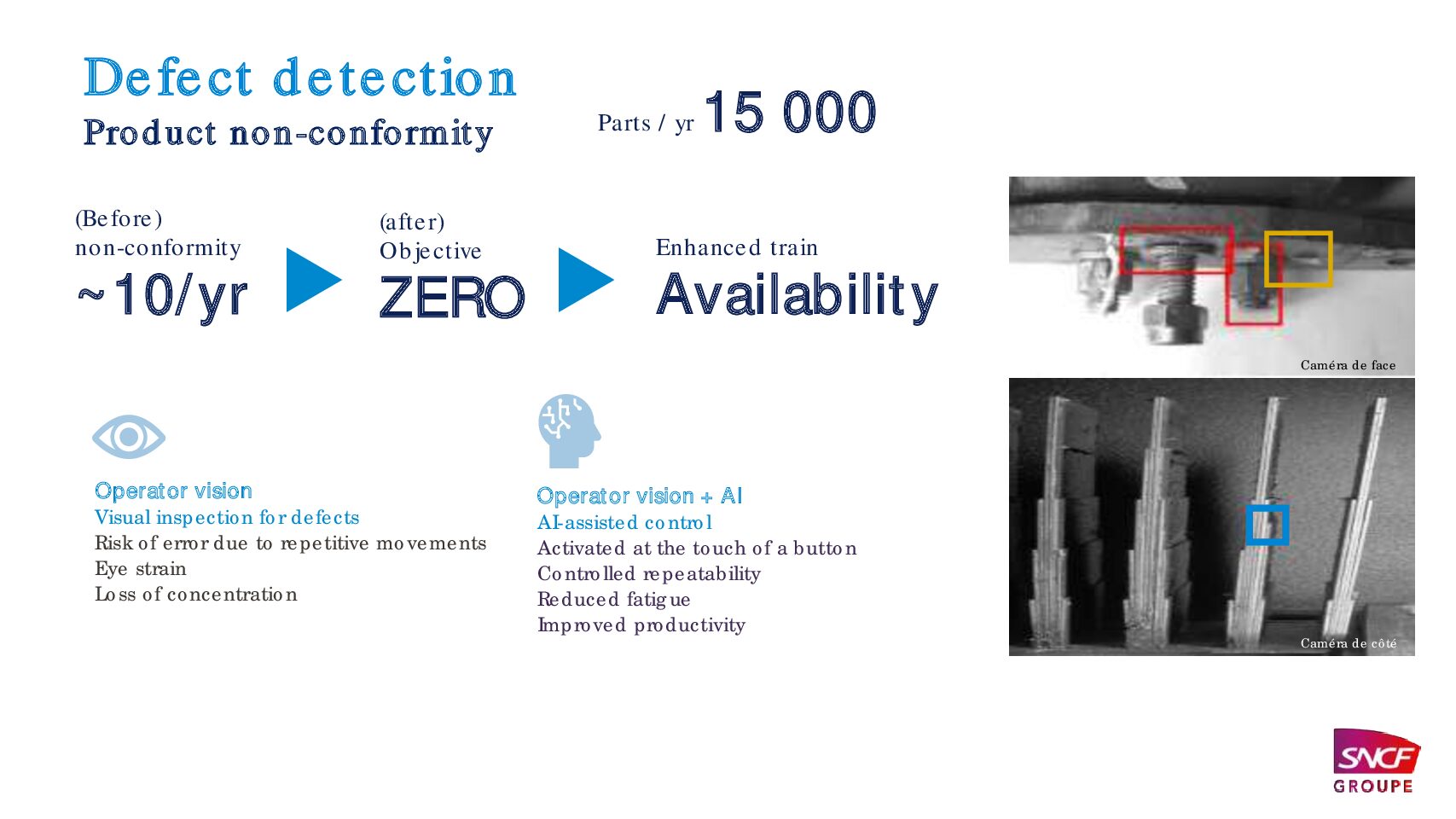
This custom camera-based inspection application is currently being tested for detecting unsecured hatches on trains.
✈️ Aviation
Air transport shares a common goal with rail – keeping its core assets, namely aircraft, in the sky as much possible rather than on the tarmac. Hence the crucial importance of optimising maintenance operations to reduce the consequences – in terms of time and money, as well as for the workforce and passengers – of operational delays.
“We want to shift towards predictive maintenance at scale in order to rely more on the actual condition of aircraft, rather than on traditional, statistically driven, preventive maintenance schedules,” explains Fabrice Villaumé, head of Products Portfolio at digital services provider Skywise. Launched in 2026 by Airbus, following the merger of its Skywise data platform and Navblue flight operations unit, this new Skywise entity is designed to optimise airline operations by sharing and combining aircraft manufacturer expertise, data, digital know-how, AI and other cutting-edge technologies.
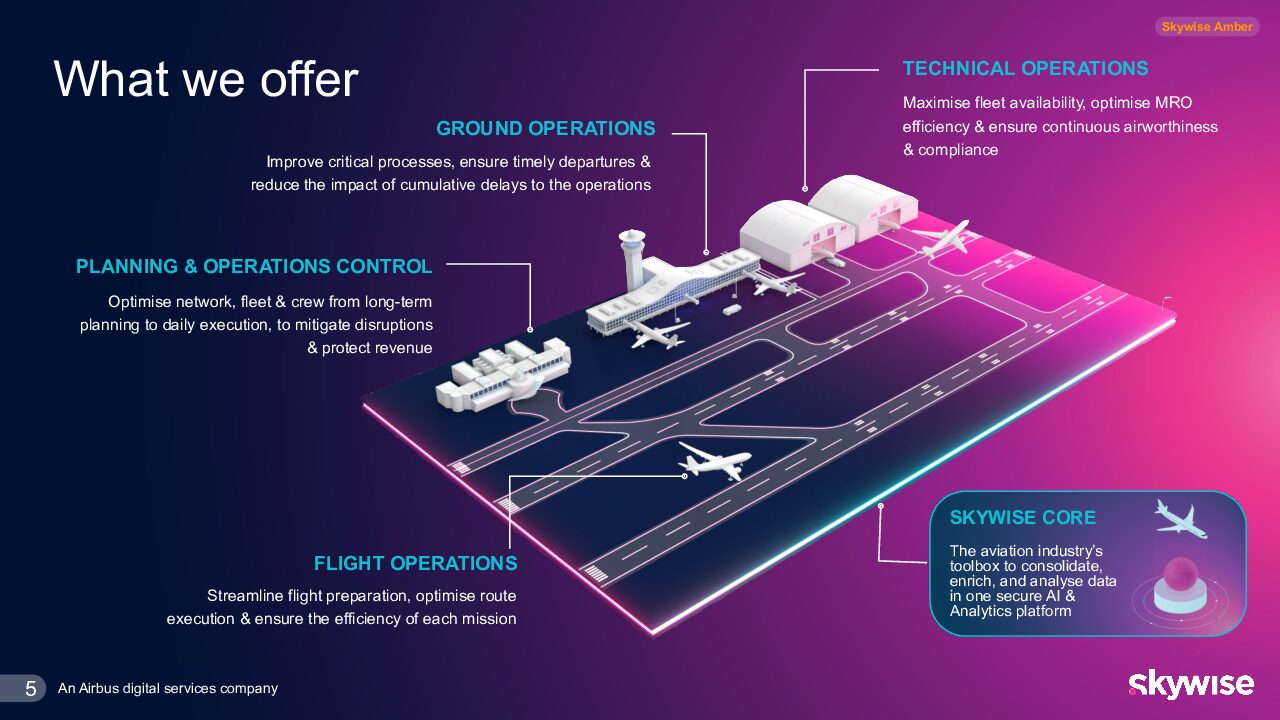
Specifically to improve scheduled, fixed interval, and predictive maintenance for aircraft, Skywise has developed a dedicated AI & analytics platform for both Airbus and non-Airbus fleets. Baptised the Skywise Core Platform, this toolbox interconnects data coming from the aircraft (e.g. reports and high fidelity, time series and snapshot datasets) and maintenance information systems of its customer airlines, together with technical data provided by Airbus. “In particular, dedicated avionics boxes [electronic systems] are deployed to monitor the activities of on-board aircraft systems,” adds Mr Villaumé. “All the information captured from these different sources is fed into the Core Platform, which analyses it continuously using AI and other kinds of modelling approaches.”
Core Platform customers can access a range of dedicated, operational service modules, such as Skywise Reliability, Health Monitoring, and Fleet Performance+.
They can use Health Monitoring for instance, to check the technical health status of their fleets for more predictable, efficient, and resilient (in the wake of unforeseen circumstances) operations. “It serves to remove blockers for easy data-driven, maintenance decisions,” sums up Mr Villaumé.
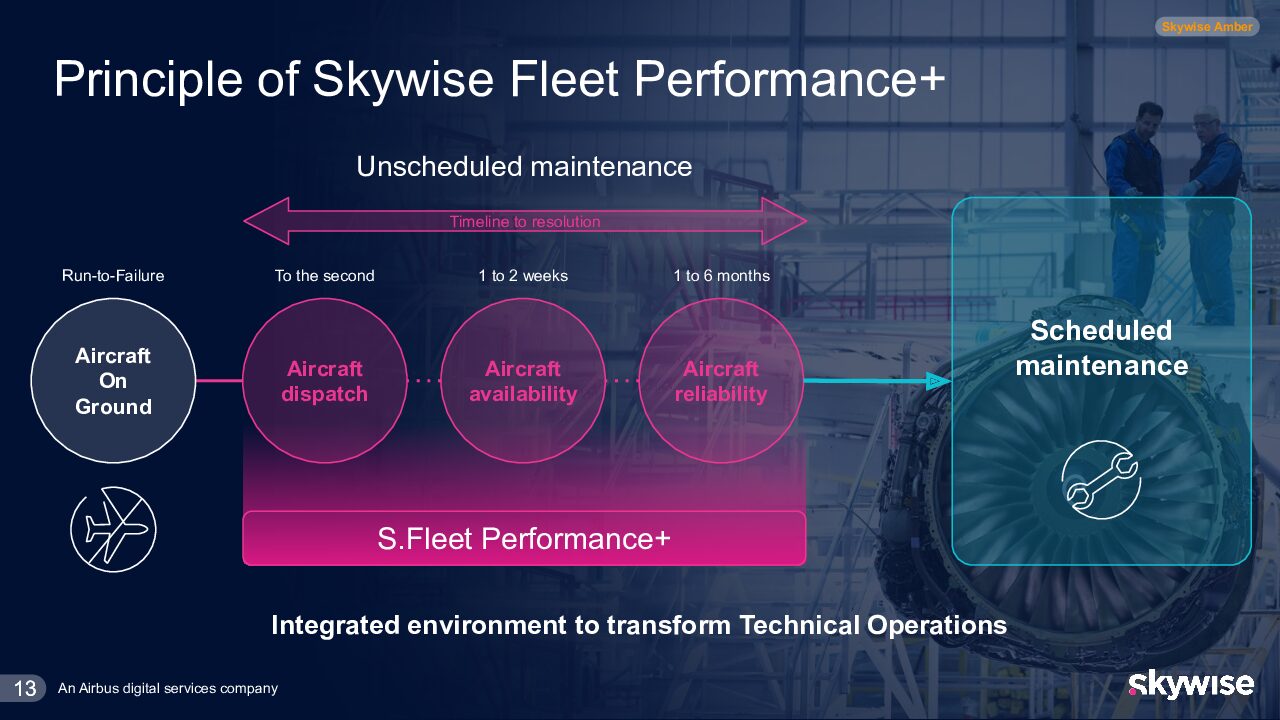
The AI and analytics used by Skywise on its Fleet Performance+ module focuses on three key time horizons: immediate aircraft dispatch by detecting and resolving faults as they occur; short-term aircraft availability by predicting failures one to two weeks in advance; and long-term aircraft credibility by analysing trends across individual and global fleets to improve reliability and maintenance planning.
Skywise has also established a collaborative business model called the Digital Alliance. This industrial partnership, between airlines with deep engineering know-how, equipment and system suppliers, develops integrated digital analytics and predictive maintenance solutions to optimise technical operations for a positive impact on airline network operations. The five partners currently on board are Airbus, Delta TechOps, GE Aerospace, Liebherr-Aerospace, and Collins Aerospace. “With this Alliance, we have gathered together engineering resources and predictive analytics into a single framework,” says Mr Villaumé.
“With the Skywise Core Platform, we are increasingly embracing what we call a ‘low-code, no-code’ approach,” points out Mr Villaumé. “This not only allows our own developers, but also customers using our platform, to develop their own apps quite easily. It’s a kind of DIY approach.”
“At the end of the day, the vision at Skywise, which is now a reality, has been to provide an environment that improves data collaboration between the various actors in the aviation ecosystem, namely airlines, maintainers, lessors and so forth,” he concludes.
🚗 On the roads
With AI-enabled tools now being developed and introduced, highway maintenance works are entering a new era, essentially moving from a reactive to a proactive approach. Combining augmented reality, sensors, data, robotics, and AI, between 2021 and 2025, the European Union HERON project worked to help drive this transformation.
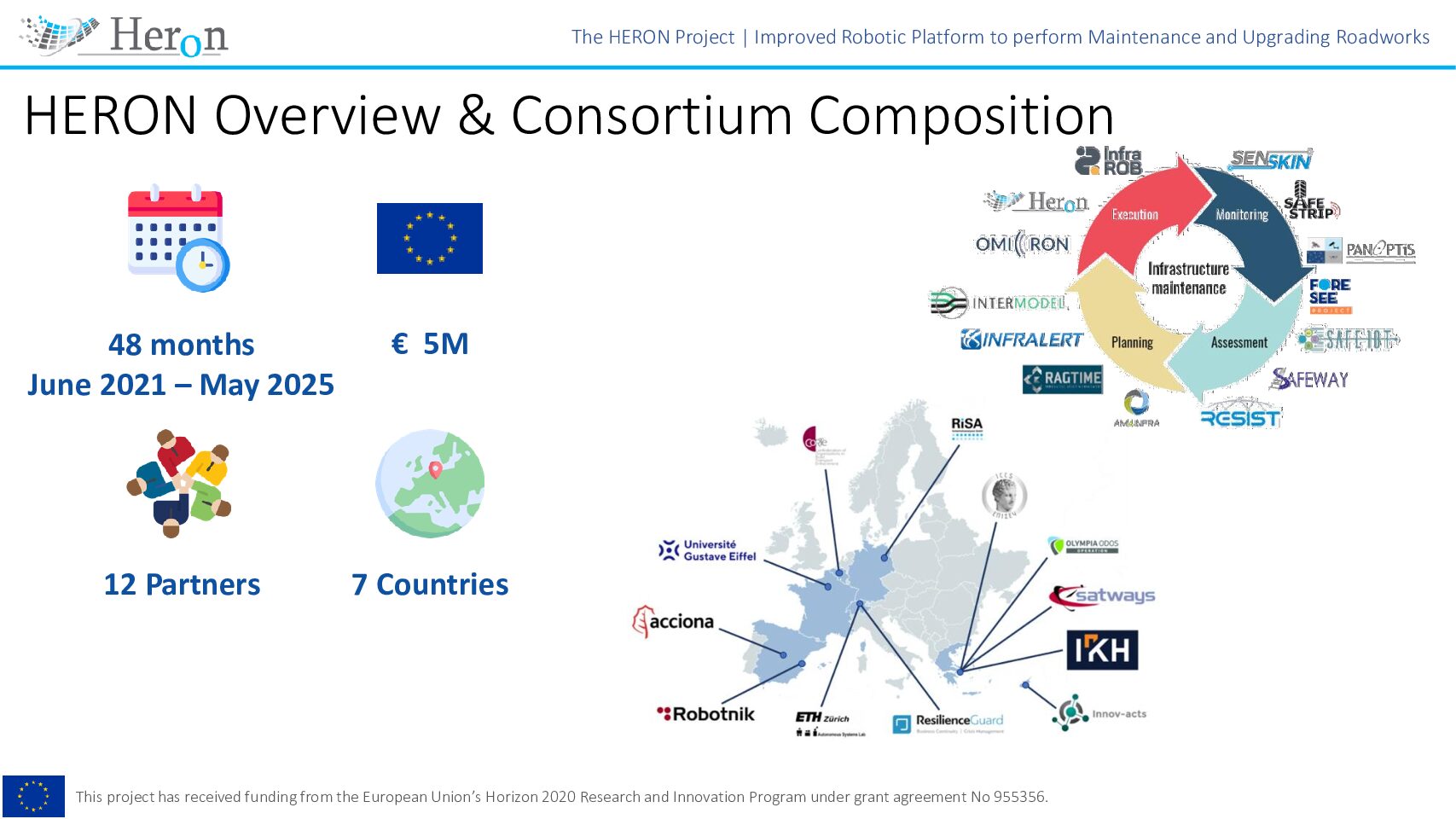
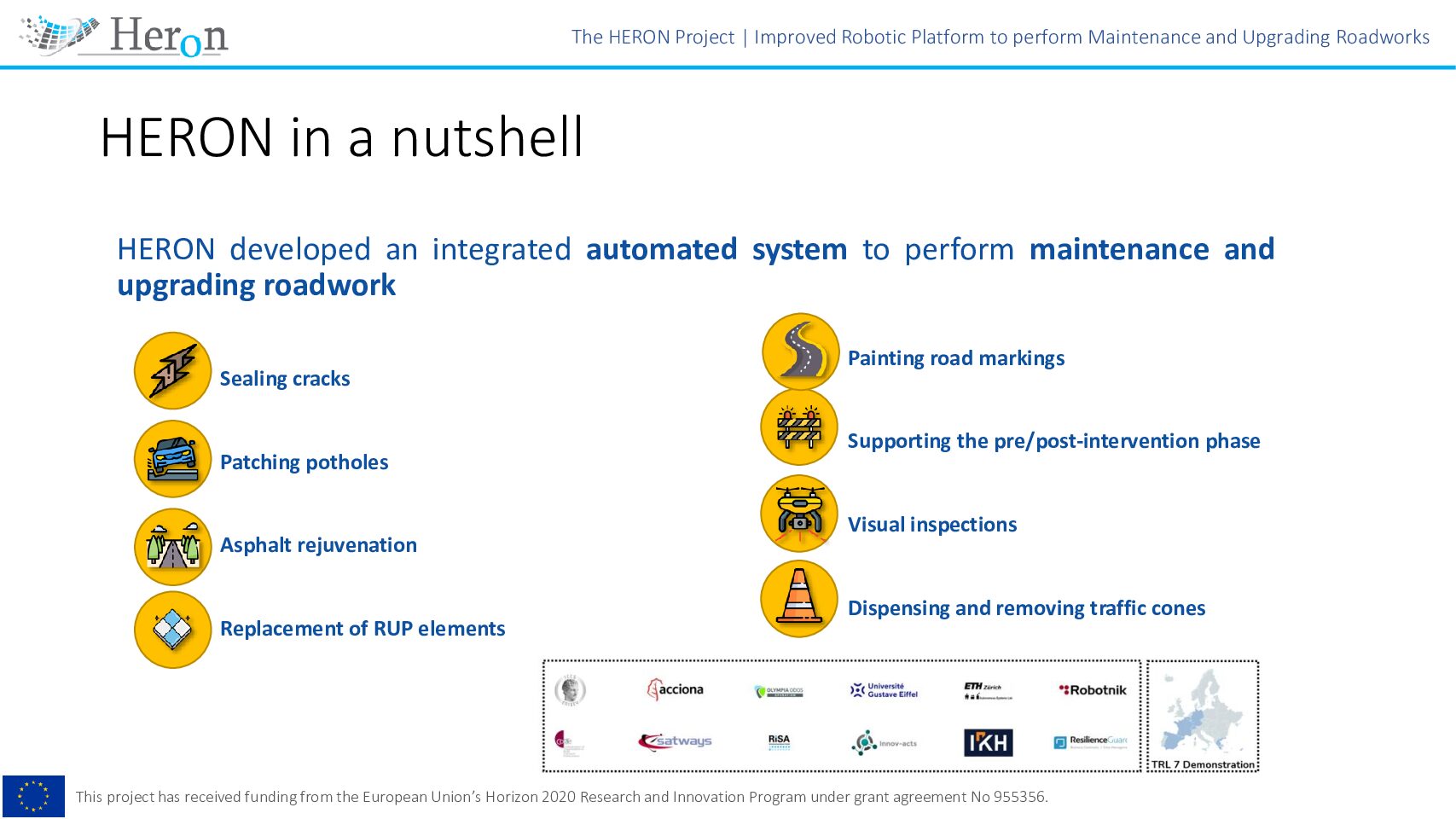
Over its four-year duration, the consortium developed an integrated automated system for road maintenance and upgrade activities. These range from sealing cracks and patching potholes to asphalt rejuvenation and visual inspections.
Modelling for visual inspections involved building on top of technologies and AI models. The resulting AI models can be used to create automated inventories of road assets and carry out rapid and wide-scale patrols for asset logging, using both traditional patrol vehicles and unmanned aerial vehicles (UAVs).
Shifting from the traditional approach to road maintenance, based on visual surveys and estimations, to repeatable patrols using AI models, provides precise metrics on asset degradation. The AI models create a continuous feedback loop whereby the road is continuously monitored by static or moving sensors. The information captured is communicated to the centralised systems of road maintenance managers, who use it to plan missions and intervene in a more informed and optimised way. “Simply identifying the presence of a small defect, like a crack, is not enough,” adds project coordinator Nikos Bakalos, a research engineer from the National Technical University of Athens. “You need a severity score to indicate how serious they are, too, because the geometry of such a defect, the depth of a pothole, or the way the crack has formed on the road surface, leads to completely different outcomes. With our system, AI-generated severity scores are used.”
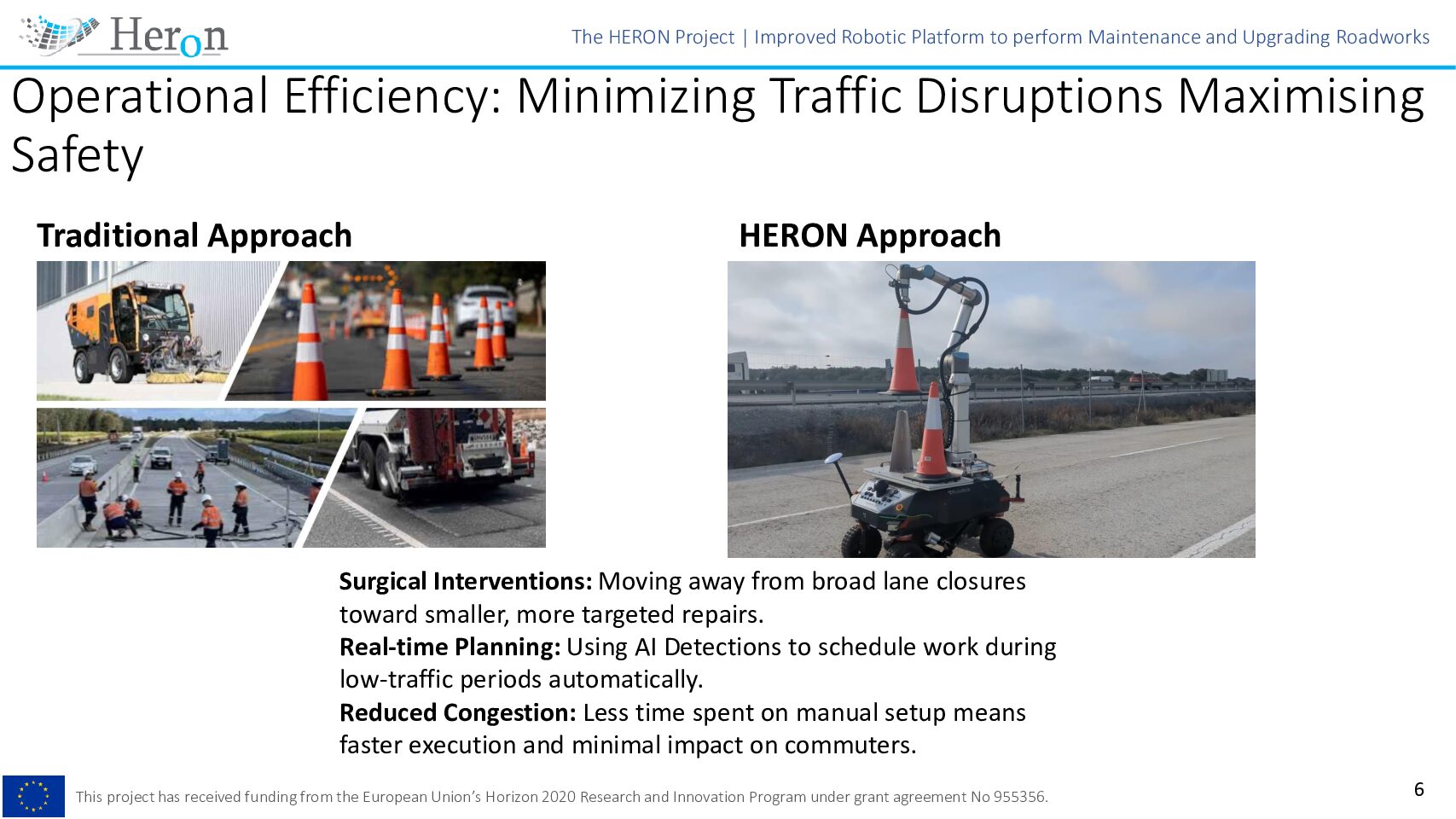
The project also focused on the pre and post intervention phases of road maintenance – from monitoring and mission planning, to locking down the intervention area with traffic cones, to restoring the road to normal operations. “Importantly, we worked on both insight and intervention in order to bridge the gap between detection and repair,” expands Mr Bakalos. Here, HERON’s robotic system for performing maintenance tasks, comprising an unmanned ground vehicle integrated with a robotic car, bridges the gap between the actual moment of detection and subsequent mechanical repair work. Thanks to this AI-enabled approach, the project is confident road managers will be able to optimise resource allocation to either deploy robotics components or human workers to the highest priority defects, based on severity scores generated by the AI models.
Like SNCF Voyageurs in the rail sector, when training its AI models, HERON came up against the challenge of data availability, quality, and quantity. A lack of data on road defects was slowing down development of the project’s tech solutions. To overcome this hurdle, alongside open source and proprietary datasets, the team also used generative AI to create larger libraries of defects. “This allowed us to train models on more examples and let them handle scenarios without waiting for them to happen in real life on the roads,” explains Mr Bakalos. “This way we could simulate scenarios to test both the detection capabilities and the planning and intervention capabilities of our system.”
In terms of impacts, AI, data-driven road maintenance means reorientating from estimates to evidence. It represents a more agile approach, whereby extremely small-scale interventions can be carried out, instead of waiting for defects to become serious and having to shut down roads, which is costly and disruptive. For maintenance workers, the time spent preparing and setting up works is minimised, and their completion speeded up. Less traffic disruption and better safety, both for road workers and driver-users, are further anticipated benefits. “With AI detection and real-time planning, works can be scheduled automatically during low-traffic periods,” says Mr Bakalos.
Two stakeholder partners currently have access to vision algorithms developed by HERON.
“The next step, building on our work over the past four years, would be to gravitate from static assets to digital twins,” hopes Mr Bakalos. “Using these twins, we could generate and continuously update the state of the road in question and simulate future degradations, view historical usage, and essentially plan and optimise interventions.”
Optimising planning with digital twins
In France, the project, headed by the French public agency Cerema, is indeed focusing on digital twins to transform road maintenance, with optimising planning specifically in mind.
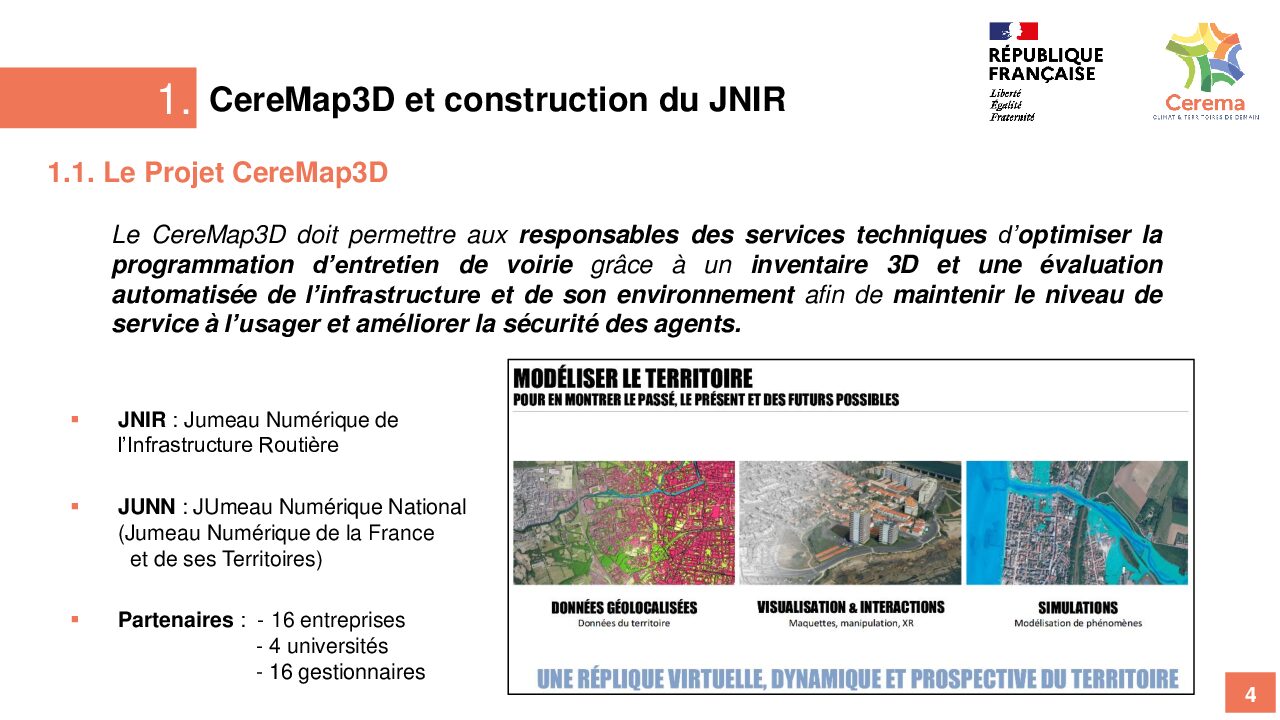
Its consortium of six companies, four universities, and 16 infrastructure managers is developing a dynamic, 3D, mobile mapping and scanning system for creating precise digital twins (Jumeau Numérique de l’Infrastructure Routière, JNIR) of roads and their surrounding environments. End users, namely maintenance managers, their teams and technicians, can use this tool to perform automated inventories, evaluate infrastructure conditions, and optimise road maintenance planning without disrupting traffic.
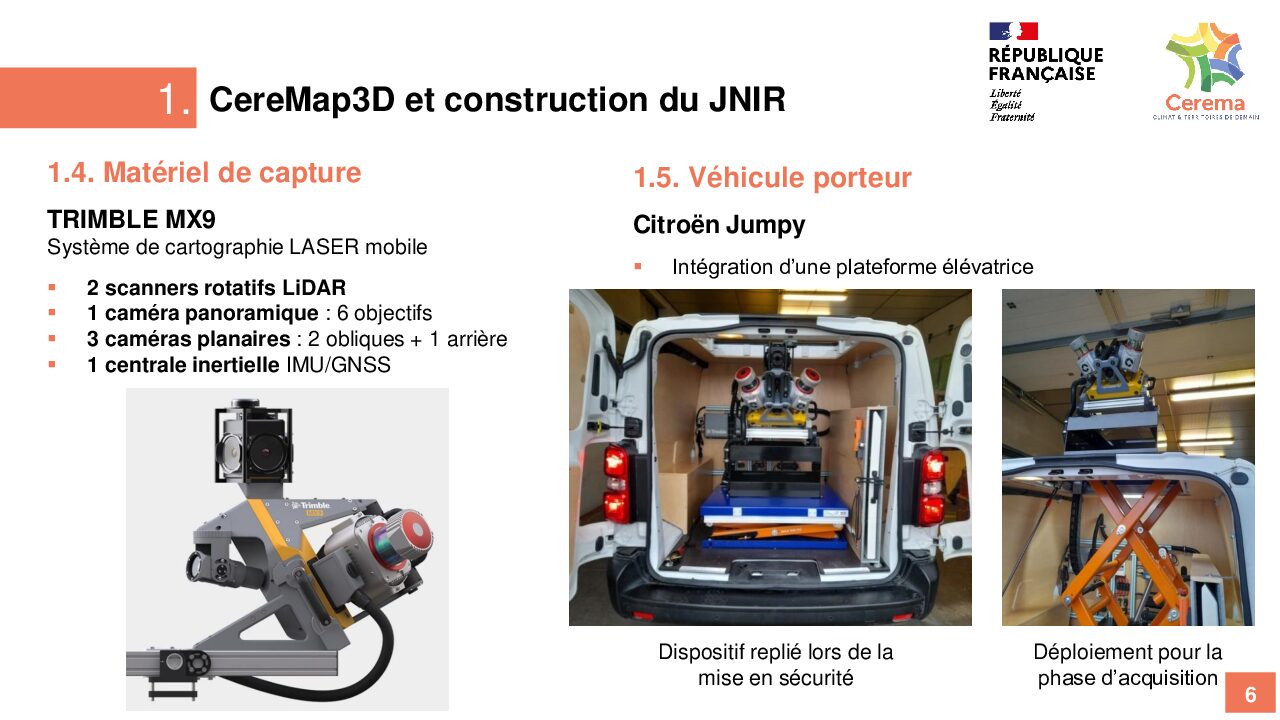
To build such a digital twin, data is captured by a mobile laser cartography system mounted inside a carrier vehicle, a Citroën Jumpy van. Surveys are conducted while traffic is flowing normally and the location accuracy (X, Y, Z) is measured in centimetres. An automated assessment of the data captured provides an inventory of infrastructure (roadways, traffic signs, guardrails, shoulders, sidewalks, etc.) and assesses the condition of each element.
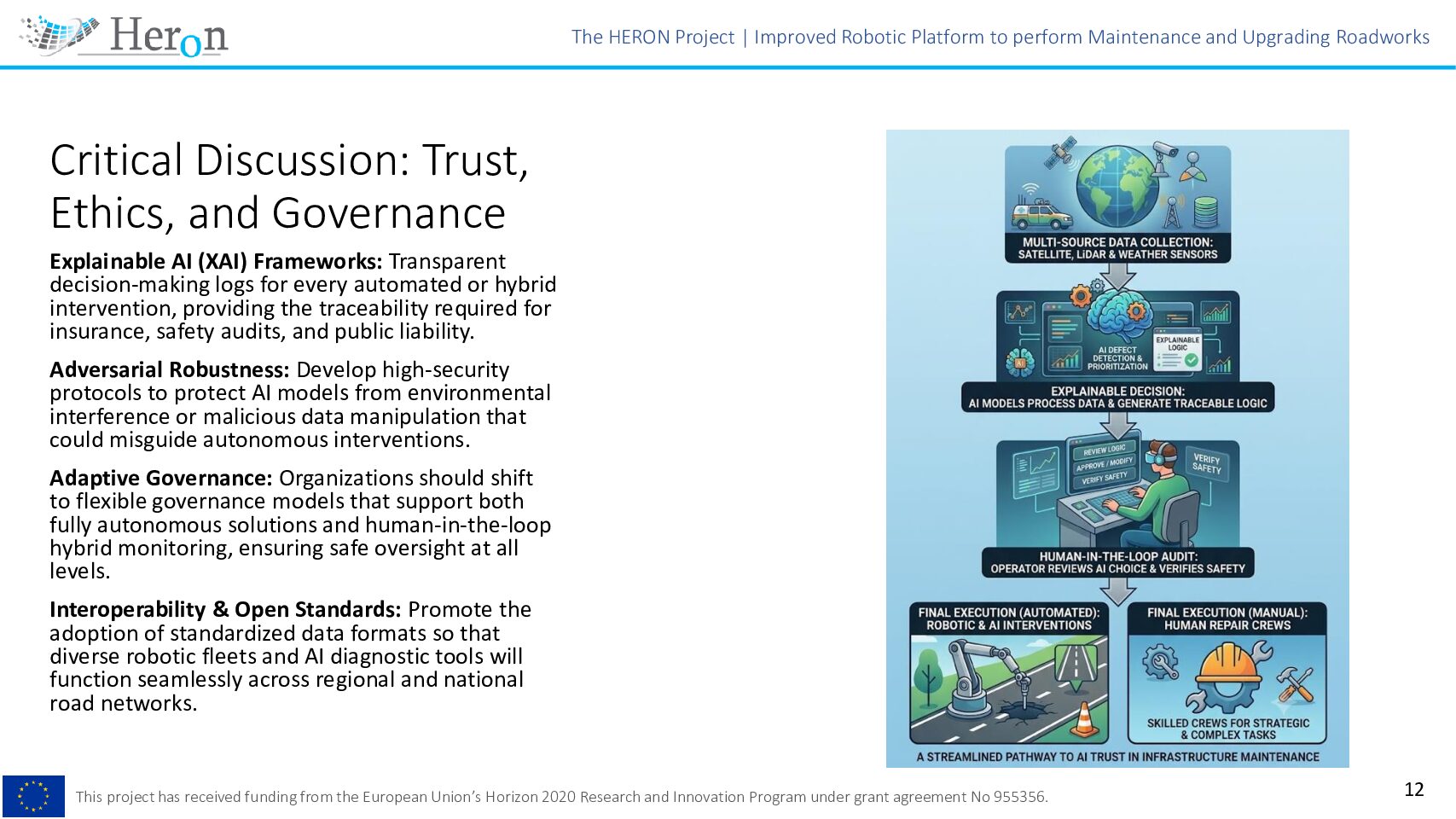
“To bring this solution into service, AI must go beyond being a black box to deliver transparent, decision-making logs,” explains Jonatan Plantey, digital project director, Cerema. “We need to teach the models to be robust in the face of human (cybersecurity) and environmental (poor visibility, for instance) issues, hybrid workflows must be created combining AI-driven monitoring with manual maintenance workflows.”
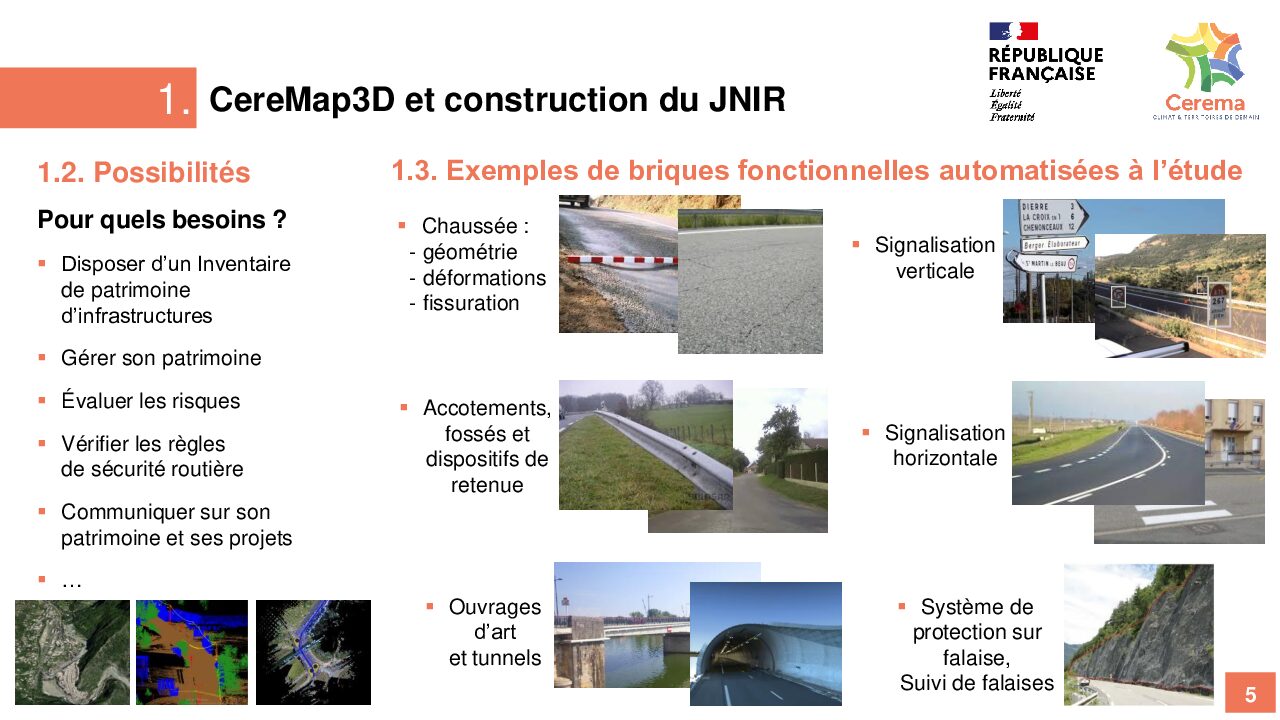
Use cases for the system extend beyond pure road asset management to include related aspects and the surrounding environment: risk prevention for ground movements, rockfalls, and cliffs, road safety with regards aspects such as regulations and visibility, civil engineering structures, e.g. bridges, and urban planning.
CereMap3D is part of an even larger digital twin initiative in France called launched in April 2026 by the National Institute of Geographic and Forest Information (IGN). This national digital twin programme for French territories is supported by the France 2030 investment plan, with a budget of €40 million. “The JNIR developed by CereMap3D will be integrated into JUNN, which will pave the way for new simulation and anticipation capabilities to help territories cope with the consequences of climate change, e.g. natural risk prevention, sustainable development planning, epidemic control, forest adaptation, and so forth,” enthuses Mr. Plantey.
AI and humans – who benefits and how?
Company employees, rail and air passengers, road users… are there any real societal benefits to using AI for maintaining transport systems?
In Japan, the declining working-age population is a concern for both the railway sector and the RTRI, which has incorporated this trend into its RESEARCH 2030 masterplan. “We must maintain the level of railway service quality, but the number of workers is falling,” explains Dr Hirai. “In order to sustain this level in their absence, today and in the years to come, we are going to have to introduce a lot of cutting-edge technology, which includes AI.”
For instance, in one RTRI case study with a rail company, maintaining the switching system typically involved human workers making four manual checks annually. “Now, based on AI-enabled data analysis, this is down from four checks to three checks a year, and should get down to just two in the near future,” adds Dr Hirai.
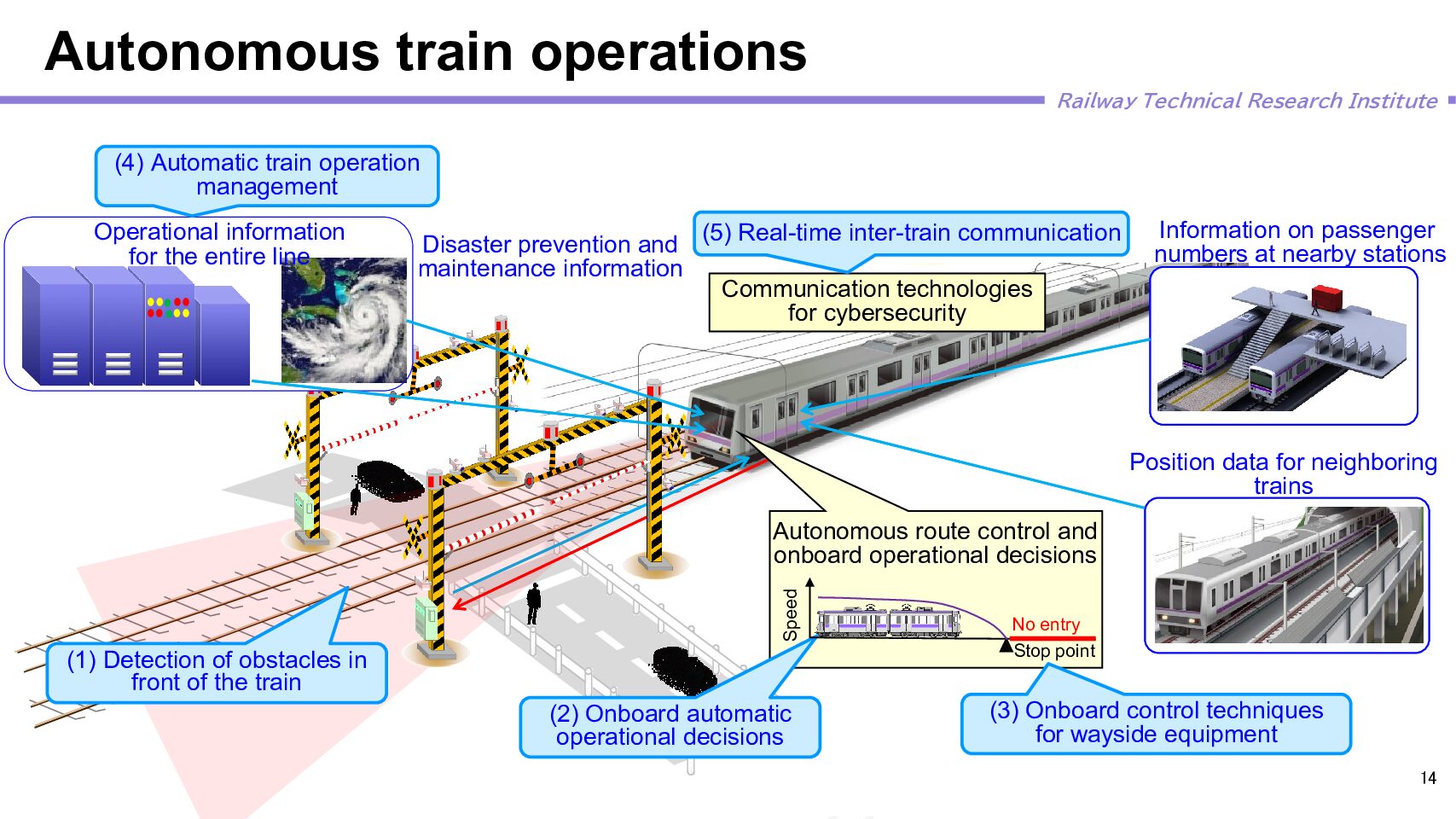
In the years to come, jobs in rail in Japan are also likely to be impacted by the deployment of autonomous train operations, whereby the train or railway system itself, based in part on the identification capabilities of AI, has an intelligence and can make judgments. “We are conducting research on autonomous operations on existing railway lines to achieve Level 3 automation, or higher, with no operators in the cab,” expands Dr Hirai. “Furthermore, the RTRI aims to achieve autonomous operations with a system that takes on the role of railway traffic controller.”
This ongoing research at the RTRI requires that each train is capable of autonomously controlling level crossings and turnouts, as well as recognising and assessing various situations affecting train operations. Part of the work to reach this level of autonomy calls for developing technologies to detect obstacles in front of the train. To achieve this, the researchers have combined cameras and multiple LiDAR sensors to detect humans on railway tracks at night (difficult with ordinary cameras). They are also exploring technologies to enable trains to determine, independently of humans, where they can proceed along sections of a railway line, and where they should halt.
“Driverless trains under conditions have already been operated in commercial use, but I hope to see the technologies presented here applied in the near future to realise automated train operation on existing lines with many infrastructure constraints,” concludes Dr Hirai.
At SNCF Voyageurs, adopting AI-driven predictive maintenance practices represents “a huge change in mindset for our teams,” admits Mr de Laharpe. “Before, they were sent out to do repairs on equipment that had broken down, which made sense to them. Now, they are being called on to maintain equipment that is still in working order.” Yet according to feedback, once these SNCF workers have understood and experienced the benefits of the AI-enabled methods – an opportunity to work more efficiently, with better results and less pressure – they are more enthusiastic.
As for the human jobs themselves, Mr de Laharpe doesn’t see a major threat on the horizon. And much of this is down to detecting small issues, more often and earlier. “To be perfectly honest, what we are seeing is a need for more maintenance and more results, rather than less maintenance and firing personal.”
AI-enabled predictive maintenance can deliver benefits for rail passengers, too, e.g. for Heating, Ventilation, and Air Conditioning (HVAC) systems, any repairs are anticipated and scheduled in advance. This operating model should avoid impacting service quality, i.e. the system doesn’t break down during journeys.
On the roads, using AI-enabled tech in the years to come is expected to help reduce the risks of accidents involving maintenance workers. “We will be needing more agents working off the roads to check the data, and less on the ground, the frontline, which will reduce the risk of accidents,” anticipates Mr Plantey from Cerema.
Nevertheless, it is likely humans and AI-enabled technology will continue to co-exist for road maintenance work, at least for the coming few years. “I think in a very near future we will see a hybrid approach with humans and AI,” says Mr Bakalos. “Less workers on the roads, yes, but more working in planning and management off road.”
One avenue explored by the HERON project concerned how to integrate its approach and technologies into current road management systems and practices. The team concluded that the best way forward is to support workers in adapting to the new working methods. “They need to be accompanied in this transition process – from traditional manual tasks to a more high-level role that involves using the HERON tools and models in their interventions,” recommends Mr Bakalos. In practical terms, this old-meets-new approach will involve creating hybrid workflows that integrate the maintenance approaches used on the roads today with the more mature parts of the technology developed by HERON.
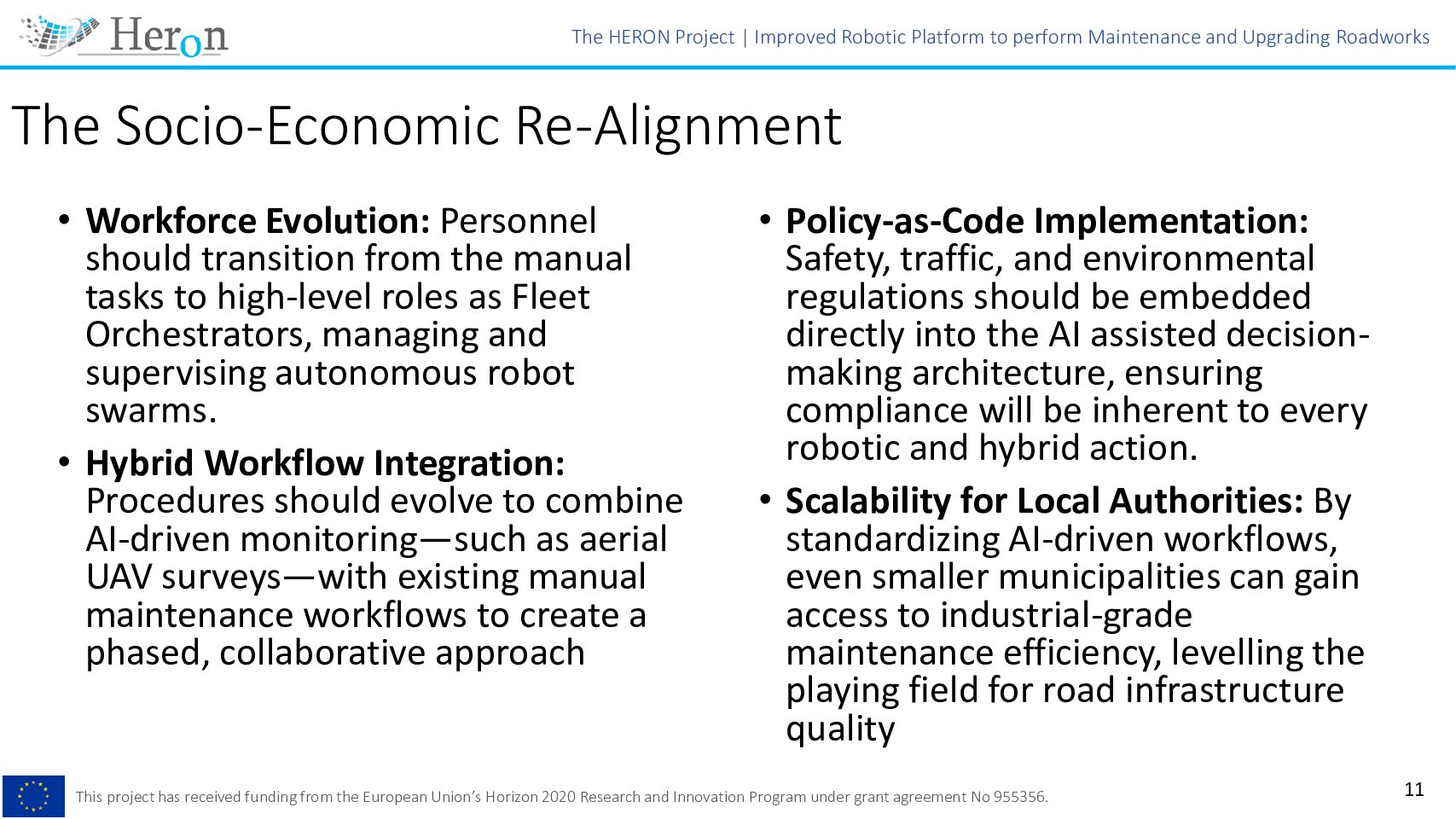
Over the long term, however, the inspection phase of road maintenance is likely to be rapidly automated. Yet, while the interventions themselves may well involve tools or solutions that don’t require human workers on the spot, they still might be needed (on the sidelines or remotely) to monitor the work. “From an overall technology perspective, we are still quite a way off not having any humans at all working on the roads,” reckons Mr Bakalos. “And for robotics in particular, in terms of both regulations and tech, we’re not going to see maintenance robots on highways any time soon.”
Respecting planetary boundaries
Maintaining rail, air and road assets and infrastructure is costly in terms of energy, water, and material resources. It also impacts biodiversity and generates C02 emissions. To play a part in helping the transport sector within the planetary boundaries of the Doughnut economics model, this maintenance work must adopt more sustainable and resource-efficient practices.
Seven of nine planetary boundaries now breached
By offering airline operators AI-enabled tools for health monitoring and predictive maintenance, Skywise says its customers can indeed adopt a more sustainable approach to operating and maintaining their aircraft. Real-time, fleet health monitoring, for instance, spots issues early on, thus avoiding extra fuel burn caused by mechanical drag or system defects. Optimising fuel consumption contributes towards shrinking the carbon footprint of planes.
On the roads, by enabling predictive, optimised interventions instead of reactive repairs, AI can help managers repair infrastructure before damage becomes severe. This in turn reduces the need for extensive road closures and large-scale reconstruction. In terms of resources and environmental impacts, such an approach can help minimise traffic congestion, vehicle idling, fuel consumption, and associated greenhouse gas emissions caused by detours and delays. AI systems can further incorporate environmental indicators — such as resource use, emissions, and ecological impacts — into maintenance planning to optimise the timing and allocation of interventions.
Artificial intelligence may well provide solutions for transport maintenance to do better for the planet, but how is this technology itself impacting the planetary boundaries? Indeed, the data centres housing AI consume vast amounts of electricity, water, and land. To date, there are no facts and figures on this issue vis à vis transport system maintenance. So is difficult to truly assess the real-life pros and cons. The question remains how to leverage the potential of AI for transport system maintenance while protecting the world’s most precious resources.
Does AI even fit within our planetary boundaries?
Governance and ownership
In a multipolar world increasingly dominated by data and AI, every sector of activity, including transport, is raising questions over data capture, ownership and governance, tech provider dependency, and cybersecurity risks.
As a global player with airline operator customers across the globe, Skywise operates under various jurisdictions and must ensure it complies with each and every one. “In Europe, the European Data Act is now in full force,” points out Mr Villaumé. “Then in China, for instance, where we have 3,000 aircraft operating daily, there are extremely strict rules governing data exports.” Given such diverse regulatory contexts, Skywise faces the challenges of running a platform hosted in Europe, so ensuring it complies with the rules in force here, while not being authorised to export data out of China. In response, it is thinking global and modular. “At Skywise, we believe the days of a ‘one-global-solution-fits-all’ are well and truly over. It’s a thing of the past,” concedes Mr Villaumé. “Today, we must build modular applications, based on a global architecture, that allow solutions to be adapted locally. This ‘local for local’ approach will ensure we can meet specific regional requirements and comply with the regulations of the country in question.”
Customer airlines retain ownership of the data they allow on the Core Platform. They also decide what information they are willing to share. “It is vital to ensure we have the rights to manipulate, interconnect, and use the data on our platform,” insists Mr Villaumé. “For us, there is no room for compromise here.” Skywise itself shares some of its own data by default; yet the company may also decide not to share certain information it considers to be trade secrets or commercially sensitive. “For all concerned, it’s a matter of choice,” sums up Mr Villaumé.
For the HERON project, rules and regulations for integrating its findings and solutions into real-life road situations represent a major hurdle. “For instance, deploying the inspection phase, with our robot operating freely on the roads, is currently not allowed under European law,” regrets Mr Bakalos. “Also, current regulations are very stringent when it comes to using UAVs.” Furthermore, regulations differ between EU member states and prove rigid or change rapidly, depending on the country in question. “This disparity highlights the need for flexible governance models for road interventions,” insists Mr Bakalos. “We need interoperability and open standards so the robotic fleets and AI diagnostic tools can function seamlessly across regional and national road networks,” he recommends.
Cyber exposure and tech dependency
In transport maintenance, introducing connected sensors, cloud platforms, AI systems, and real-time data sharing may deliver operational and performance benefits, but it also expands the ‘attack surface’ – the number of possible entry points for cybercriminals. The many possible consequences range from disruption to maintenance work, reduced asset availability, and data loss or theft, to supply chain disruption, loss of public confidence and safety risks (delay or errors in identifying defects which could lead to accidents).
“As soon as you create data pipelines, by nature you are exposed. This is a reality,” observes Mr Villaumé from Skywise. “To avoid situations and issues for customers using our Core Platform and exchanging information with us, we are extremely careful about cybersecurity. We are doing a lot of work to protect ourselves, for instance, by closely monitoring access management and using multifactorial identification.”
On the roads, greater autonomous capabilities for maintenance, through the use of AI, not only increase cybersecurity threats from humans (data hacking), but safety and security risks from the environment too, e.g. low visibility or adverse weather conditions can affect the correct functioning of AI-driven tools. “Taking this into account, we must have ‘adversarial robustness’,” affirms Mr Bakalos. “Essentially this means teaching our models to be robust enough in the face of adverse conditions, both man-made and due to the environment, data manipulations, or anything that can misguide an autonomous intervention.” Jonatan Plantey from Cerema agrees: “We need to teach our CereMap3D models to be robust in the face of human (cybersecurity) and environmental (poor visibility, for instance) issues.”
With the rapid advance of AI in today’s geopolitically volatile world, the role, power, and influence of companies providing the technology (AI models, cloud tools, enterprise infrastructure) is a growing concern for customers. Company reliance on AI providers creates risks such as vendor lock-in, data security vulnerabilities, and rising costs. Is this dependency manageable, or will it become one of the defining risks of AI going forward?
Skywise works with tech providers to bring its AI and analytics to scale. It also has some multi agreements in place for hosting and computing, but “we want to have flexibility,” insists Mr Villaumé. Consequently, the company structures these agreements to preserve the option of changing providers, if it so wishes, once they expire. Yet, deplores Mr Villaumé, in some cases, it is a question of what is available on the market. “For AI and analytics platforms, for instance, right now there are no real alternatives in the world to the US technologies.”