


Conviction #11
Conviction #11
Managing freshwater resources, an imponderable for responsible mobility
Managing freshwater resources, an imponderable for responsible mobility.
While the transport sector transition is focused almost exclusively on decarbonisation, environmental strategies are neglecting an equally vital issue: freshwater management. Yet freshwater withdrawal is the sixth of the nine planetary boundaries to be crossed, and by so doing, directly threatens the survival of ecosystems and populations. In real terms, in France by 2050, the environmental needs of many watersheds will no longer be fulfilled, even in wet years, due to climate change1.
Mobility stakeholders must consider sustainable management and adaptation to the increasing scarcity of this resource to avoid exposing themselves to major industrial and economic risks.
The impact of transport on water resources is not obvious to the naked eye because it is embedded across the entire life cycle. A Life Cycle Assessment (LCA) conducted in 2016 in Melbourne, Australia2, reveals that petrol cars are extremely water-intensive, consuming approximately 6.4 litres per passenger-kilometre in this context. The study shows that a daily 50km single-occupant car journey requires 320 litres of water per day – the equivalent of two months’ worth of drinking water consumption. Conversely, shifting to public transport and active modes of transport leads to massive indirect water savings, while also reducing greenhouse gas emissions (GHG).
Decarbonisation itself is not without its water-related tensions: biofuel production is extremely water-intensive, and lithium extraction for batteries generates critical water stress in arid regions like South America’s ‘lithium triangle’. In these areas, industry may use ‘fossil’ water, which is several thousand years old and does not renew itself3.
Technology solutions must therefore be assessed holistically, based not only on their carbon footprint but on their water footprint too, and, more broadly, their impacts on all the planetary boundaries.
To meet this challenge, businesses and public authorities must put moderation and innovation at the heart of their business models, set themselves ambitious goals, and introduce practical measures. These could include, for instance, widespread water recycling when washing transport fleets or transforming infrastructure into permeable surfaces that can recharge groundwater aquifers.
Tomorrow’s mobility solutions will only be sustainable if they take water resources into account, to both preserve them and adapt to their increasing scarcity.
Footnotes:
12025, French Haut-Commissariat à la Stratégie et au Plan, https://www.strategie plan.gouv.fr/en/node/2988
22016, André Stephan & Robert H. Crawford, https://www.sciencedirect.com/science/article/abs/pii/S1361920916305995
3Dr David F. Boutt, professor at University of Massachusetts Amherst, hydrologist and co-author of the research article ‘The hydrogeology of critical mineral resources relevant to the energy transition’ (2025)
KEY FIGURES
2.5%
of the water on Earth is freshwater, of which the vast majority is stored in ice or aquifers, leaving just 1% of this freshwater ‘free’ in lakes and rivers (less than two tablespoons for every 10 litres of water on Earth).

700
French municipalities were deprived of drinking water during the 2022 drought, forcing the authorities to supply residents with water by tanker lorry.

10 to 15%
of global water withdrawals are for energy. While agriculture is the largest consumer, the energy sector – vital for the transport sector – plays a significant role in terms of its drilling, cooling, and treatment needs.

ILLUSTRATIONS
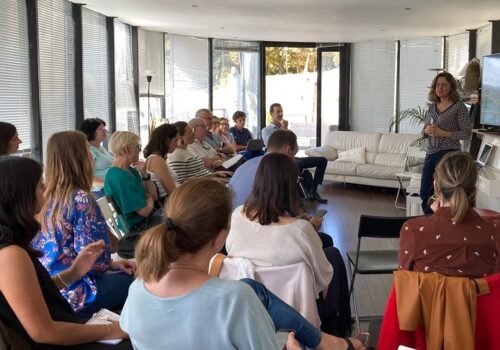
The impacts of transport systems on freshwater resources
With experts from the fields of energy, transport and geology, during a session in 2025, Futura-Mobility explored four key questions on freshwater use by transport systems.
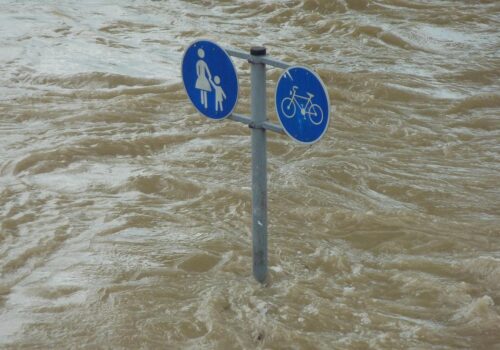
The water cycle: how to cope with climate change
From droughts and extreme rainfall to the risks of landslides and flooding, what are the links with climate change? How are these phenomena affecting us all today, and what about tomorrow?
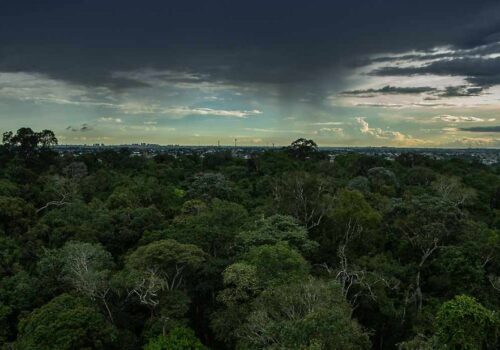
Freshwater boundary exceeds safe limits
New assessment reveals dramatic changes to the global water cycle, with parts of the Amazon drying out. The planetary boundary for freshwater may now be transgressed, potentially pushing the Amazon closer to a tipping point.
RECOMMENDED READING

The Water Knife
Water is power.
The American Southwest has been decimated by drought, Nevada and Arizona skirmish over dwindling shares of the Colorado River, while California watches. When rumors of a game-changing water source surface in Phoenix, Las Vegas water knife Angel Velasquez is sent to investigate.
With a wallet full of identities and a tricked-out Tesla, Angel arrows south, hunting for answers that seem to evaporate as the heat index soars and the landscape becomes more and more oppressive. There, Angel encounters Lucy Monroe, a hardened journalist who knows far more about Phoenix’s water secrets than she admits, and Maria Villarosa, a young Texas migrant who dreams of escaping north to those places where water still falls from the sky.
Cover photo: Kawita Chitprathak-Pixabay
UI icons: flaticon.com