


Conviction #10
Conviction #10
Protecting biodiversity is a strategic imperative for mobility companies
Biodiversity, which refers to all living beings and ecosystems, is more than just an ethical or environmental issue; it is the foundation of human survival. As humans, we are completely dependent on the ecosystem services provided by nature to feed, house, and keep us on the move. For instance, around 75% of food crops worldwide depend on pollinators1.
In the transport sector too, biodiversity provides vital regulatory services. For instance, the roots of trees and other plants stabilise the soil and facilitate rainwater infiltration, preventing landslides and flooding of infrastructure. Nature is therefore very much a strategic asset essential to ensuring the sustainability of mobility companies.
Yet today we are witnessing a sixth mass extinction, caused by human activities. Populations of vertebrate animals have declined by 73% in just 50 years2. Forty-five per cent of known flowering plants and 31% of trees are threatened with extinction, not to mention the plants yet to be discovered and which may become extinct, forever depriving humanity of their potential3 benefits.
Transport systems have a significant and multidimensional impact on living organisms. Soil sealing is the main cause of biodiversity collapse, leading to habitat loss and fragmentation that prevents genetic mixing of species. In addition, collisions with vehicles kill billions of animals each year, plus chemical, noise and light pollution all disrupt biological cycles. Furthermore, the transport sector is responsible for 24% of global CO2 emissions4, accelerating the climate change to which most species are struggling to adapt.
Hence it is vital we transform our mobility systems to make them more efficient and innovative.
Strategically for companies, this means rigorously measuring the impacts with tools like the Biodiversity Scores5, systematically prioritising avoidance of areas of high natural value, and enhancing land used for transport activities as ecological corridors. Nature-Based Solutions (NBS) are also a major opportunity, often offering more sustainable and less costly alternatives to technological solutions on their own.
Finally, integrating biodiversity at the highest levels of governance clearly gives a competitive edge, enabling companies to anticipate increasingly stringent regulations, such as the CSRD, and meet the growing expectations of citizens and stakeholders.
Tackling biodiversity loss is a collective responsibility that calls for strong leadership from the private sector to ensure the resilience of our societies.
Footnotes:
1FAO: https://www.fao.org/pollination/about/en
2Royal Botanic Gardens: https://www.kew.org/science/state-of-the-worlds-plants-and-fungi
3WWF: https://www.worldwildlife.org/publications/2024-living-planet-report
4https://ourworldindata.org/co2-emissions-from-transport, based on figures from the International Energy Agency (IEA) and International Council on Clean Transportation (ICCT), 2020
5Global Biodiversity Score developed by CDC Biodiversité
KEY FIGURES
over 94%
of the biomass of mammals on the planet corresponds to the total weight of humans and animals domesticated by humans (firstly cattle). The total weight of other mammals, both terrestrial (deer, rodents, elephants, bats, primates, etc) and marine (whales, dolphins, seals, etc), accounts for the remainder, i.e. less than 6%.

Double
transport demand is expected worldwide by 2070, i.e. the number of kilometres travelled by passengers (demand for air travel is anticipated to triple over the same period!). These increases are likely to put more pressure on biodiversity in the future.

65%
of invertebrates and 30% of vertebrates are nocturnal, and their biological cycles (reproduction, migration, feeding) are disrupted by artificial lighting from transport infrastructure.

ILLUSTRATIONS
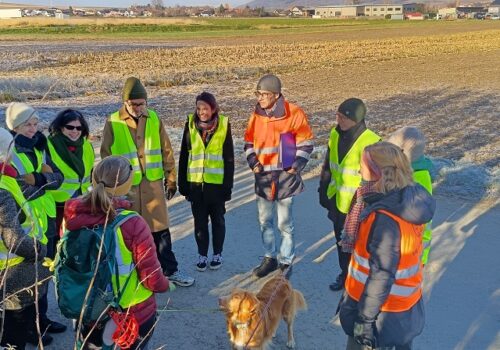
How is the transport sector protecting biodiversity in Austria?
During Futura-Mobility’s field trip to Austria, in 2025, the delegation explored how the country – government, infrastructure managers, and other specialist bodies – are working to reconcile the human need for mobility with growing awareness of the vital importance of sustaining and nurturing biodiversity.
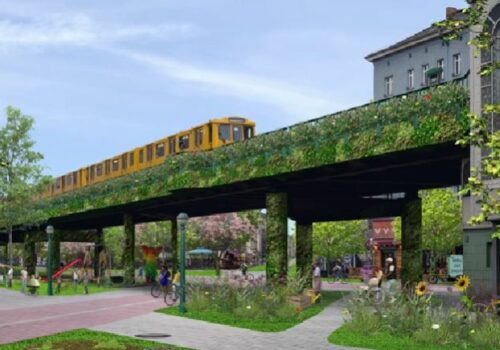
Jan Kamensky, the ‘digital gardener’
The utopian animations (2020) by Hamburg-based artist Jan Kamensky playfully transform car-filled streets into inviting, people-friendly spaces. As such, they are an invitation to reflect on how we want to live in urban contexts.
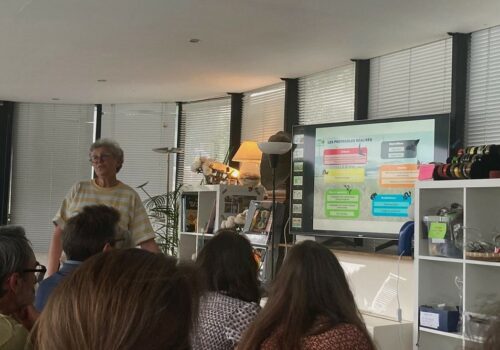
Integrating biodiversity into transport infrastructure: best practices and innovations
With expert speakers from the rail, maritime, road, and airport sectors, this Futura-Mobility session in 2025 provided an opportunity to discuss the solutions implemented by mobility systems to protect biodiversity and establish mutually beneficial coexistence.
RECOMMENDED READING

The Overstory
Winner of the 2019 Pulitzer Prize in Fiction, The Overstory (W. W. Norton & Co.) is a sweeping, impassioned work of activism and resistance that is also a stunning evocation of – and paean to – the natural world. From the roots to the crown and back to the seeds, Richard Powers’s twelfth novel unfolds in concentric rings of interlocking fables that range from antebellum New York to the late twentieth-century Timber Wars of the Pacific Northwest and beyond. There is a world alongside ours—vast, slow, interconnected, resourceful, magnificently inventive, and almost invisible to us. This is the story of a handful of people who learn how to see that world and who are drawn up into its unfolding catastrophe.
UI icons: flaticom.com